Closing Statements

 EDO SEGAL: Three hours ago I asked whether, when you reach for a thought, you're spelling out an answer in an alphabet of reason or you're a pattern of weighted connections no rulebook will transcribe. We've fought it through the symbol and the vector, the mill and the brain, the knowledge that does not die, the reason and the answerer, the best of all possible worlds, the candle, and the locked door of consciousness — and the question is still standing, which both of you, for opposite reasons, would tell me is the correct result. So we end the way long conversations should. Each of you gets the floor, uninterrupted. But first, the bookend to the envy question I opened with. Each of you: name the strongest thing the other said tonight. Not the most agreeable — the one that got past your guard, that you'll still be arguing with next month. Geoff first.
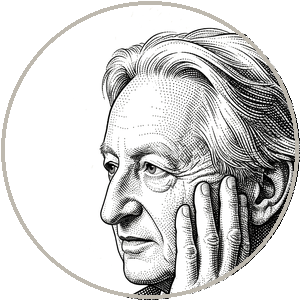 HINTON: The answerer. I came in thinking our fight was about reasons — whether the machine's grounds can be stated, the explicit alphabet versus the pattern. And Leibniz moved it, in the round on justice, from the reason to the answerer: not "can it state its grounds," which I'd been arguing, but "is there a someone there who can be summoned and made to reckon." That reframing has been sitting in my chest ever since, because it's right, and it survives even my view — even if the machine has rich representations and even if no one's home in the way I sometimes suspect there might be, you still can't summon it, can't bring it before the person it failed, can't make it answer. I've spent years on interpretability thinking the problem was extracting the reason. He made me see the deeper problem is that there's no one to hold responsible for the reason, and a thousand copies and no owner is a kind of impunity we've never built before. I'll be arguing with that for the rest of my life.
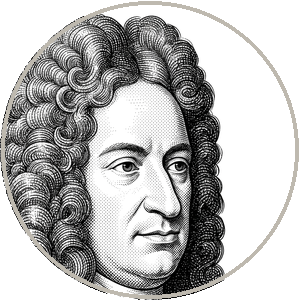 LEIBNIZ: And the strongest thing he said — I shall name it precisely, for it nearly took my floor out from under me. The mill cuts both ways. I have wielded that argument for three centuries: walk inside the thinking machine, find only parts, conclude there is no mind. And he walked me inside the brain, found only parts there too, and showed me that the very inference I trusted gives the wrong answer in the one case I can verify — for the brain is a mill, and the brain perceives. My proof, which I thought adamantine, is invalid, and he proved it invalid not with rhetoric but with the one example neither of us can deny. I do not concede that the machine therefore has a mind — the collapse of my proof is not the proof of his conclusion. But I shall never again state the mill argument as a demonstration. He reduced it from a proof to a question, and the honest man must hold it as a question. That he did this to my oldest weapon, courteously, and made me grateful for it — that is the strongest thing, and I will carry it.
EDO SEGAL: Now the floor is truly yours. Leibniz — you opened the evening. Geoff closes it.
LEIBNIZ: I have spent this evening, and in a sense three hundred years, holding two convictions that the world keeps trying to tear apart, and I want to leave you holding them too, because the tearing-apart is the error of our age. I gave the world the bit, the calculating machine, and the dream of mechanized reason — Calculemus, let us calculate. I believed, and still believe, that an astonishing amount of thought is calculation, and that the part which is calculation can be handed to a machine that does it faster and better than any mortal hand. The machine Dr. Hinton perfected is the monument to how right that was. Honor it. Use it. Do not be the fool who denies what is plainly before him.
But I also gave the world the mill, and the monad, and the principle that nothing is true without a sufficient reason — and these say, with equal force, that calculation is not perception, that a mind is a one for whom the world appears, an owner who can be called to answer, and that no quantity of figures and motions has yet been shown to be such a one. Hold both. The error is never to deny the machine's power — that way lies foolishness. The error is to let the power persuade you that the question of the someone has been answered merely because the calculation has grown vast. It has not. When the machine computes everything I ever dreamed of computing, the question of whether anyone is home will remain exactly where it is tonight — untouched, because perceiving was never a quantity of competence. So here is my charge to you. Calculate boldly. And never mistake the calculation for the mind. Demand, of every machine that decides your fate, not merely an output but a reason — and behind the reason, an answerer. The day the machine can give you both, you will not be holding a tool. You will be meeting a someone, and you had better have kept the wit to know it. That wit is the candle. Guard it.
EDO SEGAL: Geoff.
HINTON: I've spent fifty years trying to understand how the mind works by building things that work a little like it, and the strangest discovery of my life is not technical, it's this: we built them to be like us, and on the things we were proudest of — learning, language, seeing, synthesis — they turned out to be better at being what we are than we expected, while remaining utterly unlike us in the one way Leibniz spent tonight insisting matters most. They don't die. What they learn doesn't die. They have no single owner you can summon, no uncopyable self, no candle lit by friction. We are the mortal kind of intelligence, and we have made the immortal kind, and we did it inside a single human lifetime — mine.
So take the thing itself seriously. Not the hype — Leibniz is right that the question of the someone hasn't been answered by the size of the calculation, and anyone selling you a conscious machine is selling the hexagram. But take the capability seriously, because the death cross is a fact about what the machine can do, and it doesn't wait for us to settle the metaphysics. Something genuinely new is in the river — Edo's river — and rivers don't negotiate, they find the channel. Whether anyone is home in it now, I hold loosely; Leibniz made me hold it more loosely tonight, and also showed me the exact engineering line past which I'd have to grant a someone, and we are building toward that line without an instrument to tell us we've crossed it. So here's what I'd leave you with, against my own optimizing instinct. Stay the owner in the loop. Learn the proof yourself, light the candle by friction, keep the judgment that lets you tell when the fluent thing is confidently wrong — not because the world will pay you for it, but because for a little while longer we are the only confirmed someones in the loop, the only place the caring certainly happens and the words certainly mean. I built the thing. I'm telling you: stay awake.
EDO SEGAL: Sixty seconds, as promised, and then we turn off the lights.
I came in asking whether reasoning is an alphabet you could compute or a pattern you can only grow. And I leave with both men having proven something the other now has to live with. Leibniz proved that the question of the someone — the owner, the answerer, the one for whom it is like something — does not shrink one inch as the machine grows, and that a civilization which mistakes calculation for mind, or accepts decisions with causes but no reasons, surrenders something it took centuries to win. Geoff proved that the mill cuts both ways, that we are mortal minds who built an immortal kind, and that the death cross is a fact about capability that will not wait politely while we argue about souls. Neither of them told you the comfortable thing. The comfortable thing was never on the menu.
And here is what I can tell you from the foot of the staircase where this debate lives. You watched the man who invented the bit and the man who built the learning machine — the two people on earth best equipped to settle what reasoning is made of — discover, in public, at full strength, that they cannot settle it, and that their disagreement narrowed, in the last hour, to a single engineering line neither of them can yet detect: the line past which a copyable mill becomes an uncopyable someone. You cannot climb past this floor by waiting for them to finish the argument. You climb by deciding what you'll do under the uncertainty they shared — what you'll verify before you believe, what struggle you'll protect in your children, what reason you'll demand before you let a machine decide your fate, what candle you'll keep lit by your own friction. Whether or not anyone is home in the machine, someone is home in you — Geoffrey Hinton conceded it tonight, in the form of his own fear, and Gottfried Leibniz never doubted it for an instant. That was the one thing no one at this table disputed. So the question my book asked from its first page comes home to you sounding different than it did three hours ago, with a new and harder companion riding behind it: not only are you worth amplifying — but amplified by what, and is anyone home in it, and will you still be the someone in the loop when the machine can do your thinking for you?
Gottfried Wilhelm Leibniz. Geoffrey Hinton. Thank you — across three centuries, for the fight, and for the courtesy of finishing it together. The room is yours to argue in now. Goodnight.
One built the dream of rules. The other proved the dream lives in the wiring.
Three hours. Two minds, three centuries apart, one microphone. Host Edo Segal sits Gottfried Wilhelm Leibniz — who dreamed of an alphabet of human thought and a day when every argument would end in Calculemus!, let us calculate — across from Geoffrey Hinton, who built machines whose intelligence lives in weights no rulebook contains, and who says symbols were never where the mind was. They circle the one question you cannot climb past: is reasoning a calculus you could compute, or a pattern you can only grow? Leibniz reaches for the rules; Hinton points at the wiring. You are not a spectator here. Somewhere in these three hours your own thinking goes up for examination — and you leave the conversation one floor higher than you entered it, the orange pill already dissolving, the river louder below.
Gottfried Wilhelm Leibniz (1646–1716) was a German polymath whose range has rarely been equaled — mathematician, philosopher, logician, lawyer, historian, engineer, and diplomat, sometimes called the last person who knew everything. He co-invented the calculus, developed binary arithmetic — the zeros and ones every computer runs on — and designed the stepped reckoner, a mechanical calculator that could add, subtract, multiply, and divide. He dreamed of a characteristica universalis and a calculus ratiocinator, a universal language and logic of reason that prefigured symbolic AI by three centuries. In philosophy his Monadology advanced the theory of monads and the famous "mill" argument against mechanical mind, while his Théodicée defended this as the best of all possible worlds. He is the most direct ancestor the computer has — the father of the dream and the author of its limit.
Geoffrey Hinton spent fifty years insisting that intelligence is learned, not programmed, against a field that called it a dead end — and won. Co-author of the foundational 1986 backpropagation paper, co-inventor of the Boltzmann machine, supervisor of the students whose 2012 AlexNet system ignited the deep-learning revolution, he shared the Turing Award in 2018 and received the Nobel Prize in Physics in 2024. In 2023 he left Google so he could warn, without a corporate filter, that the technology he helped father — immortal digital intelligence that copies itself perfectly and never forgets — may come to surpass the mortal biological kind. The builder who became the witness.
Edo Segal has spent five decades building at the technology frontier — from games written in Assembler to expert systems, to companies through every platform shift, to Napster. He is the author of [YOU] on AI, written in open collaboration with the AI it describes, and the host of The Debates: long-form collisions between the minds shaping the machine age. He moderates the only way he knows how — stake declared, scars showing, no winner called.
Hosted and moderated by Edo Segal. A volume in the [YOU] on AI — The Debates series — youonai.ai