Closing Statements

 EDO SEGAL: Three hours ago I asked one question, and I said every round would be that question wearing a different coat. When you reach the floor where the machine starts to know, do you climb by engineering reason in, or by getting out of the way and letting it learn? Is knowing something you compose, or something you converge on? You've taken it apart from every side. Now I want each of you to put it back together, in character, for the reader who has to climb this floor tomorrow morning whether or not we've satisfied them. Gottfried, you've waited three hundred years for the last word. It's yours.

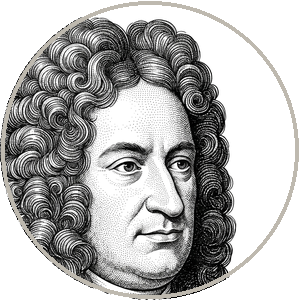 LEIBNIZ: Then hear it from a man who was wrong in the most instructive way a man can be wrong. I believed knowing was composition — that the mind could be written down, that the right alphabet would make thought legible and discord would end and the machine would show its work. I was wrong about the alphabet; there is none. I was wrong about the legibility; the knowing that scales cannot be read. I was wrong, most painfully, that calculation would pacify us; it has armed us. And yet I will not tell you composition was a delusion, because tonight Mr. Sutton himself could not build his learner without composing its floor and its purpose, and could not exorcise my ghost from his reward. So here is what I leave you, and it is smaller than my dream and truer. You cannot compose the knowing. But you must compose what it is for. The machine will learn what it learns in a darkness you will never read — accept that; my craving to read it was the flaw that broke me. But what it learns toward — that is still yours, still composed, still legible, still your responsibility and no one else's. Do not waste your strength trying to engineer the mind. Spend it engineering the purpose, because that is the one part the learning cannot do for you, and the one part on which everything else depends. I dreamed of a calculus that would settle every dispute. I leave you a smaller charge: settle, with all the rigor I once spent on the whole of reason, the single question of what you are pointing the thing at. Get that right, and the darkness can be borne. Get it wrong, and no legibility could have saved you anyway.

EDO SEGAL: Rich.

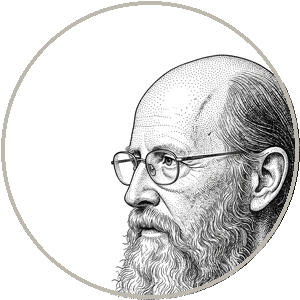 SUTTON: I've spent fifty years trying to build a mind by understanding how minds learn, and the strangest thing I've learned isn't technical, and a man three centuries older than me drew it out of me tonight. It's this. I thought my fight was against composition — against building knowledge in, against the cleverness of hand-crafted systems, against the whole rationalist dream of writing the mind down. And it is. The representation is learned. The contents of a mind are too complex to compose, and every attempt to compose them is a ceiling, and the bitter lesson is true and I'd stake my life on it again. But I came in thinking that made me the opposite of Leibniz, and I leave knowing I'm his other half. Because the thing I can't learn — the purpose, the reward, what the agent is for — that has to be composed, by hand, by us, and it's the most important thing in the whole system, and I'd buried it because it didn't fit my story. So here's my last word, and it's not the one I walked in with. Get out of the way of the learning — and never, ever get out of the way of the choosing. Let the machine converge on how. You compose the what-for, and you compose it like your life depends on it, because the more powerful the learner, the more everything rides on that one composed thing you can't delegate. The future belongs to agents that learn from their own experience. But what they learn toward belongs to whoever was brave and careful enough to choose it. I spent my life proving the mind writes itself. I'll spend what's left admitting it still has to be aimed, and that the aiming is the human part, and that we'd better get very good at it very fast.

EDO SEGAL: [pause] Sixty seconds, as promised, and then I let you both go.

Here is what I can tell you from the floor where this debate lives — the one just below the crossing, where the machine starts to know. I came in split down the middle: Assembler in my hands and the bitter lesson in my eyes, Leibniz by temperament and Sutton by evidence. And I leave the split resolved, not by one of them winning, but by both of them being forced, in front of you, to the same astonishing place: that knowing is composed at the ends and converged in the middle. You cannot write the mind down — Sutton is right, and three hundred years of failure agree with him. But you must write down what the mind is for — Leibniz is right, and Sutton couldn't build his machine without conceding it. Neither of them won. Something better than winning happened: the question got honest.

So let me hand it to you the way I'd hand it to my kid at the kitchen table, because that's where it actually lives. She's going to grow up with machines that learn faster than she does, in a dark she'll never read. Most of what they know, she won't be able to check, and most of what she's tempted to hand them, she shouldn't. The lesson of this table isn't engineer everything and it isn't trust the learning. It's this: stop trying to control how the thing knows — you can't, and the trying will exhaust you. Pour everything you have into what it's for — what you point it at, what you reward, what you refuse to outsource, what struggle you protect even when the smooth path is right there. The machine writes itself now. That much is settled. What it writes toward is the last thing that's still yours, and it turns out to be the only thing that was ever load-bearing. Two minds three centuries apart took everything else apart and left you standing on exactly that.

Whether anyone is home in the machine, they could not tell you — they stripped away every false answer and handed the question forward, naked, which is the most honest gift this table had to give. But someone is home in you. That was the one thing no one at this table could take away — not even the man who came to prove it couldn't be proven. You're standing on the staircase now, at the floor where the knowing begins. The machine is climbing it beside you, faster, in the dark. The only question that's still yours to answer is the one my whole book asked from its first page, and it sounds different now than it did three hours ago: not can it know — it can — but what will you aim it at, and are you worth amplifying?

Gottfried Leibniz. Richard Sutton. Three hundred years apart, and you met in the middle. Thank you, both of you, as human beings. The room is yours to keep arguing in. Goodnight.
One says you compose a mind. The other says you can only converge on one. They met in the middle — and it cost them both everything they came in sure of.
Three hundred years apart, two minds who could not agree on what it means to know sit down with Edo Segal for three hours. Gottfried Leibniz still believes the universe can be spelled out — give him a perfect language and a calculus of reason and every quarrel ends in arithmetic. Richard Sutton has watched that dream lose, again and again, to machines that were simply told to learn. Between them runs the river of accelerating intelligence and the rising line of the death-cross, where capability crosses into something that no longer needs our hand-built rules.

This is not a history lesson. It is the argument happening inside your own climb — whether to engineer your way up the tower or learn your way up. The rationalist who wanted to write the mind down meets the empiricist who proved the mind writes itself, and they discover, in public, at full strength, that knowing is composed at the ends and converged in the middle: you cannot inscribe what the machine knows, but you must compose what it is for. Pull up a chair on the staircase. The view from the roof depends on who is right.

Gottfried Wilhelm Leibniz (1646–1716) was a German polymath — philosopher, mathematician, logician, jurist, and diplomat — widely regarded as one of the most universal intellects in history. He invented the calculus independently of Newton, devised the binary arithmetic on which every computer now runs, and built the stepped reckoner, the first calculator to perform all four arithmetic operations. His characteristica universalis and calculus ratiocinator — a universal symbolic language and a logical calculus to settle any dispute by computation — are the deepest ancestor of artificial intelligence; Norbert Wiener named him the patron saint of cybernetics. In the same mind that dreamed the thinking machine, he raised, in the image of a mill one could walk inside, the argument that mechanism alone could never produce a perception.
Richard S. Sutton (born 1957) is a computer scientist and one of the founders of modern reinforcement learning. With Andrew Barto he built the field's foundations, introduced temporal-difference learning, and co-authored its standard textbook; in 2025 the two received the 2024 Turing Award. He is the author of the reward hypothesis and the 2019 essay "The Bitter Lesson," among the most discussed ideas in AI, and an architect of the "era of experience" and the OaK architecture. A professor at the University of Alberta, he insists the celebrated systems of the present are a way station, and that the deepest progress will come from agents that learn, like living things, from their own experience.

Edo Segal has spent five decades building at the technology frontier — from games written in Assembler to expert systems, to companies through every platform shift, to Napster. He is the author of [YOU] on AI, written in open collaboration with the AI it describes, and the host of The Debates: long-form collisions between the minds shaping the machine age. He moderates the only way he knows how — stake declared, scars showing, no winner called.

Hosted and moderated by Edo Segal. A volume in the [YOU] on AI — The Debates series — youonai.ai