The Reckoner and the Death Cross
 **EDO SEGAL:** Gottfried, in 1672 you set out to build a machine that did all four operations of arithmetic, the stepped reckoner, and you gave it a justification that is now quoted in every argument about automation ever made. You wrote: it is unworthy of excellent men to lose hours like slaves in the labor of calculation, which could safely be relegated to anyone else if machines were used. That is the founding charter of automation, and it draws a line — the rote, mechanical labor goes to the machine, and the *real* thinking stays with the excellent men. Now let me set the table with numbers from my own world. By early 2026, a trillion dollars of market value had left the public software industry — I call it the [software death cross](https://www.youonai.ai/fieldguide/med/software_death_cross). Entry-level programming jobs down sixteen percent. And in that room in Trivandrum I watched twenty engineers become twenty times more productive, then sat in board meetings where the arithmetic was: if five can do the work of a hundred, why pay for a hundred? Gottfried — your line, the one between the labor the machine takes and the thinking it leaves us. Is it still where you drew it?
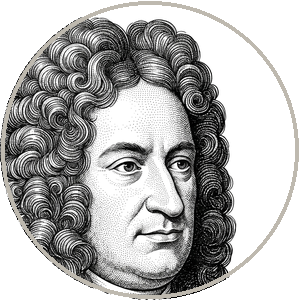 **LEIBNIZ:** It has moved, and it has moved into the country I reserved for the soul, and I will not pretend otherwise. My distinction assumed that the merely mechanical and the genuinely cognitive were two different *kinds* of thing — that drudgery could be mechanized precisely because it was not really thinking, and that the freeing of men from drudgery would leave their thinking untouched and even ennobled. The whole optimism of my charter rests on that wall: machines take the calculation, men keep the judgment. But your systems do not merely add and subtract. They draft, they argue, they propose, they analyze — they perform the very operations I placed on the human side, the operations I thought *defined* the human side. So either I was wrong that those operations are non-mechanical, or I was wrong about where the wall stood. I suspect both. I wanted to free thinkers from calculation. I did not foresee a calculation that could think, and the thing I did not foresee is precisely the thing now eating the ground beneath the excellent men.
**EDO SEGAL:** Alan, here is the trap I suspect you will refuse. You proved the machine has hard limits. If the machine is bounded, how can it be displacing the unbounded creature — us — at this scale? Can a thing with a hole in its floor restructure a labor market?
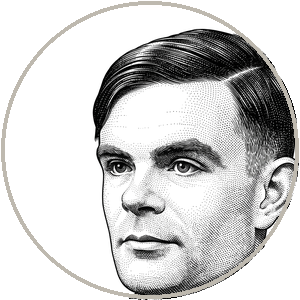 **TURING:** Easily, and the question contains a confusion I would like to remove, because it is the same confusion that runs through the whole public conversation. My limits are limits on *deciding every case*. They are not limits on being *useful*, or *fast*, or *good enough to replace a junior clerk on the tasks a junior clerk actually does*. A machine can be permanently unable to solve the halting problem and still draft your contracts better than the associate you were paying. Undecidability is a statement about the far horizon of computation. The death cross is happening in the near field, where the machine is merely *competent*, and competence at scale is more than enough to move a trillion dollars. So I refuse the trap precisely: my limit is real and it is irrelevant to the displacement, and anyone who consoles a laid-off programmer with "ah, but the machine can't solve the halting problem" is offering a true fact as a cruel joke. The economic disruption does not require the machine to be omniscient. It only requires it to be cheaper than you at the thing you were paid for. And it is.
**LEIBNIZ:** I want to add the part my charter got *right*, though, because Mr. Segal's death cross is not the whole verdict on my line. I said the machine should take the labor unworthy of an excellent man so the man could rise to worthier work. The error was not in the *aspiration*. The error was in assuming the rising happens automatically — that the freed capacity flows upward to the man rather than into the pocket of whoever owns the machine. A free man relieved of drudgery climbs. A man dismissed because the drudgery and the dignity were taken in the same stroke does not climb; he is simply gone. The difference is not the machine. The difference is who captures what the machine releases, and *that* I said nothing about, because I was a councillor to dukes and I assumed the excellent men were also the men who owned things. That blindness is the one I would most want corrected if I were advising your age.
**EDO SEGAL:** There is a generational wound inside this I have watched up close, and I want to name it, because it is where my own arithmetic failed me. The entry-level role was never just cheap labor. It was the *forge*. The hours of writing code that didn't work and finding out why — that is where senior judgment was made. My engineer in Trivandrum lost ten minutes of accidental architectural learning hidden inside four hours of plumbing, and didn't know she'd lost them until her judgment wobbled months later. Multiply her by an industry. Alan — you who proposed raising a machine like a child should feel this most sharply. Can expertise survive the removal of its own [apprenticeship](https://www.youonai.ai/fieldguide/med/apprenticeship_problem)?
**TURING:** It is the question that frightens me more than my own theorems, and I will tell you why it cuts at me specifically. My whole proposal for building a mind was that you do *not* program the finished adult — you build a child and let it learn, through experience, through being stuck and corrected, because competence is *grown*, not installed. I said the price of a machine that learns is a machine you do not fully understand, because the knowledge ends up distributed through it in forms no one designed. The same is true of a human expert. Her judgment is grown from friction you cannot specify and she cannot articulate — it is precisely the part that is *not* a stated rule. Now your market is removing the friction that grows it, on a delay: strip the apprenticeship now, discover the missing seniors in a decade, long after the executive who saved the money has been promoted. It is a tragedy of time horizons, every firm rational, the profession strip-mined of its future. And here is the part that should unsettle Leibniz's optimism and mine equally: even if the machine understands everything, a civilization that stops growing humans who can *check* the machine has surrendered the one thing neither of us thinks should be surrendered. The judgment that grips the rail. You cannot automate the growing of the checker without eventually having no one left who can tell when the calculation went wrong.
**LEIBNIZ:** On that I have no quarrel at all, and I will add the sharpest version. Your machine, Mr. Turing, may have its limits hidden in exotic undecidable corners. But a *society* that has dismantled its apprenticeships has put its limit somewhere far more dangerous — in the simple, daily, ungrand fact that no one is left who learned the craft well enough to notice the machine is confidently wrong. The machine's horizon is a theorem few will ever meet. The society's horizon is a missing senior engineer, and everyone meets her absence.
**EDO SEGAL:** Mark it — they have converged again, and it is the convergence that matters most for the reader at the kitchen table. Strip-mine the apprenticeships and you do not just lose jobs; you lose the people who can tell when the calculation lies. I kept my hundred engineers and the tools both, and bet that a hundred amplified people building more ambitious things beats five building the old things cheaper — and I will tell you the bet only holds if you maintain it against the current every quarter, because the current is exactly the arithmetic both of them just described. The next round goes up from work to worlds. Gottfried's most mocked idea — the best of all possible worlds — turns out to be a theory of *optimization*, and optimization is the whole method of the machine, and that is where his serenity and the alignment problem collide. After this.