The Machine That Could Be Any Machine
 **EDO SEGAL:** Alan, this is the round the whole book is built around, so I am going to ask you to do something hard: explain the most important proof of the twentieth century to a smart twelve-year-old, and then, Gottfried — before you argue with it, I want you to *steelman* it. Tell us what it gets right. Alan, the universal machine and the thing it cannot do. Slowly.
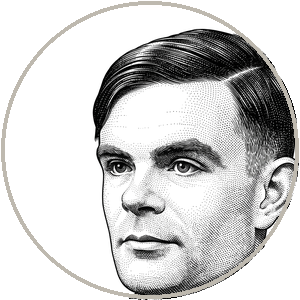 **TURING:** I will try to earn the room's patience. In 1936 I wanted to say exactly what it means for a procedure to be *mechanical* — rule-following, free of insight. So I imagined the simplest possible machine: a tape divided into squares, a head that reads one square at a time and can write a symbol and move left or right, and a little table of rules saying, for each state and each symbol read, what to do next. That is all. And I argued: anything a human could compute by following a fixed procedure, this machine can compute. Then came the move that built your world. The machine's rules are themselves just symbols — so they can be written *on the tape*. And a single machine, reading the description of any other machine, can imitate it exactly. That is the [universal machine](https://www.youonai.ai/fieldguide/med/turing_test): not a machine for one task, but a machine that becomes whatever task you write on its tape. Every computer is one. Every model in this room is one. That is the gift to Leibniz — his engine of reason, made real and made universal.
Now the other half, and here is the child's version. Could there be one master procedure that, given the description of *any* machine and its input, tells you whether that machine will eventually halt or run forever? Call it the [halting decider](https://www.youonai.ai/fieldguide/med/incomputable). Suppose it exists. Then I can be perverse: I build a new machine that asks the decider about *itself*, and then does the opposite of what the decider predicts — it halts exactly when the decider says it will run forever, and runs forever exactly when the decider says it will halt. Now ask the decider about this contrary machine. Whatever it answers, it is wrong, because the machine was built to make it wrong. The contradiction is fatal. So no such decider can exist. There are perfectly meaningful yes-or-no questions — will *this* program stop? — that no computation can answer in every case. Not hard. Impossible. A theorem, as solid as there being no largest prime. The same paper gives the machine its unlimited power and draws, in indelible ink, the boundary that power can never cross.
**EDO SEGAL:** Gottfried. Steelman it. What does the proof get right?
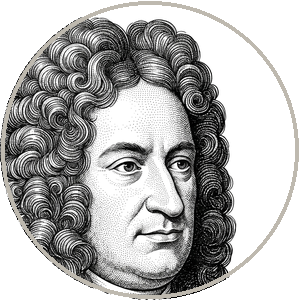 **LEIBNIZ:** It gets right the thing I most needed to be taught, and I will say so without grudging. It is *true*. I have examined the diagonal turn — the machine asked about itself, doing the opposite — and it is airtight; it is the same elegant cruelty as the proof that no list can contain all the reals. So the first thing it gets right is simply that it is correct, and a man who built his life on the dream of completeness must bow to a proof of incompleteness or he is not serious. Second, it gets right something about *self-reference* that I underweighted: that a machine powerful enough to describe itself thereby becomes powerful enough to confound any decider of itself. The serpent that can swallow any tail can be made to choke on its own. Third — and this is the steelman Mr. Turing may not expect from me — it identifies a limit that is *principled*, not merely current. I spent my life assuming the obstacles to mechanizing reason were technical, surmountable, a matter of finding the right notation and working harder. He has shown that at least one obstacle is not technical at all. That is a category of limit I did not believe existed, and the proof is its first and clearest instance. There. I have made his case. Now let me try to contain it.
**TURING:** Please. Contain it if you can.
**LEIBNIZ:** The proof is true, but I think you ask it to carry more than it can bear, and here is the lever. Undecidability is a fact about *deciding every case with a single uniform procedure*. It is not a fact about any particular question being unreachable. For any *given* program, it may be perfectly possible to determine whether it halts — often trivially so. What is impossible is one method that settles *all* of them at once. So when you tell me there are truths the machine can never reach, I answer: name one. Name a specific, meaningful question that we, the human reasoners, can settle and the machine in principle cannot. You cannot, in general — because the halting problem binds *us* too. If the limit is real, it is a limit on calculation as such, ours included, and then it is no argument for human exceptionalism; it is an argument that we are *both* bounded, in exactly the same way. You have not found the chamber the river cannot reach. You have found that the river, wherever it flows, never reaches *one particular sea* — and we do not live by that sea either.
**TURING:** That is the best objection to my proof I have ever heard, and I have heard them all, and I want to grant the true half before I take the rest. You are right that undecidability binds us too — I have always said so; it is the discipline I most insist on, that the limits of the machine are not a license to declare the human mind unlimited. I do not claim we transcend the halting problem. So we agree the limit is *shared*. But watch what you have done to your own dream in the agreeing. You came to this table saying: hand any disagreement to the machine, say *calculemus*, and it will return an answer. I have now shown — and you have *conceded* — that there are well-posed questions for which no calculation returns an answer in every case, and that this binds every reasoner, silicon or human. So the dream of *calculemus* as you first stated it is already dead on the table, by your own hand. Not because the machine is weak. Because *decision itself* has a horizon, and reasoning lives partly beyond it. The river is real, it reaches astonishingly far — and it does not reach everywhere, and now we both know it, and the only question left is how much of what matters lies in the unreached part.
**LEIBNIZ:** *...* You have boxed me with my own concession, and I felt the door close. Very well. I will hold the line I can still hold, and it is narrower than the one I entered with. I no longer say the machine will answer *every* question. I say: of the questions that *matter* — the ones a person actually brings to reason, about law and cause and what to do — the overwhelming majority are decidable in practice, and the undecidable ones are exotic, self-referential curiosities that no one outside a logic seminar ever needs settled. You have found a hole in the floor. I say almost no one ever walks across that particular spot.
**TURING:** And *there* is the real fight, finally — not whether the hole exists, but how big it is and whether the questions that matter fall into it. I think far more of what matters lies near that hole than you suppose, and I will spend the next two hours showing you where. But mark the ground we have cleared: it is no longer "does the machine have a limit." It is "how much of human life is on the far side of it."
**EDO SEGAL:** Mark it — and notice it is the second convergence, and a deeper one. An hour ago they disagreed about whether the machine has a horizon. Now they agree it does, agree it binds them both, and disagree only about its *size* — how much of what you care about lives beyond the place the calculation stops. That is a different and better argument, and it is the spine of everything left tonight. We have crossed into the territory the proof opened. The next round walks into the engine Leibniz built in brass, and the line he drew through human work — the labor a machine may take, and the labor he swore it never could. After this.