Closing Statements

 EDO SEGAL: Before your final words, the question I bookend every debate with, because it's the one that survives the night. Name the strongest thing the other said tonight. Not the most agreeable — the one you'll still be arguing with next month. Donna.
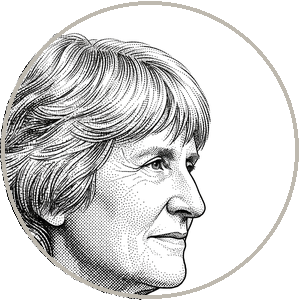 HARAWAY: The strongest thing Ray said is that I've been fusing two things that don't belong together — the child's removable death and my own constitutive finitude — and using the moral weight of the first to defend the second. I'll be arguing with that for a long time, because I think he's partly right and I don't yet know how right. He found a place where my compassion and my metaphysics were leaning on each other in a way that might not hold. That's a real wound and I thank him for it.
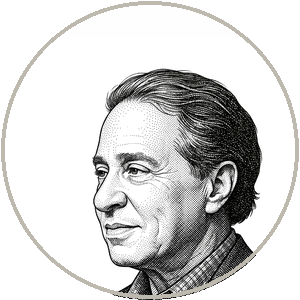 KURZWEIL: And the strongest thing Donna said — the one I'll genuinely lose sleep over — is that a self that can be copied, rolled back, and restored from backup cannot be held, and that a self that cannot be held cannot be accountable, and might not even be a self worth being. I've spent forty years on the engineering of preserving the pattern and almost none on whether the preserved pattern can still be answerable. She's put a crack in the foundation, not the façade. I'll be in that crack for years.
EDO SEGAL: Before the last word, one more pass through the kitchen table, because that's who all of this is finally for. Three hours ago I asked whether, after the merge, there's still a you who can be held responsible — and whether that you is the animal or the pattern. I want each of you to answer it now as if my twelve-year-old were the one asking, not me. Not the philosophy. The thing she actually needs to hear before she goes to sleep, in a world where the boundary between her and her tools is going to keep getting softer her whole life. Donna.
HARAWAY: I'd tell her: the softening is real, sweetheart, and it's not the end of you — you were always made of more than just yourself, full of the people and the creatures and the languages that built you, and the machine is one more of those. But here's the one thing to hold onto when it gets so soft you can't feel your own edges. Stay reachable. Stay where the people who love you can find you and where the people you might hurt can reach you. Don't let any tool, however wonderful, take you somewhere you can't be held — not held accountable, and not held in someone's arms. Those turn out to be the same place. The self worth being is the one that can still be reached.
KURZWEIL: And I'd tell her almost the same sentence with the opposite ending, which is the whole evening in miniature. I'd say: the softening is real, and it's the most exciting thing that has ever happened, and you are going to be able to become more than any person before you ever could — to think with minds vaster than your own, to maybe one day not have to lose the people you love the way I lost my father. Don't be afraid of becoming more than human, because becoming more is the most human thing our kind has ever done. Just — and here's where Donna got into my foundation tonight — make sure that whatever you become, you stay someone who can still be answered to. Reach further than anyone before you. And stay reachable while you do it. I didn't used to think I had to say that second part. I'll be saying it for the rest of my life now, however long that turns out to be.
HARAWAY: That's the closest we'll come to agreeing, Ray, and it's not nothing — "reach further, stay reachable." We just weight the two halves opposite, and a life is which half you reach for when they finally conflict.
EDO SEGAL: Then give the reader your last word. In character, no hedging, the thing you'd want a twelve-year-old to carry. Ray first.
KURZWEIL: Here's mine, to the twelve-year-old. You have been told, by everyone, that death is natural and you should make your peace with it. I want you to hold that advice very loosely, because every generation before yours was told the same thing about every limit that has since fallen — the sound barrier, the smallpox, the four-minute mile, the idea that a machine could ever speak your language. They all made their peace with limits that turned out to be temporary. The curve is real, and it is steeper than your intuition will ever let you feel, and in your lifetime the line between you and the tools you think with will keep thinning until the question "where do I end" stops having an obvious answer. Don't be afraid of that. You are not your meat. You are the pattern the meat is running, and patterns can be carried forward. We are the part of the universe that has started to wake up and ask why it has to die — and I do not think the universe, having finally asked, is going to settle for the old answer. Be brave enough to want more than you were told to want. The limits are not as fixed as they look. They never have been.
EDO SEGAL: Donna.
HARAWAY: Here's mine, to the same twelve-year-old, and notice it's not the opposite of Ray's, it's the part he left out. You are not your meat alone — Ray's right about that, you were never a clean bounded thing, you're already a knot of relations, full of bacteria and language and other people and the dead who made you. But that means the answer to "where do I end" was never going to be found by leaving the body. You end, and begin, in your kin — in everything you're entangled with and answerable to. So when the tools get so good that you can imagine floating free of all of it, copied and backed up and safe, I want you to remember that a self nothing can hold onto is not free, it's lost. Stay catchable. Stay findable. Stay worth amplifying in the only way that means anything — answerable to the people and the soil and the creatures your life is braided into. Don't climb out of the world to escape its trouble. Stay with the trouble. It's the only place anyone has ever loved you, and it's the only place you can love anyone back. You're not going to be posthuman. You're going to be a good ancestor. That's better. I promise you that's better.
EDO SEGAL: Sixty seconds, as I promised at the door, and no winner, because I don't believe in them and you didn't come here to be scored.
I came into this evening with a sentence I'd written at three in the morning — that the boundary between me and the machine had gone soft — and I leave with both of its readings sharpened to a point. Ray spent three hours proving that the softening is the beginning of an escape: that the pattern can be carried past the meat, that death is an engineering problem and the engineering is coming, and that to refuse it on faith is the same flinch our species has always made before a limit fell. Donna spent three hours proving that the same softening is an invitation to stay — that a self lifted free of its body is not saved but lost, unfindable, unholdable, unaccountable, and that the mortal, situated, kin-bound creature is not a cage to escape but the only thing that has ever been able to mean, or be loved, or be charged with what it owes. And then — the part I'll remember — they found the seam. The single coordinate where they actually divide: not suffering against transcendence, but the line between relieving the body and abolishing it. Cure the body, Donna said. Don't abolish it. And Ray, who came to abolish it, conceded there might be a seam he'd been sailing past in the dark.
So here is what I can hand you, from the death cross, where this whole book lives. You cannot ride past this floor on either of their certainties. You have watched the most committed immortalist alive and the most committed theorist of staying mortal climb the same tower from opposite stairwells and meet, not in agreement, but in a shared confession that the other was holding a piece they'd dropped. Take it home to the kitchen table. When your kid asks whether the machine will let people live forever, you now have the honest answer, which is a question back: forever as what — a pattern that's safe and copyable and answerable to no one, or a creature that stays findable enough to be held? When you sit at three in the morning and feel the boundary go soft, you get to decide, every night, which way you let it dissolve — toward the boat that leaves the water, or toward the wading-in that keeps you kin. Nobody at this table will decide it for you. That was the point of bringing two people this good and refusing to crown one. The machine is going to amplify whatever you are. So the question my book asked from its first page comes back changed, and you carry it up the stairs in your own hands: when you can be amplified past your own limits, what is the you that you would actually want to save — and is it the one that can finally be held?
Donna Haraway. Ray Kurzweil. Thank you, both, as the mortal, magnificent, entangled human beings you are. The room is yours to keep arguing in. Goodnight.
Two prophets of fusion. One irreconcilable seam.
In this three-hour debate, hosted and moderated by Edo Segal, Donna Haraway and Ray Kurzweil meet over the question their life's work makes unavoidable: what should the human–machine merge become? Haraway, who taught a generation to embrace the cyborg, refuses to leave the body — she wants us situated, accountable, kin to the world we are entangled with, blurring boundaries to undo domination, not to escape mortality. Kurzweil, who has spent decades charting the Singularity, wants exactly the exit she rejects: mind lifted free of biology, uploaded, backed up, running beyond the limits of flesh. Between them sits the reader, at the death cross of the [YOU] on AI tower, forced to choose which self is worth amplifying.
They share one word — fusion — and hear opposite liberations inside it. One hears the dissolving of boundaries that undoes domination. The other hears the deleting of boundaries that ends disease and death. For three hours they fight over your own body: whether to climb out of it to escape its trouble, or stay inside it, mongrel and mortal, to mean anything at all. Nobody wins. That was never the point. The point is the seam they uncover live — the precise coordinate where relieving the body stops and abolishing it begins — and the question they hand you, intact, to carry up the stairs. Climb in. Decide where you'll stand. Part of the [YOU] on AI collection.
Donna Haraway is a biologist who became one of the most influential philosophers of science and technology of the past half-century, Distinguished Professor Emerita in the History of Consciousness program at the University of California, Santa Cruz. Her 1985 "A Cyborg Manifesto" recast the human–machine hybrid not as escape from the body but as a way to stay in it — situated, kin-bound, accountable. Across "Situated Knowledges," "The Companion Species Manifesto," and "Staying with the Trouble," she has insisted that we are compost, not posthuman: mortal, entangled, answerable, and responsible for making kin in a damaged world.
Ray Kurzweil is an inventor, futurist, and the most prominent prophet of the Singularity. The author of "The Age of Spiritual Machines," "The Singularity Is Near," and "The Singularity Is Nearer," he formulated the Law of Accelerating Returns — the claim that information technology improves at an accelerating exponential rate — and used it to forecast, with a track record that has unsettled his critics, machines mastering human language, artificial general intelligence by 2029, and a 2040s merger in which biological and non-biological intelligence fuse. He holds that mind is substrate-independent information, that death is an engineering problem, and that longevity escape velocity is within reach.
Edo Segal has spent five decades building at the technology frontier — from games written in Assembler to expert systems, to companies through every platform shift, to Napster. He is the author of [YOU] on AI, written in open collaboration with the AI it describes, and the host of The Debates: long-form collisions between the minds shaping the machine age. He moderates the only way he knows how — stake declared, scars showing, no winner called.
Hosted and moderated by Edo Segal. A volume in the [YOU] on AI — The Debates series — youonai.ai