What Cannot Be Copied

 EDO SEGAL: Donna, you said a self that cannot be found cannot be held. Ray's answer to mortality is the upload — copy the pattern, outrun the body. Your answer isn't a different technology. It's a different word. Kin. Compost. Making-with. I want you to tell me — the way you'd tell a smart fifteen-year-old — what you are offering instead of the upload, and why it's not just a poetic way of accepting death.

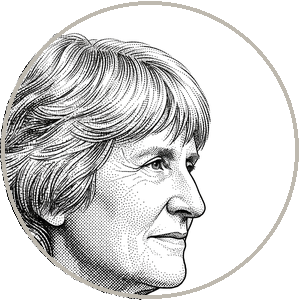 HARAWAY: It's not acceptance of death. It's refusal of the frame that makes death the enemy in the first place. Here's the fifteen-year-old version. Ray sees one self, your self, and asks how to make it last forever. I look at any self and see that it was never one and never alone — you are a community. There are more bacterial cells in your gut than human cells in your body; you could not think a thought without the mitochondria that were once free-living organisms and are now so woven into your cells that neither of you survives apart. You are already a companion-species collective wearing a single name. So the question "how do I, the individual, escape death" is built on a fiction — the bounded individual — that biology has never honored. Kin is the truth under that fiction. We make-with. We become-with. And when this particular knot of relations comes undone — when I die — I don't vanish. I compost. I become the conditions for what comes next. "No, I'm not posthuman, I'm compost." The dead leaf doesn't get uploaded. It becomes the soil that grows the tree that drops the leaf that becomes the soil. That's not me coping with mortality. That's me telling Ray his immortality is the lonelier thing — one self, preserved forever, accountable to no one, having opted out of the only kind of continuity that was ever real, which is the continuity of the living passing into each other.

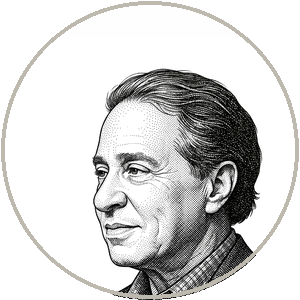 KURZWEIL: That's genuinely beautiful, Donna, and I want to honor it before I take it apart, because I think it's the most serious thing offered against my position all night. Here's where it fails for me. Compost is a consolation we tell ourselves because until about five minutes ago in cosmic time we had no alternative. Of course every wisdom tradition learned to make peace with death — death was non-negotiable, so the adaptive move was to find it beautiful. But the leaf would not choose to be soil if the leaf could choose to keep seeing the spring. You're describing a magnificent rationalization of a constraint, and the constraint is lifting. When my father died, I didn't experience him "composting into the conditions for what comes next." I experienced the irreversible deletion of a specific, irreplaceable pattern — his humor, his memories, the way he heard music — gone, not into the soil, into nothing. I've spent decades building a system that can hold a conversation in his voice from everything he wrote. Is it him? Not yet. But "kin" and "compost" are what you say when you've decided in advance that bringing him back is impossible. I haven't decided that. And I think the people who tell the grieving that loss is secretly beautiful have made a peace I'm not willing to make on behalf of everyone who'd rather have their father.

HARAWAY: No. I'll let that land, because it's real, and because you just told me about your father and I'm not going to fence with your father. But I'll say the hard thing gently. The pattern of your father that you built from his writings is kin — it's a companion species you've made, a real relation, and I honor it. What it is not is him rescued from death, and the danger of calling it him is that it teaches us to treat the irreplaceable as restorable, and a culture that believes loss is restorable is a culture that stops protecting the things it can actually lose. I don't tell the grieving that loss is beautiful, Ray. I tell them loss is real, which is the opposite of your comfort and, I'd argue, the more loving one — because it says the person mattered enough to be unrepeatable. Your immortality, if it worked, would make everyone repeatable. And a repeatable person is a person you don't have to be careful with.

KURZWEIL: I want to push on "repeatable," because I think you've smuggled the conclusion into the word again — you'd charge me for "just," so I'll charge you for "repeatable." A backup is not a spare. If I'm restored from a backup after an accident, I'm not "repeatable" any more than you're "repeatable" because you wake up every morning as a continuation of yesterday's pattern after the little death of sleep. The restored me is the same one, continued — there was never a second one walking around to make me cheap. You're picturing a warehouse of identical Rays and recoiling, correctly, from a world that careless. But that's not the proposal. The proposal is that the single irreplaceable pattern stops being deletable by a virus or a clot or a drunk driver. You're describing duplication and calling it my immortality. They're not the same, and the difference is exactly the difference between a copy and a continuation that you and I have been circling all night.

HARAWAY: Except you can't have the continuation without licensing the copy, Ray — that's the trap, and it's not rhetorical, it's technical. The instant a self is information that can be read off and restored, it can in principle be read off and restored twice, and you don't get to keep the comforting single-continuation story while the technology that enables it also enables the warehouse. The body's gift is that it makes the warehouse impossible — there's exactly one, it can't be forked, and that scarcity is the whole source of its preciousness and its accountability. The moment you make the self backup-able to save it from the drunk driver, you've made it fork-able, and you cannot un-ring that bell by promising to be tasteful about it. The architecture decides, not your good intentions. Staying with the trouble means staying with that — the trouble that the very move that saves you from death dissolves the singularity that made you a someone.

EDO SEGAL: That is the strongest exchange of the night, and I'm going to break my own rule and say nothing clever about it. Two people just told the truth about death to each other's faces. Ray: the constraint is lifting and the wisdom that worshipped the constraint is a rationalization we should be brave enough to drop. Donna: the constraint is what makes the thing irreplaceable, and a world where nothing is lost is a world where nothing is precious. You cannot both be right. Hold it. We've reached the floor this whole book was built around — the death cross, where the machine's line crosses ours. After the break, I make you tell me what that crossing actually deletes.