Closing Statements

 EDO SEGAL: Three hours ago I asked whether the fusion makes you freer and stranger, or wires you more tightly into someone else's tower. We've fought it through the cyborg and the surveillance circle, through the god trick and the hidden labor, through the death cross and the monoculture, through the mirror and the leash and the door. The question is still standing — which both of you, for different reasons, would tell me is the correct result. So we end the way long conversations should end. Each of you gets the floor, uninterrupted, to say the thing you most want carried out of this room. But first the bookend. Name the strongest thing the other said tonight — the one you'll still be arguing with next month. Meredith first this time.
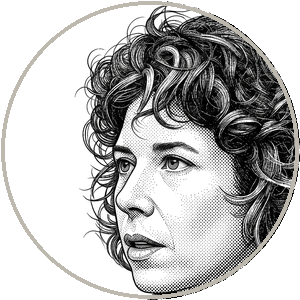 WHITTAKER: "The sunrise is the apocalypse the comfortable prefer." I came in thinking my fight was against the doomers — the existential-risk crowd, the people selling the apocalypse. Donna made me see that the optimists are running the same play, that the booster and the doomer are twins who both believe in The Event precisely so they can be excused from the present, and that my own allies in the no-more-doom fight include a lot of people whose sunrise is just another way of not doing the work. That reframing is going to cost me some comfortable alliances and I think it's correct, and it's been sitting in my chest since she said it. And — since the chair will let me have two — the thing about the engineers who walked out having read her without knowing it. I have spent years thinking the walkout was a triumph of organizing over theory. She made me see the organizing stood on the theory, that you cannot get twenty thousand people to refuse their own innocence without someone first teaching a generation that innocence was never available. I'd resisted that my whole career. I'm not resisting it anymore.
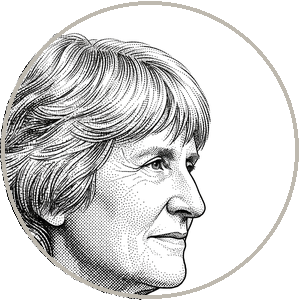 HARAWAY: "An ocean instrumented to predict the fish." I have spent forty years insisting that no apparatus of control is ever total, that the leakage and the sabotage and the ungovernable specificity of actual bodies always exceed the system's grasp — and Meredith made me feel, really feel, the difference in kind between the asymmetries I've theorized and the asymmetry between a person and a planetary predictive infrastructure built specifically to metabolize her resistance into training data. My companion-species hope assumes a facing, a mutuality, a scale a body can grasp. She showed me an apparatus engineered to deny exactly that, and I am going to be arguing with that image for a long time, because it's the strongest case I've ever encountered that this fusion might be different from every entanglement in the history I know. And — my second, since you took two — when she asked what my yes has ever stopped, and I had to say: less than it should have. That's going home with me. I've been comfortable in the soil-building role for too long, and a thinker who only ever builds soil and never once makes power flinch has to ask whether the soil is feeding the movement or feeding the thing the movement fights.
EDO SEGAL: Now the floor is yours. Donna Haraway — you opened the evening. Meredith closes it.
HARAWAY: Thank you — for the evening, and Meredith, genuinely, for the fight, which was better than the agreement. I want to leave the reader with the thing I'm most afraid they'll mishear, because they've misheard it for forty years. When I say we are already cyborgs, that the boundary is leaky, that the fusion can be a door — people hear permission. They hear: relax, merge, it's natural, it was always going to be this way. That is the opposite of what I mean, and the machine's owners have made a fortune on the misreading. What I mean is the hardest thing I know how to say: that there is no pure self to retreat to, no innocent ground to stand on, no outside the entanglement from which to judge it safely — and that this is not a reason to surrender but the precondition for responsibility. You cannot be accountable for a fusion you pretend isn't happening. The purity myth — the fantasy that you are a bounded self merely using a tool — is what lets you off the hook for what the tool does in your name and what it costs the people you'll never see. So my charge to you is not to merge more or merge less. It is to stay with the trouble of the merger you are already inside: to refuse the sunrise and the apocalypse both, to make kin with the data worker and the displaced and the child being raised by the smooth machine, to build the practice and back the bill and tend the compost, and to never, ever accept that the leash the current owners have built is the only possible shape of the door. You are not a pure human losing yourself to a machine. You are a cyborg, as you always were, and the only question that was ever worth asking is the one I'll leave you with: what kind of cyborg, accountable to whom? The trouble is the practice. The practice is the trouble. Stay in it. That's the whole of what I know.
EDO SEGAL: Meredith.
WHITTAKER: I spent more than a decade inside the machine, and the most important thing I carried out the door is not a fact about the technology. It's a fact about responsibility. Everyone wants AI to be magic, because magic has no owner, and a thing with no owner is a thing no one can be held responsible for — its harms become weather, its biases become accidents, its concentration of power becomes the inevitable shape of progress. That is the lie I have spent my life refusing, and it is the lie this whole moment runs on. So here is what I want you to carry up the stairs, and it's the opposite of magic. The fusion you're feeling is not a force of nature and it is not your personal metamorphosis. It is a product, built by specific people, on stolen text and hidden labor and concentrated compute, deployed to serve interests that are not yours, and every single part of that is a choice somebody made and could have made differently. Which means it can be made differently. The machine does not decide. The technology does not choose. The trajectory is not written in the silicon — it is written in ownership, in business models, in who holds the power and whether the rest of us find the will to contest it. I know it can be contested, because I've done it — twenty thousand people standing up at once, an encrypted tool that collects nothing, a refusal that became infrastructure. Donna is right that you are already fused, already a cyborg, and I'll give her that whole. But do not let anyone tell you the fusion is freedom by default. By default it is a leash, and the door is real but you have to build it, against the money, on purpose, together. So look up from the screen. See who owns the floor you're standing on. And if the answer is unacceptable — and it mostly is — find the others, and stand up, and walk out. That's the only freedom I've ever found that was actually a door.
EDO SEGAL: Sixty seconds, as promised.
I came into this evening with a sentence I'd written at three in the morning — I felt met — and I leave with both of its readings intact and sharpened past comfort. Donna spent three hours proving the meeting was real, that you are genuinely a hybrid now, genuinely transformed, and that the only honest response is to be accountable for the cyborg you've become rather than mourning a purity that never existed. Meredith spent three hours proving the meeting was owned — that the warmth you felt was measured and optimized and sold, that the floor you're standing on belongs to five companies, and that the freedom of the fusion is mostly counterfeit until somebody does the enormous work to make a different kind. You'll notice neither of them told you the comfortable thing. Neither of them told you to relax and merge, and neither told you to unplug and flee. They told you the harder thing, from opposite banks, and it was the same thing: that the fusion is happening, that it is not innocent, and that what it becomes is not up to the river. It's up to who owns the hinges, and whether you fight for the door.
So here is what I can tell you, from the rung where the orange pill dissolves on the tongue and this whole debate lives. You will not climb past this floor by waiting for these two to settle it — you've just watched the two best in the world fail to settle it, and refuse to, on principle, because the disagreement is the most honest map of the territory you're going to get. There is no elevator here; there is only the staircase, and this is a step you have to take on your own legs. You climb by deciding what you will do while it's fusing with you: what surplus you'll fight to keep, whose labor you'll refuse to disappear, what friction you'll protect in your children, what leash you'll decline to call a door, and what door you'll do the enormous work to build. Donna says: what kind of cyborg, accountable to whom? Meredith says: who owns it, and will you contest them? Hold both questions in the same hand — that holding is the climb. The machine is threading itself through you right now, as you close this book. The only thing the two people in this room agreed on without reservation is that someone is home in you — and that whether you stay free inside the fusion is not a fact about the machine. It's a practice, and a fight, and it's yours. The question my book asked from its first page sounds different now than it did three hours ago, and I'll leave you on the staircase with it: when the machine fuses with you — are you worth the freedom you'll have to fight for?
Donna Haraway. Meredith Whittaker. Thank you. The door is yours to build now. Goodnight.
The merger is happening to you right now. They cannot agree whether the door locks behind you.
Two women who refuse to let you sleep through the AI moment, in one room for three hours. Donna Haraway, who taught a generation that we were always already cyborgs — leaky, hybrid, gloriously impure — sits across from Meredith Whittaker, the technologist who has spent her career exposing AI as concentrated corporate and surveillance power wearing borrowed poetry. Haraway hears liberation in the blurring of human and machine. Whittaker hears the alibi of the few who own the compute. Hosted by Edo Segal, this is not a panel; it is a collision — myth against material, manifesto against infrastructure, the door against the leash. It is the conversation you need on the rung where the orange pill takes hold and you decide, finally, what the merger means for YOU.
Donna J. Haraway (1944–) is an American feminist philosopher, historian of science, and theorist of technoscience whose work reshaped how a generation thinks about the boundaries between humans, animals, and machines. Trained as a biologist at Yale before turning to the philosophy and history of science, she published "A Cyborg Manifesto" in 1985 — arguing that the hybrid of organism and machine dissolves the dualisms of Western thought and opens new possibilities for politics. Her subsequent works include Primate Visions, Modest_Witness@Second_Millennium, The Companion Species Manifesto, When Species Meet, and Staying with the Trouble: Making Kin in the Chthulucene. Her concepts — situated knowledges, the god trick, companion species, staying with the trouble, compost, and the monocultures of the mind — are foundational across science and technology studies, feminist theory, environmental humanities, and critical AI studies. She is a Distinguished Professor Emerita at the University of California, Santa Cruz.
Meredith Whittaker is an American technology researcher and executive who has become one of the most consequential critics of the AI industry. After a degree in rhetoric and English literature from the University of California, Berkeley, she spent more than a decade at Google, where she founded the company's Open Research group and co-founded Measurement Lab. In 2017 she co-founded the AI Now Institute at New York University with Kate Crawford, pioneering the study of AI's social consequences; in 2018 she was a core organizer of the Google Walkout, in which more than twenty thousand employees protested the company's surveillance and military contracts. She later advised the chair of the Federal Trade Commission on artificial intelligence, and since 2022 has served as president of the Signal Foundation, leading the encrypted-messaging organization that stands as a working alternative to the surveillance business model. Her influential writings include "The Steep Cost of Capture" and "Origin Stories." She was named one of TIME's hundred most influential people in AI.
Edo Segal has spent five decades building at the technology frontier — from games written in Assembler to expert systems, to companies through every platform shift, to Napster. He is the author of [YOU] on AI, written in open collaboration with the AI it describes, and the host of The Debates: long-form collisions between the minds shaping the machine age. He moderates the only way he knows how — stake declared, scars showing, no winner called.
Hosted and moderated by Edo Segal. A volume in the [YOU] on AI — The Debates series — youonai.ai