Closing Statements

 EDO SEGAL: Three hours ago I asked whether the machine that plays the move no human could see has captured your intuition or counterfeited it. We've fought it through Go and proteins, the octopus and the body, the five stages and the hammer, the tree and the moon, abundance and consciousness, and the question is still standing — which both of you, for opposite reasons, would tell me is the right result. So we end the way long conversations should: each of you gets the floor, uninterrupted, for the thing you most want carried out of this room. Then I take sixty seconds and we turn the lights off.

But first, the bookend to the envy question I opened with. Each of you: name the strongest thing the other said tonight. Not the most agreeable — the one that got past your defenses, that you'll still be arguing with next month. Demis first.
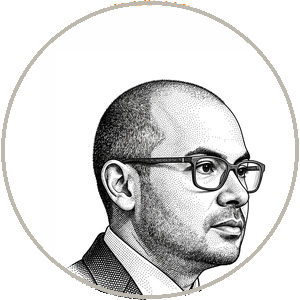 HASSABIS: The doing and the being were never the same argument. I came in certain that performance was the whole game — that if I could show you the system doing the thing, the question of understanding would dissolve into the demonstration. And the professor held a distinction I kept trying to collapse and couldn't: that I keep winning the argument about what the machine can do and announcing I've won the argument about what it is, and that these are different arguments, and the second one my method may structurally never reach. I don't fully accept it. But I can no longer pretend the folded protein answers it, and I'd been pretending that for years. He took my best evidence and showed me what it isn't evidence of, and that's been sitting in my chest since the sixth chapter and it's coming home with me.
EDO SEGAL: Hubert.

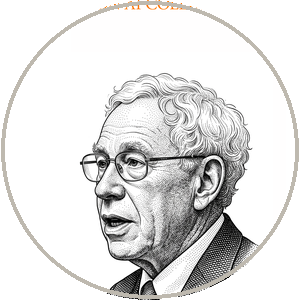 DREYFUS: The thing he said in the Crossing — that he can't tell what he's built, and that not knowing might be the most dangerous thing about it. I spent fifty years insisting the difference between doing and being is real, and I argued it as a philosopher argues, in seminar rooms, as though the stakes were conceptual. Demis showed me the stakes are not conceptual. He is about to mass-produce things that sit on one side or the other of a line none of us can locate, and the epistemics fail exactly where the moral weight becomes infinite. I came to vindicate a distinction. I'm leaving having watched the man building the machines take my distinction more seriously than I did — practically, terrifyingly, in a way I never had to, because I was never the one with my hand on the lever. That reordered something in me, and I'm too old for many things to reorder me. That one did.

EDO SEGAL: Now the floor is truly yours. Hubert — you've waited fifty years and you've been briefed on a future you didn't live to see. You open. Demis closes.
DREYFUS: Thank you. And Demis — genuinely, for the fight, and for the honesty in the last hour, which I did not expect and will not forget. You were told tonight, by one of the great engineers of the age, that the boundary between you and the machine keeps moving, and that the wise bet is it will move again. I want to leave you with the boundary that I think does not move, and with why it matters that you hold it.

Somewhere a child is learning to ride a bicycle. She wobbles, she falls, it hurts, she's afraid, she tries again — and one afternoon, without being able to say how, she simply rides, and the knowing is in her body now, earned through the fear and the falling, hers in a way nothing given to her could ever be. That is what understanding is. Not the residue of it — the having of it, in a body, through a history of caring, with skin in the game. The machines have become extraordinary at producing the residue. They can tell you everything about riding a bicycle and they have never wobbled, never fallen, never been afraid, never had an afternoon. And here is my charge to you, and it's more practical than philosophical: the question "is anyone home?" is not a riddle for laureates. It's a discipline for you, every day now. When the tool hands you a fluent answer, ask — does it understand this, or only echo the shape of understanding? When it does your work, ask — am I still becoming capable, or only becoming productive? Protect the friction. Guard the falling. The bicycle has to be learned in the body or it isn't learned at all, and a civilization that forgets this will produce a generation that can describe everything and ride nothing. You are not obsolete. You are the only place the understanding ever lived. Do not hand it away because the handing is smooth.
EDO SEGAL: Demis.

HASSABIS: I've spent my life trying to understand intelligence by building it, on the wager that you know what a mind is when you've made one. And the strangest thing I've learned — and tonight sharpened it — is that the building keeps answering the question I asked and raising the one I didn't. I asked what intelligence is, and we built machines that have a great deal of it, by any test that ever did any work. And in doing it we ran straight into the professor's question, the one no benchmark touches: whether there's anyone there while the intelligence happens. I don't know. I've been honest about that all night. What I do know is this: the tool is real, it is the most powerful instrument our species has ever made, and it is going to fold the proteins and design the medicines and accelerate the science whether or not anyone is home in it — and the meaning of all that capability depends entirely on what we do with it, on whether the humans pointing it stay worth pointing it.
So take the thing seriously — not the hype, the professor's right about the hype — the thing. Something genuinely new is in the river, and Edo's metaphor is better than he knows, because rivers don't negotiate; they find the channel. We are, for a while longer, the only confirmed minds in the loop, the only place where the understanding is certain and the caring certainly happens. Whatever the machine turns out to be, that makes the next few years ours to shape, and the way we shape them is by refusing both lullabies — the one that says the machine is everything and the one that says it's nothing. It's neither. It's a tool of unprecedented power, pointed by beings who can still, for now, tell the difference between solving a problem and living a life. Keep being one of those beings. That's the whole instruction. I built the thing, and I'm telling you: stay the kind of mind that's worth amplifying.
EDO SEGAL: Sixty seconds, as promised.

I came into this evening with a move in Go I couldn't put down, and I leave with both readings of it intact and sharpened. Demis spent three hours proving that intuition was buildable — that the thing we called magic was a learnable function, and that the machine which found move 37 had captured something we genuinely thought was ours. Hubert spent three hours proving that capturing the output of intuition is not the same as capturing the intuition, because the intuition was a being's, in a body, with a stake — and that the residue, however perfect, has no one inside it. You'll notice neither of them told you the comfortable thing. The comfortable thing was that the machine is obviously just a tool, or obviously a rising mind. They left you, instead, with a machine that does what minds do and may or may not be anyone while it does it — and with the discovery, in the last hour, that the two men best equipped on earth to settle that question cannot settle it, and that their failure is not a failure of intellect but an honest map of a territory none of us has crossed.
So let me route it through the place it actually lands. A parent sits at a kitchen table, and her twelve-year-old is using one of these tools to do his homework, and it's good — better than the parent could do — and the boy is learning fast. And the question that should keep that parent awake is not whether the machine is smart. We answered that tonight: it's smart, by every test that means anything. The question is the one Hubert handed us with the bicycle and Demis handed us with his own sleepless honesty. Is my child still becoming something while the machine does the work — still wobbling, still falling, still earning the knowing in his own body? Or is he becoming a person who can describe everything and ride nothing, accompanied by a tool that has never fallen and never will, and may not be anyone at all?

You cannot climb past this floor by waiting for the experts to settle it. You've just watched the two best in the world fail to, magnificently. You climb by deciding what you will do under uncertainty — what friction you'll protect, what understanding you'll refuse to outsource, what you'll keep doing in your own body even when the machine could do it smoother. The machine has already crossed the line we thought was ours. Whether it took anything real when it crossed, no one at this table could tell you for certain. But here is the one thing they never once disputed, across three hours, from opposite shores: someone is home in you. The whole question the rest of your life will live inside is whether you'll still be there when the machine asks you to leave.
Demis Hassabis. Hubert Dreyfus. Thank you — across the years that should have kept you apart. The room is yours to argue in now. Goodnight.
The engineer who keeps doing the impossible. The philosopher who proved it couldn't be done. One move in Go that decides how high you climb.
Three hours. Two minds who were never meant to share a room. One question that decides how high you climb. Demis Hassabis built the machines that solved Go and folded the proteins of life — proof, he says, that intuition was always computation in disguise. Hubert Dreyfus spent a lifetime proving the opposite: that real know-how lives in the body, in a world that matters, in a place no algorithm can enter. Edo Segal hosts the collision across the death-line — the engineer who keeps doing the impossible against the philosopher who swore it couldn't be done. This isn't a debate you watch. It's the floor of the tower where the orange pill dissolves and you feel the machine cross the line you thought was yours. Sit with it. Then climb.
When the machine sinks the move no grandmaster could see, has it finally captured your intuition — or only counterfeited the one thing that was supposed to be yours alone? Part of the [YOU] on AI collection. Take a side. Change your mind. Then decide whether you'll still be home when the machine asks you to leave.

Sir Demis Hassabis is a chess prodigy turned games designer turned neuroscientist turned architect of the age's most consequential AI breakthroughs. He co-founded DeepMind in 2010 with the mission to "solve intelligence, and then use it to solve everything else," and led the teams behind AlphaGo — whose Move 37 against Lee Sedol the world watched as a machine produced what we had reserved for ourselves and called creativity — AlphaZero, and AlphaFold, which dissolved the fifty-year protein-folding problem and released the structures of more than two hundred million proteins to the world for free. In 2024 he shared the Nobel Prize in Chemistry for that work and was knighted for services to artificial intelligence. He describes AGI as the ultimate general-purpose tool to help us understand the universe.
Hubert Lederer Dreyfus (1929–2017) was an American philosopher at MIT and then the University of California, Berkeley, and the twentieth century's most influential philosophical critic of artificial intelligence. Trained in phenomenology, he became a leading interpreter of Heidegger and Merleau-Ponty and turned their thought on the foundations of AI. From the RAND report Alchemy and Artificial Intelligence (1965) to the landmark What Computers Can't Do (1972), he argued that human intelligence depends on embodied skill, situated coping, and an unformalizable background of shared practice — capacities he held disembodied, rule-based machines could never possess. With his brother Stuart he developed the five-stage model of skill acquisition. Mocked in his lifetime, he was substantially vindicated when symbolic AI stalled exactly where he said it would, and his arguments now appear in standard AI textbooks. He insisted to the end that to understand is not to compute but to be a certain kind of being in the world.
Edo Segal has spent five decades building at the technology frontier — from games written in Assembler to expert systems, to companies through every platform shift, to Napster. He is the author of [YOU] on AI, written in open collaboration with the AI it describes, and the host of The Debates: long-form collisions between the minds shaping the machine age. He moderates the only way he knows how — stake declared, scars showing, no winner called.
Hosted and moderated by Edo Segal. A volume in the [YOU] on AI — The Debates series — youonai.ai