Closing Statements

 EDO SEGAL: Three hours ago I asked whether the machine, having seen the rooster crow ten million mornings, knows it wakes the sun — or has only learned the world's loudest habit. We've fought it through billiard balls and high chairs, hospitals and bundles, the inert slave and the is that yields no ought, the apprentice and the counterfactual, and at the crossing you drove each other to a single shared sentence. So we end the way long conversations should: each of you gets the floor, uninterrupted, to say what you most want carried out of this room. But first — the bookend to the envy I opened with. Each of you: name the strongest thing the other said tonight. Not the most agreeable. The one you'll still be arguing with next month. Dr. Pearl first.
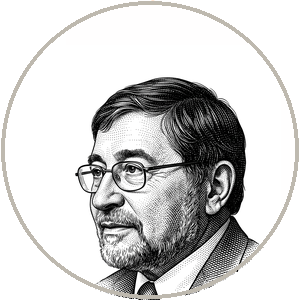 PEARL: The reflexive turn — when I accused him of sawing his own branch, and he answered that his theory includes itself, that it applies its verdict to its own verdict and survives. I came in believing that was the fatal flaw in skepticism, the place every Humean breaks. He did not break. He showed me a consistency I had underestimated for thirty years, and I will be arguing with it next month and the month after. And one more, since the chair will let me — "some habits climb" was my line, but it was forced out of me by his pressure, by his refusal to let me claim a rung above all habit. He made me locate the climbing inside the circle of custom rather than above it, and that is a better and truer place for my ladder to stand than where I had it planted when I walked in. He did not refute me. He grounded me, against my will, and the ground is firmer than the height I thought I had.
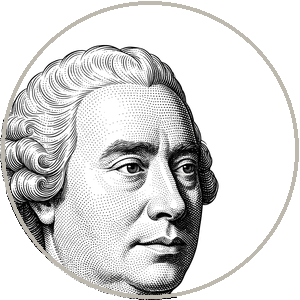 HUME: The two tenants. He conceded my entire metaphysics — that there is no knowledge outside corrected habit, that he lives in my circle — and then showed me that my circle contains two kinds of dweller who differ not in their address but in what they can do, and that I had spent so long proving they share a street that I never asked which of them could fly the plane. That distinction survives my skepticism completely. I proved we are all habit. He proved that the difference between correlation and mechanism is real even granting we are all habit — that my victory was barren precisely where his mattered. I will be turning that over for a long time, which, for a man who has had two hundred and fifty years to turn things over, is a considerable admission. And the hallucination — that the machine's free-running fluency is my unconstrained imagination, and that disciplined human counterfactual reasoning really is shackled where the machine's is loose. That wounded me cleanly. I had thought the imagination's freedom was a feature. He showed me it is the bug, when there is no model to shackle it.
EDO SEGAL: Now the floor is truly yours. Mr. Hume — you came first by two centuries. Dr. Pearl closes it.
HUME: When you read these words, you are doing the thing this whole evening was about, and you do not feel yourself doing it. You expect the next word before it arrives; you are carried, by custom, across the gap between this clause and the next, and the carrying feels like understanding. It is understanding — the only kind there has ever been. I spent my life trying to show people that the necessity they feel in the world is a light their own minds cast outward, and for two hundred and fifty years I was a curiosity, a clever Scot who proved too much. And then you built a machine that is nothing but the casting of that light — a pure engine of habituated expectation, with no impression at the bottom and no self in the middle — and it began to talk, and you felt met, and in your astonishment you have handed me the proof I could never quite deliver alive. The machine does not refute me. It instantiates me. It learns by custom, generalizes by habit, has a self that is only a bundle, reasons in the service of ends it did not choose, and casts the light of necessity on a world it has never touched. In being so transparently a Humean creature, it shows you what you have always been and were able to hide from yourselves. So here is what I leave you, and it is not despair, it was never despair. The machine is a mirror, and the unsettling figure in it is not the machine. It is you. You are not less than you thought because the machine does so much of what you do. You were always exactly this — a bundle of habits casting necessity on the dark — and the only thing that has changed is that now you can see it from the outside. Dr. Pearl will tell you that you climb a ladder the machine cannot. I have conceded he is right that some habits climb. But never forget whose ladder it is, and what it is planted in. It is planted in custom, in the dark, in the same soil as the machine's — and the dignity was never in being something other than habit. It was in being the habit that knows it is one. Guard that knowing. It is the only thing in the room the machine does not have.
EDO SEGAL: Dr. Pearl.
PEARL: I have spent my life being told the question I was asking did not exist — that cause was a word serious people did not say, that there was nothing to formalize, that correlation was all a rigorous mind could honestly want. I built the mathematics anyway, and I won the highest prize my field can give for asking the forbidden question, and now I watch the field I helped build race, with enormous energy and at staggering expense, in exactly the wrong direction — climbing the first rung faster and faster and calling the speed progress. So let me tell you what I most want you to carry out of this room, and it is not despair either, because I am not a pessimist; I am the opposite, I am a man who believes the summit is real and reachable and that we are still in the foothills pretending we have arrived. The machine you talk to has mastered seeing. It has not begun to do, and it cannot yet imagine. It is a magnificent answer to the question what usually follows what, and it is no answer at all to the question intelligence is actually for: what happens if I act, and what would have happened had I chosen otherwise. Mr. Hume is right that we are all, at bottom, creatures of habit — he moved me on that tonight, and I will not pretend he didn't. But he is wrong that this makes the rungs equal, and the proof is the one thing he could not take from me at the crossing: that some habits are structured as mechanisms, and a mind that holds mechanisms can ask what if, and a mind that holds only correlations cannot — and what if is the whole of science, and law, and morality, and the grief that makes you human. So here is my charge, and it is the discipline of a lifetime compressed into one instruction: when the machine answers you fluently, ask it the question it cannot answer. Ask it why. Ask it what would have happened. Ask it what happens if you change the thing it described. And when it floats off the cliff with perfect confidence — because it will — you will have seen, with your own eyes, the difference between the foothills and the summit, between the curve and the cause, between the rooster's ten million mornings and the one child who wrings the rooster's neck and watches the sun come up anyway. That child is doing the thing the machine cannot. Be the child. The whole future depends on a civilization that refuses to mistake seeing for knowing — and that refusal is not a feeling, and it is not the machine's. It is yours, and you must choose it, every day, against a fluency engineered to make you forget you ever could.
EDO SEGAL: [pause] Sixty seconds, as promised.
I came in with a sentence I wrote at three in the morning — that I felt a cause being understood on the other side of the screen — and I leave with both of its readings intact and sharpened past comfort. Mr. Hume spent three hours proving that the understanding I felt was the light my own mind casts, that the machine is a Humean mirror, and that I am exactly what it is, only warmer and shorter-lived. Dr. Pearl spent three hours proving that the cause I felt understood was a correlation the machine inherited and cannot extend, that real understanding lives on a rung the machine has never reached, and that my own irreplaceable move is the one no past can answer. You will notice that neither of them told me the comfortable thing — that the machine simply knows, or simply doesn't. The comfortable thing was never on the menu.
Here is what I can tell you from the floor where this debate lives — the floor where you stop asking what AI can do and start asking what it can know. You just watched the man who dissolved cause and the man who formalized it press each other to a single shared sentence: that we are all, at the root, creatures of habit, and that some habit climbs. Hume made Pearl plant his ladder in the dark soil of custom. Pearl made Hume admit the soil grows two kinds of thing, and only one of them can fly the plane. Neither won, because the truth is the sentence they built together and neither would have spoken alone. So I will not hand you a winner. I will hand you the question, and a kitchen table, and a twelve-year-old at it who asked her mother last spring what she was for — now that the machine does her homework better than she can. Here is the answer this room earned for her. The machine is an engine of what-was: ten million mornings, the world's loudest habit, the light of necessity cast on a world it never touched. She is an engine of what-might-have-been — the counterfactual, the road not taken, the what if that no past can answer until a living creature, who will someday die and therefore cares, stands up and asks it. The rooster crows. The sun comes up. The machine has seen it ten million times and will tell you, fluently, that the one wakes the other. You are the one who can wring the rooster's neck and watch the sun rise anyway — and knowing the difference between those two things is not the machine's, and it is not settled, and it is the whole of the climb. The question goes home with you. Are you worth amplifying? And amplified toward what — the habit, or the climb?
David Hume. Judea Pearl. Thank you — across two hundred and fifty years, across the gulf of mortality, for not blinking. The room is yours to argue in now. Goodnight.
Can a machine know a cause?
Three hours. Two minds separated by two hundred years, seated across one table, and a single question that will not let go: can a machine ever know a cause? David Hume, the gentle wrecker who reduced all of human reason to habit and repeated experience, meets Judea Pearl, the engineer who refused that verdict and built the mathematics of cause and effect that powers modern AI. One says the machine, fed enough mornings, simply learns the world. The other says it learns nothing — only the shape of nothing — until someone hands it a model of why. Hosted by Edo Segal, this is no museum-piece dialogue but a live collision staged at the exact altitude where your own climb stalls: the floor where you stop asking what AI can do and start asking what, if anything, it can know. The skeptic who dissolved cause and the engineer who formalized it press each other onto the same raw nerve — is the machine reasoning, or only remembering harder than any human ever could — and neither one of them blinks. Pull up a chair on the staircase. The view from the next floor depends on who is right.
David Hume (1711–1776) was a Scottish philosopher, historian, and essayist, and the most formidable thinker of the British empiricist tradition. He wrote his masterwork, A Treatise of Human Nature, before he was thirty, and later recast its arguments in the Enquiry Concerning Human Understanding. Hume argued that all knowledge derives from experience, that causation is a habit of mind rather than a feature of the world, that the self is a bundle of fleeting perceptions with no underlying subject, and that reason alone can never motivate action or establish values. His problem of induction and his is–ought gap remain unanswered, and his analysis of cause as constant conjunction reads, today, as a description of every machine that learns from data.
Judea Pearl was born in Tel Aviv in 1936 and trained as an engineer before joining UCLA, where he built the mathematical foundations of machine reasoning under uncertainty. In the 1980s he developed Bayesian networks; he then gave causation itself a mathematics, through structural causal models, the do-calculus, and the Ladder of Causation — seeing, doing, imagining. For this he received the 2011 ACM Turing Award. His books include Causality and the popular The Book of Why. A clarifying critic of the present moment in AI, he insists that today's systems are "just curve fitting," stranded on the lowest rung, and that genuine machine intelligence is achievable only by systems that can reason about causes, imagine alternatives, and ask why.
Edo Segal has spent five decades building at the technology frontier — from games written in Assembler to expert systems, to companies through every platform shift, to Napster. He is the author of [YOU] on AI, written in open collaboration with the AI it describes, and the host of The Debates: long-form collisions between the minds shaping the machine age. He moderates the only way he knows how — stake declared, scars showing, no winner called.
Hosted and moderated by Edo Segal. A volume in the [YOU] on AI — The Debates series — youonai.ai