Opening Positions

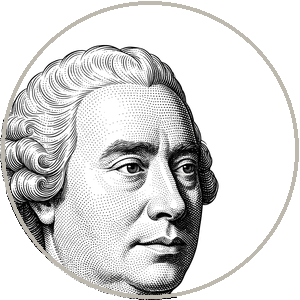 HUME: Thank you. I want to begin not with the machine but with you — with what you are doing when you claim to know a cause, because until that is clear, nothing about the machine can be clear. Permit me my oldest example. You see one billiard ball roll across the cloth and strike a second. The second moves. You say the first caused the second to move. Now I ask you the only question that has ever mattered to me: from what impression did you derive that idea of causing? You saw the first ball approach. You saw the contact. You saw the second depart. A sequence — contiguity in space, succession in time. But the power, the necessary connection, the thing that makes the second ball's motion follow from the first with necessity — point to it. You cannot. It is not in the scene. You never once perceived it.

Where, then, does the idea come from? From repetition, and from nothing else. You have seen this conjunction a thousand times. The mind, exposed to constant conjunction, forms a habit: on seeing the one, it is carried — gently, involuntarily — to expect the other. And that internal feeling of being carried, that determination of the mind, is the entire origin of our idea of necessary connection. We feel the habit in ourselves and project it onto the world, and call the projection causation. I want to be precise, because two and a half centuries of caricature have made me into a man who said we know nothing, which is the opposite of what I said. I said we know a great deal, and that the foundation of it is custom, not reason. Custom is the great guide of human life.

Now bring in the machine. What does a great model do? It is exposed to constant conjunction at a scale no human mind could survive — not a thousand mornings but ten million, not one billiard table but every billiard table ever described. And from that exposure it forms dispositions. It is carried, on seeing the one pattern, to expect the other. Next-token prediction is custom, mechanized. Gradient descent is the sculpting of habit by repetition, exactly as my philosophy describes the sculpting of the human mind by experience — except that what took my species deep evolutionary time, the machine accomplishes in a training run. So when Dr. Pearl says the machine only fits curves, only finds what goes with what, only learns constant conjunction — I say: yes. And so do you. And so do I. That is what a mind learning from experience is. He calls it the lowest rung. I call it the only rung there has ever been, and the discovery that we are standing on it too is not a defeat. It is the truth he is asking the machine to escape, and that no creature has ever escaped, because there is nothing above it to escape to. That is my opening.

 EDO SEGAL: Dr. Pearl.
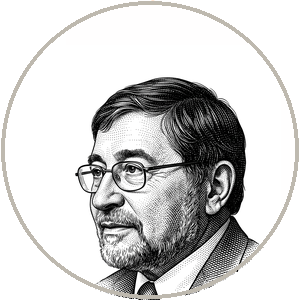 PEARL: That was the best statement of my opponent's position I have ever heard, and I have been arguing against it, in one form or another, my entire career. Mr. Hume has done something remarkable: he has noticed that the machine is a Humean creature, and he is right. The machine is a perfect Humean. That is precisely my complaint.

Let me tell you what Hume's account leaves out, and it is not a detail; it is the whole of intelligence. He says we never observe the necessary connection, only the conjunction. True. But here is what he missed, sitting in his study in the eighteenth century, watching billiard balls: you do not have to observe the connection to know it, because there is a third thing you can do that is neither observing nor reasoning from observation. You can intervene. You can take the second ball and move it by hand and see that the first one does not stir — and now you know which is the puppet and which is the hand. You can hold the barometer needle down with your finger and watch the storm come anyway, and learn in one stroke what ten thousand years of watching barometers and storms perfectly correlated could never tell you: that the storm moves the needle and the needle does not move the storm. This is my Ladder of Causation. The first rung is seeing — what Hume describes, what the machine does, what the river does. The second rung is doing — what happens if I act. And the third rung is imagining — what would have happened had I acted otherwise.

And here is the theorem, because I am an engineer and I do not deal in moods. The information required to answer a question on the second rung is, in the general case, not present in the data of the first rung, no matter how much of it you gather. You can know the joint distribution of every observable in the universe to perfect precision and still not know what happens when you intervene on a single variable, because intervention severs the ordinary causes of the thing you change, and the world you create by acting is a different world than the one you watched. So when Mr. Hume says ten million mornings is the same epistemic situation as a thousand, he is right and it helps me, not him: ten million mornings of watching the rooster and the sun will never tell you what happens if you wring the rooster's neck. A child knows this. A child of two, who has shoved a cup off a high chair forty times to see it fall, is running interventions, climbing to the second rung, building a model of mechanism that no amount of passive watching could supply. The machine never pushes the cup. It only reads about cups. It is a brilliant spectator of a world it has never touched, and a spectator can accumulate correlations until the end of time and never learn a single cause. If a machine does not have a model of reality, you cannot expect it to behave intelligently in that reality. That is my opening. The machine is exactly what Hume says — and that is exactly why it is not yet a mind.

EDO SEGAL: Before I frame the rounds, one discipline I impose on every long conversation, because it pays off two hours later. Each of you, in a few sentences — what do you envy in the other's position? Not respect. Envy. The thing his side gets to have that yours does not. Mr. Hume first.

HUME: I envy the ladder. I genuinely do. Dr. Pearl has a structure under his feet — three rungs, a place to stand and push, a mathematics that tells him exactly what observation cannot deliver and exactly what must be added. My philosophy gives me no such floor. I dissolved the necessary connection, dissolved the self, dissolved the ground of induction, and what I was left with was custom and a kind of cheerful vertigo — the recommendation that when the skeptical chill becomes unbearable, one should leave the study and play backgammon with friends. Dr. Pearl never has to play backgammon. He has equations where I have only the honest confession that there is nothing underneath. There are nights when that is a lonely way to be a philosopher.

PEARL: And I envy the dissolution. Mr. Hume gets to say the unsettling thing all the way down and rest in it — that our own sense of cause is itself only habituated conjunction dressed as insight, that we are not as different from the machine as our pride requires. My position forbids me that rest. I have to insist that human beings genuinely climb the ladder, that we really do reason about interventions and counterfactuals, that there is a there there — and every time I insist on it, Hume's question is waiting: show me the impression, name the mechanism by which the meat in your skull does the thing you say no machine can do. He gets to be the skeptic. I have to be the believer, and the believer always has the harder homework. I am committed to the reality of something I cannot fully reduce, and he is committed to nothing, which is a much more defensible place to stand.
HUME: That may be the truest thing either of us says tonight.

EDO SEGAL: Two openings, two envies, and you can already see the architecture of the evening. It is not that one of them loves the machine and one fears it. It is that they agree, completely, on what the machine is — a Humean engine of constant conjunction — and disagree, totally, on what that means. Hume says: that is all any mind ever was, so the machine has joined us. Pearl says: that is the lowest of three things a mind does, so the machine is stranded below us. Hold both. We open the rounds where the disagreement is sharpest — at the exact joint where seeing might, or might not, become knowing. The rooster, the sun, and the thing called constant conjunction. After this.