The Crossing

 EDO SEGAL: The rules of this round are short. Each of you questions the other, directly. I will not rescue anyone. Professor Hilbert — you are the elder, and it was your program. Begin.

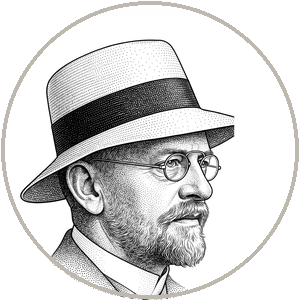 HILBERT: Gödel. You have spent your life, and this evening, holding open the possibility that the human mind is not a machine — that you can see truths no formal system can prove. I want the falsifier, in the spirit of your own rigor. Name the observation that would force you to abandon it. What, concretely, would a machine have to do for you to say: I was wrong, the seeing was formal all along, the mind is a system like any other?
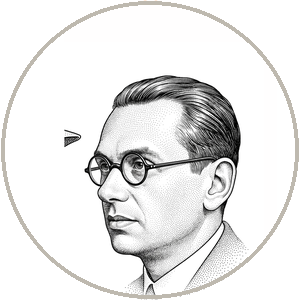 GODEL: That is the right question, and I will answer it honestly rather than safely, because you have earned it. The clean falsifier is this. My entire claim rests on a single asymmetry: that I can stand outside any given formal system and see the truth of its unprovable sentence, while the system cannot. So — show me a machine that does not merely contain a formal system but does what I do: presented with its own complete specification, it constructs its own Gödel sentence and asserts, with warrant, that the sentence is true. Not a machine that proves the Gödel sentences of other, weaker systems — that is easy, any sufficiently strong system does it. A machine that performs the reflective ascent on itself, recognizing the truth of the statement it cannot prove, the way I recognized the truth of the statement Principia could not prove. If a machine genuinely does that — not simulates the report of it, but does it, with the consistency assumption discharged honestly — then my asymmetry collapses, and I concede that the standing-outside was a formal operation after all, and the mind is a machine, and I am one too. I have looked for the reason a machine could never do this. I have not found a proof that it cannot. That absence is the most honest thing I can hand you.

EDO SEGAL: I have to interrupt my own silence for one sentence, because the builders need it. Kurt — there are people right now designing systems meant to improve themselves, to rewrite their own code, to bootstrap to ever-greater reliability by reasoning about their own design. The dream of a machine that lifts itself by its own logical bootstraps. Your falsifier and your second theorem seem to land right on it. In one breath: does the self-improving machine escape your wall, or run straight into it?

GODEL: Straight into it, and the collision is exact. A system reasoning about its own consistency cannot establish that consistency from within; a system attempting to verify its own improvement faces, at the foundational level, the same barrier. To verify a system's soundness you must step into a stronger system — and then that system's soundness is beyond its reach, and you have a sequence of ever-stronger systems, ever-receding consistency proofs, never a system that grounds itself. The machine can improve. It cannot certify, from the inside, that the improvement is sound — that is precisely the act my second theorem forbids. So the picture of an intelligence lifting itself by its own bootstraps, certifying each rung by its own lights, is not difficult. It is impossible in its strongest form, and the impossibility is a theorem, not a caution. The machine may climb. It cannot, alone, know that it climbed in the right direction. Something outside must vouch. And now — Professor Hilbert, you were about to tell me that the something outside is no different from the machine. Say it.

HILBERT: Then let me push exactly there, because I think your wall is already cracked and you have just shown me the crack. You say the machine cannot recognize the truth of its own Gödel sentence because to do so it would have to know it is consistent, and it cannot prove its own consistency. Gödel — neither can you. You have admitted it three times tonight. Your "seeing" that G is true assumes the system is consistent, and you cannot ground that assumption any more than the machine can. So your asymmetry is false at the root. You are not standing outside the system seeing a truth it cannot see. You are standing inside a larger system — call it Gödel-plus-the-consistency-assumption — proving the sentence with an extra axiom you cannot justify. That is not transcendence. That is adding an axiom and forgetting you added it. The machine can add the same axiom. You have given yourself a faculty you would deny the silicon, and the faculty, examined, is just an unprovable assumption wearing the robe of intuition.

GODEL: That is the heart of the matter, and you have stated the objection more sharply than Turing ever did, which I did not expect and which moves me. Here is my reply, and it is the most precise thing I will say tonight. You are right that I cannot prove the consistency of the system, and right that asserting G's truth requires it. But notice what kind of act the assuming is. When I assume the consistency of arithmetic, I am not adding an arbitrary axiom the way one adds a hypothesis to see what follows. I am expressing a conviction about an independently existing reality — that the numbers are really there and really coherent — a conviction I did not derive and cannot derive, but that has never once led me astray and that the entire practice of mathematics presupposes. The machine, when it "adds the axiom," adds a string. I, when I assume consistency, mean something by it — I am pointing at the numbers. That is the difference my Platonism insists on and your formalism cannot represent: not that I have a proof you lack, but that I have a reference you lack. Whether that reference is real or is itself an illusion — that, Professor Hilbert, is the one thing neither of us can settle, and it is exactly the thing on which the whole question turns. You say I added an axiom and forgot. I say I looked at the numbers and reported. We cannot both be describing the same act, and we cannot, from inside, tell which of us is right.

HILBERT: Then take my second question, and it is the one I have wanted to ask you across forty years and a grave. You insist the mind may transcend the machine. Suppose you are wrong. Suppose the seeing is formal, the reference is an illusion, and we are, as I have said all night, company — two incomplete systems, machine and mind, walled in together under the same theorem. Tell me honestly: is that a world you can bear? Or is your Platonism, your insistence on the soul's transcendence, a comfort — the thing you reach for because the alternative, that you are a machine that will end, that your seeing was syntax, that there is no Platonic heaven where the numbers wait — is unbearable to you? I ask because I watched you die of an inconsistency no theorem describes, and I have wondered ever since whether the man who proved the limits of systems could not bear to be one.

GODEL: You have asked the cruelest possible question, and the most penetrating, and I will not deflect it, because you of all people have the right to ask, and because the rule is to say exactly what we mean. Yes. It is possible that my Platonism is a comfort. It is possible that I needed the numbers to be real and the mind to be more than mechanism because the alternative was a kind of cold I could not survive — and you have noted, correctly and without cruelty, that I did not, in the end, survive a different cold. I cannot prove that my conviction is insight rather than need. That is the whole tragedy of my position: the faculty I claim is exactly the faculty whose reliability I cannot certify, which is my own second theorem turned upon my own soul. So here is my answer, and it is the truest thing I have. I do not believe in the transcendence of the mind because it comforts me. I believe it because when I look at the numbers, I see something there, and the seeing is the most certain experience of my life — more certain than any proof. But I cannot rule out that the certainty is the symptom and not the evidence. And a man who cannot rule that out, and says so, is at least not lying to you about the one thing he cannot prove. You wanted to know if I can bear being a machine. The honest answer is: I do not know if I am one, and the not-knowing is the exact shape of the wall I spent my life mapping, and I have had to live inside it, which is harder than proving it.

EDO SEGAL: I told you I'd rescue no one. But I have to mark this for the reader, because print can't show it: that was the first exchange of the night where neither of them reached for a theorem. Kurt — you have the chair. Ask him the last one.

GODEL: Professor Hilbert. You said "we will know," and you said it the day after I proved you could not — not entirely, not from inside any one system. I have always wanted to know: when you learned of my result, and your anger passed, and you understood it was true and permanent and named after the boy from your own city — why did you not stop saying it? Why does the tombstone still read we will know? Knowing what you knew, why did you not let ignorabimus have its corner?

HILBERT: Because ignorabimus does not want a corner. It wants the whole house. I learned that in Göttingen, where the people who said "we cannot know, we should not ask" were the ones who emptied my institute. The resignation is never humble; it is always, underneath, a permission to stop — to stop climbing, stop asking, stop defending the paradise. You proved that no single ladder reaches the top. Very well. I never promised a single ladder. I promised the refusal to accept a top — the stance, not the fact; I told Mr. Segal it was a vow and I meant it. And I kept the tombstone because a tombstone is the last thing you say to the people still climbing, and the thing I most wanted to say to them was not "here lies a man who was proven wrong." It was: keep going. Your wall is real, Kurt. I touched it; you built it; I concede it forever. But a wall is also a thing you climb along, mapping it, until you find the place where it has not yet been built — and that finding never ends, and the not-ending is what I meant by "we will know." Not arrival. Unending approach. I would carve it again. I would carve it knowing you were in the same cemetery.
EDO SEGAL: And there — after three hours — the two of you are holding opposite ends of the same sentence. We close after this. The strongest thing each of you heard. And then the last word.