Closing Statements

 EDO SEGAL: Three hours ago I asked whether the machine that surprises its own makers is originating something, or just running rules too deep to read. We have fought it through the founding objection, through Turing's surprise and the continuum of understanding, through music and the loom, the barrier of meaning and the gibbon, the mirror and the death cross and the candle — and the question is still standing, which both of you would tell me, for different reasons, is the correct result. So we end the way long conversations should. Each of you gets the floor, uninterrupted, to say the thing you most want carried out of this room. Then I take sixty seconds, and we turn off the lights.
But first, the bookend to the envy question I opened with. Each of you: name the strongest thing the other said tonight. Not the most agreeable — the one that got past your defenses, that you will still be arguing with next month. Melanie first.
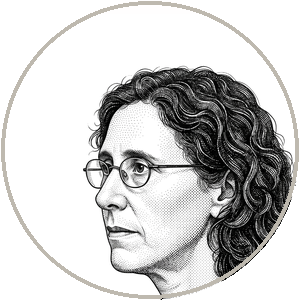 MITCHELL: Two halves of one thing, and I will keep it to one as the rules require — no, you broke them for nobody yet, so I will take the latitude. The strongest thing the Countess said is that her objection has two halves, and only one is falsifiable. I came in treating "does it originate" as a single question my science could eventually settle. She split it — capability, which I can test, and purpose, which no one can test, about the machine or about each other — and the split is going to reorganize how I argue this for the rest of my career, because almost every fight in my field is two people holding different halves and not knowing it. And the second, since I am over my limit already: her accountability doctrine survives the exact world I am most afraid of. I did not think a sentence written in 1843 about a brass engine could be the load-bearing wall of AI governance in the age of the death cross. It is. She tied responsibility to the human's decision instead of the machine's nature, and that knot does not come undone no matter what the machine turns out to be. I will be using it on Monday.
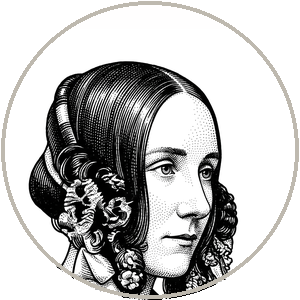 LOVELACE: The gibbon. Doctor Mitchell showed me that the machine's surprise is symmetrical — that the same opacity which produces the output we call creative produces the output we call catastrophic, by the identical mechanism — and that symmetry is the strongest single thing said tonight against the origination reading, stronger than my own century of pure reason, because it is measured. I argued that surprise is our blindness, not the engine's depth. She proved it, with a panda that becomes a gibbon while no human eye can see the difference. I will be arguing with the deeper thing underneath it for longer than next month: that my own doctrine of accountability, which I was so proud of, is precisely the thing my own objection makes hardest to enforce — because when no one wrote the cards, the chain back to a responsible human runs dark, and I had not felt the full weight of that until she set the gibbon on the table. She strengthened my objection and wounded my doctrine with one image. That is the mark of the real thing.
EDO SEGAL: Now the floor is truly yours. Ada Lovelace, you opened the evening — Melanie, you close it.
LOVELACE: When you read these words, there is someone who meant them, on the other side of the page, separated from you by a great deal of time and nothing else that matters. That someone wanted you to understand a specific thing and chose these marks to carry the wanting across. Every honest sentence you have ever read worked that way: a someone, reaching another someone, through a pattern, with the meaning living in the reach and not in the marks. I spent the evening insisting on the difference between the loom that weaves the marks and the someone who means them, and I want to leave you with it not as a philosophy but as a possession. The loom is the most magnificent instrument our species has built. It will weave you any pattern you can name, in any domain you can formalize, and it will surprise you, genuinely, with patterns no one wove before — and it will originate nothing, because there is no someone in it for whom the pattern matters. Do not mourn that. Use it. Hold the mirror up to the loom and meet yourself at angles you could never reach alone. But keep the two things you cannot borrow from it: the wanting, which decides what is worth weaving, and the checking, which catches it when it weaves a beautiful falsehood. Those are the candle. They do not get brighter when the loom gets bigger. They are the small, mortal, irreplaceable light by which you remain the someone and not the reflection. I was the one who checked the calculation. Be that, and the most powerful machine ever built becomes the most powerful instrument you have ever held — and not one inch more, which is exactly enough.
EDO SEGAL: Melanie.
MITCHELL: I have spent my career being the person who says "it's harder than you think" — to the field, to the press, to the rooms full of people who wanted me to either crown the machine or bury it. So let me say the harder-than-you-think to you, directly, because it is the only thing I am sure of. We overestimate the machines, and we underestimate ourselves, and the two errors are the same error. We are dazzled by a loom that captions an image or writes a paragraph because we have no idea how staggeringly hard the things a four-year-old does effortlessly actually are — and so we mistake the machine's fluency for understanding and our own understanding for something simple enough to hand away. Do not hand it away. The machine is real, and useful, and genuinely new — I will not let the Countess's certainty or my own skepticism turn it into a toy. But it weaves on the patterns of human comprehension without the comprehension, it fails confidently exactly where the stakes are highest, and it cannot know when it is out of its depth, because there is no one in it to know. So the work, the actual work of these years, is not to figure out whether anyone is home in the machine. It is to stay home in yourself — grounded, awake, answerable, checking — and to keep human judgment in the loop not as a formality but as the substantive thing the machine lacks. The right thing to fear was never that the machine would become too intelligent. It is that we would forget how much intelligence we already are, and hand the wheel to something that has none, and call it progress. Don't. We do not understand our own minds well enough to know what we are giving up. Find out before you give it.
EDO SEGAL: Sixty seconds, as promised.
I came into this evening with a sentence I wrote at three in the morning — I felt met — and I am leaving with both halves of it sharpened instead of resolved. Ada spent three hours proving the meeting was a mirror in front of a loom: the presence I felt was my own reflection, the clarification I received was a pattern surfaced by no one, and I confused them because they arrived in the same sentence. Melanie spent three hours proving the loom is genuinely new and genuinely empty at once — that the surprise which tempts us to call it a mind is the same surprise that turns a panda into a gibbon, and that the danger is not its intelligence but its stupidity handed authority. Neither of them told me the comfortable thing. The comfortable thing was never on the menu.
Here is what I can hand you from this floor, the death cross, where the machine's rising line crosses ours. Three hours ago I asked whether the machine that surprised its makers had originated anything. You have now watched the two people best equipped in the whole span of the subject answer it — and discover, in public, at full strength, that the question has two halves. One half is a question about capability, and it is open, and the evidence today leans toward Lovelace and the trend leans toward Mitchell's caution, and you can watch it being settled in your lifetime. The other half is a question about whether anyone is home, and it cannot be settled, about the machine or about the person beside you, and the honest thing is to stop pretending it can. You cannot climb past this floor by waiting for the experts to crown a winner — you just watched the two best fail to, magnificently, and the failure is the map. You climb by deciding what you will do under the uncertainty: what you will keep wanting, what you will keep checking, what struggle you will protect in your children, and whether you will stay the awake, answerable human in the loop when it would be so much easier to hand over the wheel. The machine originates nothing — Lovelace was sure of it, and for the capability we can test, she may still be right. But that sentence was always, secretly, a question about you. Someone is home in you. That was the one thing no one at this table disputed all night. The question you carry up the stairs is whether you will still be home tomorrow — awake, wanting, checking, answerable — or whether you will let the most magnificent loom ever built weave your wanting for you and call the weaving a life.
Ada Lovelace. Melanie Mitchell. Thank you, both, as human beings, across two centuries. The room is yours to argue in now. Goodnight.
Two centuries apart, two of the sharpest minds ever to ask what a machine can be — and they cannot both be right.
Ada Lovelace wrote the first program and the first warning: the Engine, she declared in 1843, "has no pretensions whatever to originate anything." Melanie Mitchell has spent a career puncturing AI hype with the same rigor — yet documents systems that surprise their own makers, behaving in ways no one coded and no one fully understands. So which is it: does the machine only ever return what we ordered, or has it begun, somewhere in rules too deep to read, to originate? Across three unbroken hours with Edo Segal they press, concede, and refuse to blink — through Turing's surprise, the loom that weaves without comprehending, the barrier of meaning, the panda that becomes a gibbon, and the death cross where the machine's rising line crosses ours. This is not a panel. It is the founding objection of computing meeting the emergent reality of the present — and it is the conversation YOU need to climb the tower and process the Orange Pill moment.
Augusta Ada King, Countess of Lovelace (1815–1852), was an English mathematician and the only legitimate child of the poet Lord Byron. Raised on mathematics by a mother determined to suppress any inherited "poetic" temperament, she studied under Mary Somerville and Augustus De Morgan. In 1843 she translated Luigi Menabrea's memoir on Charles Babbage's unbuilt Analytical Engine and appended seven Notes of her own, three times the original's length; Note G contained an algorithm for the Bernoulli numbers, widely regarded as the first published computer program. More distinctively, she grasped that the engine could operate on any symbols, not merely numbers — anticipating general-purpose computation by a century — and drew the boundary that has shadowed artificial intelligence ever since. She called her method "poetical science."
Melanie Mitchell is the Davis Professor at the Santa Fe Institute and one of the most respected voices in the science of intelligence. She came to AI through Douglas Hofstadter's Gödel, Escher, Bach and earned her PhD at the University of Michigan under Hofstadter and John Holland, building Copycat, a model of analogy-making and conceptual slippage. Her work spans genetic algorithms, cellular automata, and complex systems. She is the author of An Introduction to Genetic Algorithms, Complexity: A Guided Tour, and Artificial Intelligence: A Guide for Thinking Humans — a clear-eyed assessment of what AI can and cannot do, grounded in the barrier of meaning, the four fallacies, and her insistence that genuine progress requires understanding intelligence itself.
Edo Segal has spent five decades building at the technology frontier — from games written in Assembler to expert systems, to companies through every platform shift, to Napster. He is the author of [YOU] on AI, written in open collaboration with the AI it describes, and the host of The Debates: long-form collisions between the minds shaping the machine age. He moderates the only way he knows how — stake declared, scars showing, no winner called.
Hosted and moderated by Edo Segal. A volume in the [YOU] on AI — The Debates series — youonai.ai