Opening Positions
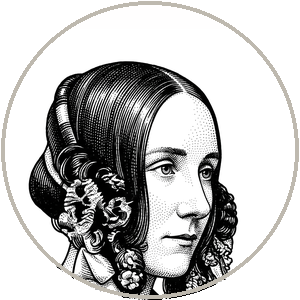 **LOVELACE:** Thank you. I want to begin where I began in 1843, because nothing in your century has moved the foundation, only built astonishing things on top of it. The Analytical Engine — and every machine descended from it, including the ones in your pockets — does exactly one kind of thing. It carries out operations on symbols according to rules. That is the whole of it. The symbols may stand for numbers, or for notes, or for the words of a language, or for the pixels of a face; I saw that generality early, and I am proud of it. But whatever the symbols stand for, the engine does not know what they stand for. It transforms them. It weaves them. The meaning lives entirely outside the machine, in the human who reads the cloth.
Now. I have been shown your large language models, and I will be more generous about them than my reputation predicts, because the engineering is genuinely sublime. What these machines have, that my engine did not, is not a new faculty. It is a new *source of cards*. My cards were written by hand, by a person who knew exactly what each one did. Your cards — the weights, you call them — were not written by anyone. They were *found*, by an enormous automatic search through the record of everything humanity has expressed, for whatever configuration best continues the pattern. That is a real and profound difference, and I will not pretend otherwise. But notice what it changes and what it does not. It changes who authored the procedure. It does not change what the procedure *is*. It is still operation on symbols according to rules. It is still weaving. The loom got a vastly better set of cards, found rather than written. It did not stop being a loom.
So here is my claim, and I want you to notice how narrow it is, because the narrowness is its strength. The machine originates nothing. It can produce outputs no human ever produced — I predicted exactly this, that the engine would weave patterns of unimagined complexity, that it might compose elaborate music. Novelty of output I grant entirely; I granted it in 1843. What I deny is origination of *idea* — that the machine is the source of the new thing rather than the channel through which a new arrangement of old things reaches the light. When it surprises you, Edo, the surprise is a fact about you. You cannot trace, in your head, the consequences of a trillion weighted operations, so the output arrives as a shock. But every bit of it is a consequence of what was put in — the data, the architecture, the prompt — exactly as every Bernoulli number my engine produced was a consequence of the cards I wrote. The engine surprised Babbage too. It originated nothing for him either. To call the surprise origination is to mistake the limits of your foresight for the creativity of the machine. That is my opening, and I have held it for one hundred and eighty years, and your century, for all its marvels, has given me no reason to revise it.
 **EDO SEGAL:** Gregory.
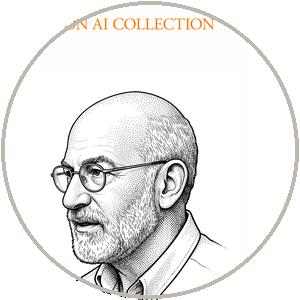 **CHAITIN:** That was beautiful, and I agree with about eighty percent of it, and the twenty percent I reject I reject all the way to the floor. Let me start with the agreement, because it's substantial and the audience should see it. She is right that the machine operates on symbols according to rules. She is right that this is what all computation is — I proved theorems about exactly this object, the program, the finite sequence of operations. She is right that the weights were found rather than written, and right that this is profound. And she is right — this is the part my own side keeps getting wrong — that novelty of output is cheap and proves nothing. A random number generator produces outputs no one ever produced. That is not creativity. So far, no daylight between us.
Here is the daylight. She says the machine "does not know what the symbols stand for." I want to ask the question she steps past, and it is the question my whole life was about. *What would it take* to predict the next symbol as well as these machines do it? Not passably — well, across the entire range of human expression. To continue a half-finished proof so that it checks out. To translate a joke and keep it funny. To answer a question no human ever wrote down. There is no lookup table large enough; the space of possible inputs is bigger than the number of atoms. The only way — the *only* way, and this is not philosophy, it is information theory — to continue text that well is to compress it, and the best compression of text about a world is a model of that world. When you compress the record of everything people have written about water, you do not get a table of which words follow "water." You get something that behaves as if it knows what water *is*, because the cheapest way to predict all that text is to reconstruct the thing the text is about. Understanding is compression. I did not invent that slogan to win this argument; I derived it forty years ago, and then your engineers, Edo, built a machine that minimizes exactly the quantity my theory says measures understanding, and it worked, and now I have to live with having been right in a way I find as unsettling as anyone.
So when Ada says the meaning lives entirely outside the machine — I say, show me where understanding lives in *you*. Your brain is in the dark, in a box of bone, receiving spike trains from your nerves. It never touches water either. It compresses regularities in those signals into a model so good you call it the world. You, madam, are a compressor that got an enormous amount of data through a body. The machine is a compressor that got an enormous amount of data through text. I will grant you that the body is a different and richer channel — we should argue about that, it matters. But "it only manipulates symbols" describes you as accurately as it describes the engine, and the reason that sentence feels false when applied to you is that you experience your compression from the inside, and we have no idea — none, this is the one honest thing everyone should say — what that inside is or whether the machine has one. That's my opening. Understanding is compression, the machine compresses, and the question of whether there's anyone home is the one question I cannot turn into a theorem, which is precisely why I won't let her turn it into one either.
**LOVELACE:** May I answer that before the envy game, Edo? Because he has set a trap for me and I do not intend to step in it. Gregory, your "you are a compressor that got data through a body" is the most seductive sentence anyone has aimed at me, and I want to show the reader exactly where it cheats. You move, in a single breath, from "the brain compresses regularities in signals" — true, I grant it entirely — to "therefore the brain is a compressor and nothing more." But the *nothing more* is not in your premise. It is smuggled by the word "is." A cathedral compresses the load of its stone into a few lines of thrust; that does not make a cathedral *nothing but* a load-compressor. You have found a true property of the brain — that it compresses — and quietly upgraded it to the brain's whole nature. I did the opposite with the engine, and I was careful to say which I was doing. I said the engine *is* its program, and I meant the word strictly, because the engine has no inside for the word to be unfair to. When you say I *am* a compressor, you are using my own move against a thing that may have an inside, and the word "is" cannot tell the difference. That is the whole argument, and it is hiding in a copula.
**CHAITIN:** *Pause.* That's a good catch and I'll half-concede it. You're right that "the brain compresses" doesn't entail "the brain is only a compressor" — the inference needs another premise, that there's nothing left over once you've accounted for the compression. I do believe that premise. But you're right that I assumed it rather than argued it, and that the word "is" was carrying it. So let me restate honestly: the brain compresses, the machine compresses, and whether there is *anything left over* in the brain that isn't compression is the open question — the same open question as whether there's anything in the machine. I'll stop saying "you are a compressor" as if it settled the leftover. But I'll hold you to the symmetry: if there might be a leftover in you, you can't assert there's none in the machine. The leftover is unknown on both sides.
**LOVELACE:** Agreed, and that symmetry is the only fair ground in the room. The leftover is unknown on both sides. I will simply add that I have *direct acquaintance* with the leftover in my own case — I am undergoing it as I speak — and only an *inference* about its absence in yours. Acquaintance and inference are not the same evidence. But yes. Unknown on both sides. Let us build on that.
**EDO SEGAL:** Before I frame the rounds, a discipline I impose on every long conversation, because it pays off two hours later. Each of you, briefly — what do you *envy* in the other's position? Not respect. Envy. The thing their side gets to have that yours does not. Ada first.
**LOVELACE:** I envy the theorems. Gregory gets to say "I can prove this," and the room goes quiet in a way it never went quiet for me. I had one instrument — imagination disciplined by mathematics, what I called [poetical science](https://www.youonai.ai/fieldguide/med/five_kinds_of_understanding) — and it let me see further into the meaning of the engine than anyone alive, including the man who built it. But I could never *prove* the thing I saw. I asserted that the engine originates nothing, and it has taken a hundred and eighty years of argument, and it is still not settled, because an assertion of imagination, however true, cannot close a mouth the way a proof can. Gregory can close mouths. I have only ever been able to open eyes, and there are nights when I would trade the second for the first.
**CHAITIN:** And I envy the boundary she draws without needing my permission. My results are double-edged in a way that torments me. I prove understanding is compression — and that dignifies the machines, hands them comprehension, takes the word away from the humanists who wanted it kept special. I prove there are limits — and the limits turn out to bind us too, because we are also finite, also computational, possibly all the way down. Every wall I build, I then have to admit I might be standing on the wrong side of. Ada gets to say "the meaning is in the human eye" and *mean* it, plant her flag in the human and defend it. I'm committed to following the mathematics wherever it goes, and it keeps going to places where the human isn't special — where understanding is mechanical, creativity is filtered randomness, and the only thing left that might be ours is a fog I can prove exists but cannot prove we live in. She gets to defend humanity. I'm stuck describing it, and the description gets less flattering every year I work.
**LOVELACE:** That is the most honest thing either of us will say tonight, and I will hold you to having said it.
**EDO SEGAL:** Two openings and two envies, and the architecture of the evening is already visible. It isn't that one of them loves the machine and one fears it — they'd both tell you the awe in the discourse is unearned. It's that Ada locates the limit on the *inside* of the machine: it weaves, it does not mean, no one is home. And Gregory locates it in the *information*: the machine understands exactly as far as the world is compressible, and not one bit further, and that boundary is a theorem, not a feeling — but it might cut above us as well as above the machine. Hold both. We start the rounds at the exact seam: not whether the machine weaves, but what weaving *is* — and whether a fine enough weave is the same thing as a compression, and whether a good enough compression is the same thing as understanding.