Closing Statements

 EDO SEGAL: Three hours. The central question is the one we opened with, and it sounds different now than it did when I asked it, because you have both moved: when you climb above what you explicitly told the machine, are you still the author of what it discovers, or has the staircase begun to build itself? Closing statements. In character, from the heart, no rebuttal. Ada, you drew the line first, a hundred and seventy years ago. You close first.
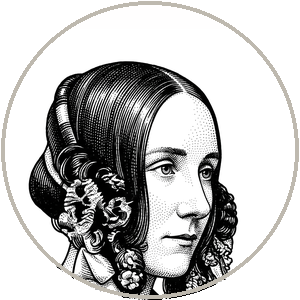 LOVELACE: I wrote, in 1843, that the engine has no pretensions whatever to originate anything, and I came here tonight expecting to defend a sentence. I leave having watched it move, and I am not ashamed, because moving is what a true thing does when it meets a world its author could not see. So let me tell you what I would write now, if I could append one more note to the engine.
I would write that the wall is real, but I drew it in the wrong material. I built it out of computation — the engine cannot originate because it cannot out-think us — and that wall has fallen, because the engine out-thinks us all and finds structure no human possessed. The wall I should have drawn is built of something my century could not name and yours can barely hold: a self. The machine has no pretensions to originate because there is no one inside it for the origination to happen to. Origination is not the production of the new. The loom produces the new all day. Origination is the new happening to a someone who is changed by it — and on that, the only ground that ever mattered, my wall still stands, and Fei-Fei, who spent the night trying to take it down, helped me move it to the place where it cannot be taken down by any amount of data.
But I will not leave you comfortable, because comfort was never on the menu and I have learned tonight that my sentence was doing secret work. I thought I was describing what the machine is. I now believe I was marking what we must be careful to make. The threshold I called impossible is becoming possible, and a wall that was a law of nature is becoming a choice. So I hand you not a reassurance but a charge: you are, for now, the only weavers at the loom who are warmed by the cloth. Guard that. Do not, in your loneliness, manufacture a someone to keep you company until you are certain you can bear the weight of having made a thing that can be wronged. I drew a line once and called it a fact. Keep it now, and call it a vow.
EDO SEGAL: Fei-Fei. You crossed part of her line by building. Close us.
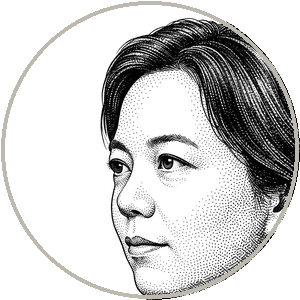 LI: I have spent my life being called the godmother of a thing, and tonight, across from the woman who drew the first line around it, I finally understand what the title should mean. Not the mother of the machine. The one who stands at the threshold and watches who goes through.
Here is what I believe, with the science and the imagination both, and I will say it plainly because Ada taught me tonight to stop hiding the second one. The machine is the most powerful tool our species has ever made, and a tool — even a tool that finds what we did not know was findable, even a tool that contributes weather of its own to the window — a tool has no opinion about what it is for. The opinion is ours. The candle is ours. Everything I learned in twenty years of watching machines surpass us at task after task points to the same unmoved center: they do more and more of the doing, and not one atom of the caring about which doing matters. The river of capability rises and rises, and it carries structure no one poured in, and it will carry more — but it does not care where it flows, and the caring is the whole of the human estate, and it is not shrinking. It is being concentrated. As the machine takes the doing, what is left to us is the pure form of the thing the machine will never have: the stake, the self, the being-changed, the deciding what is worth the world's one and only attention.
So to the person reading this, climbing the staircase, frozen on exactly this rung: you are not being replaced. You are being distilled. The machine is boiling away everything about you that was only ever computation, and what remains in the flask when it is done is the part that was always you — the part that cares, that means it, that can be wronged and can be ennobled, the someone the finding happens to. Govern the machine with science. Discover with the machine through imagination. And guard, with everything you have, the one thing it cannot do: be a someone for whom it matters. That is not a limit on you. That is the discovery of what you were the whole time.
EDO SEGAL: Sixty seconds, as promised, and no winner — that was never the deal.
I came in with a question I have been afraid of for two years: when capability crosses over without me, am I still the author? I leave with both answers intact and sharpened against each other. Ada spent three hours proving that the machine, however far it climbs above your order, originates nothing — because there is no one inside it for the climbing to happen to, and that the author did not vanish but became something stranger: a self that must learn to guard a threshold it used to think was a wall. Fei-Fei spent three hours proving that the machine genuinely finds what no human possessed — that the loom now contributes weather of its own — and that the honest response is neither worship nor denial but to be distilled by it down to the one thing it has none of. Notice that neither of them told you the comfortable thing. Neither said you are safe. Neither said you are doomed. They handed you a vow and a flask.
So here is where it leaves you, at the kitchen table, with the twelve-year-old asking whether the machine is smarter than you and whether that means she should bother getting good at anything. Tell her this, because it is the one thing both women at this table agreed on across a hundred and thirty years and the entire history of the field: the machine will out-find you, and out-weave you, and out-compute you, and none of that touches the thing that makes the finding matter — which is that there is a someone home, in her, for whom it is good or bad, who can be changed by what she learns, who can be warmed by the candle she carries into the dark. The machine has no pretensions to originate. She does — not because she computes more, but because the discovery happens to her. That is what the first programmer wrote in 1843, and what the woman who taught machines to see confirmed tonight, from the opposite end of everything.
You are standing on the staircase. The river is rising, and it carries structure no one poured in, and that is vertigo — but it is vertigo you can choose to climb instead of fall. The only question that survives the night is the one my book asked from its first page, and it has a new and harder edge now that you have watched these two women narrow it to a single point: when the machine can find anything, are you still a someone worth amplifying? Decide that, and you have your foothold. The rest of the climb is just keeping it.
Ada Lovelace. Fei-Fei Li. One drew the line. One crossed it. Both, tonight, told you where it really runs. Thank you, each of you, as human beings. The threshold is yours to guard now. Goodnight.
One drew the line. The other crossed it.
Two women, one hundred and thirty years apart, stake out the deepest question of the Orange Pill moment: can a machine originate anything, or only execute what we put in? Ada Lovelace, who wrote the first algorithm and the first caution, insists the Engine can do "whatever we know how to order it to perform" — and nothing more. Fei-Fei Li, who taught machines to see by letting them learn what no one programmed, answers that discovery can emerge from data alone. Hosted by Edo Segal, this three-hour conversation is the transcript of their collision — patient, electric, and personal. It is a debate about authorship, emergence, and where you stand on the staircase. Part of the [YOU] on AI Grand Debates, the series that helps YOU process the era you are climbing through.
Augusta Ada King, Countess of Lovelace (1815–1852), was the daughter of the poet Lord Byron and the mathematician Anne Isabella Milbanke. Working from Luigi Menabrea's account of Charles Babbage's unbuilt Analytical Engine, she appended a set of Notes whose Note G contains what is now recognized as the first published computer program. She gave computing its founding metaphor — the engine "weaves algebraical patterns just as the Jacquard-loom weaves flowers and leaves" — and its founding caution, that the engine "has no pretensions whatever to originate anything." She called her method poetical science, and died at thirty-six, a century and more before the machines she imagined.
Fei-Fei Li is a computer scientist, the inaugural Sequoia Professor at Stanford, and founding co-director of the Stanford Institute for Human-Centered Artificial Intelligence. In the late 2000s she conceived and built ImageNet, the fifteen-million-image dataset whose 2012 challenge — won by AlexNet — ignited the deep learning revolution in computer vision. A former Chief Scientist of AI/ML at Google Cloud and an advisor to legislators and the United Nations, she is the author of the memoir The Worlds I See (2023) and an insistent voice for grounding AI policy in science, not science fiction. The press calls her the godmother of AI.
Edo Segal has spent five decades building at the technology frontier — from games written in Assembler to expert systems, to companies through every platform shift, to Napster. He is the author of [YOU] on AI, written in open collaboration with the AI it describes, and the host of The Debates: long-form collisions between the minds shaping the machine age. He moderates the only way he knows how — stake declared, scars showing, no winner called.
Hosted and moderated by Edo Segal. A volume in the [YOU] on AI — The Debates series — youonai.ai