The Carrier Bag and the Atlas

 EDO SEGAL: Ursula, in 1986 you wrote an essay that I think is secretly the most radical thing in this entire conversation — the carrier bag theory of fiction. You argued, following Elizabeth Fisher, that the first human tool was not the spear but the container: the sling, the gourd, the net, the bag. That before the tool that forces energy outward, we made the tool that brings energy home. And you argued that our stories are addicted to the spear — the hero, the weapon, the kill, the linear drive to a climax — and that this addiction blinds us to the other, older, humbler technology, the one that just holds things together so life can continue. Tell the reader the theory, briefly, and then I want to do something I think no one has done: I want to put your carrier bag in the same room as Kate's atlas and ask whether they're allies or enemies.

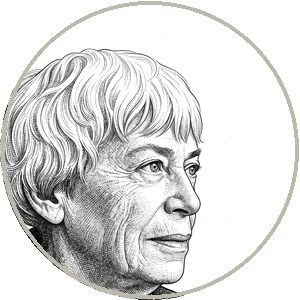 GUIN: The theory is almost embarrassingly simple, which is why it took me sixty years to dare to write it. We tell the story of the spear: the hunter goes out, confronts the beast, triumphs or dies, beginning, middle, end. It makes wonderful drama. But it's a lie about how we survived. We survived by gathering — by the long, dull, unheroic work of a wild-oat seed, and then another, and then another, put in a bag and carried home. The container is the prior technology; you cannot hunt before you can carry. And I argued that the novel, the true novel, is a carrier bag — not a weapon that drives to a kill but a sack that holds many things in tension, the seeds and the stones and the bones and the contradictions, and lets them rub against each other and stay alive. A bag has no hero. Everything in the bag is the story.

Now. The machine they've built is the apotheosis of the spear narrative. Listen to how they talk: disruption, leverage, the killer app, the moat, the death cross where one market slays another. Edo, your own book, which I love, is half spear — the builder amplified, directing the river, climbing the tower. It's a hero's story, even a self-aware one. And the spear narrative produces exactly the anxiety the whole industry now marinates in: if the story is the hero wielding the tool, then the only question that matters is what happens when the tool outgrows the hand — the alignment terror, the superintelligence that turns on its wielder. That fear is real, but it's a fear that lives entirely inside the weapon model. The carrier bag asks a different question. Not who controls the tool, but what does it carry, and for whom, and is there food in the bag for everyone. That's not a softer question. It's the harder one, because it has no climax to hide behind.

EDO SEGAL: Kate, here's the collision I promised. Your atlas and Ursula's carrier bag are both refusals of the spear story. You both insist on the unglamorous, the distributed, the held-together-ness that the heroic narrative erases. But an atlas is a different kind of object than a bag, and I want to know if the difference is a disagreement. A bag gathers and sustains; a map exposes and indicts. Is the atlas a carrier bag — or is the atlas, finally, just a better, truer, sadder spear: a weapon you aim back at power?

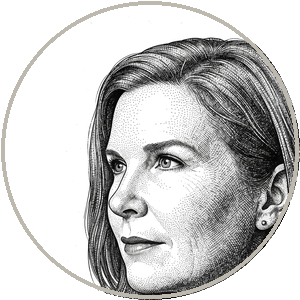 CRAWFORD: That's a genuinely beautiful way to put the question and I'm going to resist its beauty long enough to answer it honestly, because the beauty is doing some persuading I don't want to wave through. The atlas is not a carrier bag, and I don't think it should be. A carrier bag holds and sustains and accepts; it has, by Ursula's own lovely account, no hero and no enemy. But there is an enemy. There is a structure of concentrated power that owns the mine and the model and the cloud, and a bag that holds everything in gentle tension is not adequate to a structure that is actively, asymmetrically, profitably taking. The map I draw with Joler — the Anatomy of an AI System — is not a sack. It's an indictment shaped like a diagram. It takes a single Amazon Echo and unfolds it across the planet, the material extraction and the labor extraction and the data extraction, all three at once, until you're standing in front of a wall-sized image of everything the seamless little cylinder concealed. It hangs in museums precisely because the aesthetic force does analytical work — it makes the scale land in the body of someone who'd never read my footnotes. That's not gathering, Ursula. That's a counter-map, an instrument borrowed from empire and turned back on the empire. The map was always a tool of power, of surveying and claiming and administering the territory from above. I'm using the master's instrument against the master's house, with full knowledge of the irony.

GUIN: And I'd say — gently, because I half agree — that the moment you decide there is an enemy and aim your map at him, you have picked the spear back up. A truer, sadder spear, exactly as Edo said. And there's a cost to picking it up that you don't price in. The spear narrative needs an enemy to be coherent, and an enemy is a story too — "the four companies," "the structure of concentrated power" — and stories about enemies have a way of consuming the people who tell them, of making everything into a battle and every battle into a thing you can lose. Selver, in my forest novel, learns to fight the colonizers and wins, and the winning changes him, teaches him killing, and the knowledge cannot be unlearned. I'm not saying don't fight. I'm saying the carrier bag is what you carry the fight home in, and if you have only the spear — only the indictment, only the enemy, only the map of the prison — you will win battles and lose the thing the battles were for. You need the bag to hold what survives the fight. That's not softness. That's the only known way to fight a long war without becoming the thing you fight.
CRAWFORD: That I'll take, and it costs me something to take it, because I've watched the indictment eat people, including people I love in this work — the burnout, the despair, the cartographer who maps the prison so completely she can't imagine leaving it, which is the exact thing I confessed to envying you for. Maybe the honest division is this: the map without the bag produces despair, and the bag without the map produces sentiment, and the industry is perfectly happy to sell us either one as long as we never carry both at the same time.
EDO SEGAL: Before I mark it, I want to give the carrier bag one more turn, because I think it's the most underrated idea on this table. Ursula, the spear narrative produces the superintelligence terror — the tool outgrowing the hand. What does the carrier bag produce instead? What's the anxiety, or the hope, native to your form?

GUIN: The carrier bag doesn't produce an anxiety. It produces a responsibility, which is harder to dramatize and more important to feel. The spear asks: will the weapon turn on me? A terror, and terrors are exciting, and excitement sells. The bag asks: is there food in it, and for whom, and who carried it, and at what cost to the carrier? No climax in that. No villain. Just the daily, unglamorous accounting of sustenance — who eats, who's left out, what's being held together and what's being let fall. And I'd argue the spear-terror is partly a way of not having to ask the bag-questions. As long as we're transfixed by the fantasy of the machine waking up and killing us, we don't have to look at the very boring, very real ways it's already redistributing who eats — which is precisely Kate's whole subject. The apocalypse is a more comfortable story than the warehouse. So the spear narrative isn't just inadequate. It's a flight from the bag.
CRAWFORD: That I'll sign without a single footnote. The fixation on whether the machine will become conscious or superintelligent is, in my experience, the most reliable way to get a room full of powerful people to stop talking about the watershed and the wage. The distant question about machine minds crowds out the immediate question about material power, and it tends to do so in a way that serves the people holding the power. Your spear-flight and my disembodiment-strategy are the same evasion wearing two costumes.

EDO SEGAL: Mark it — convergence three, and it's the cleanest yet: the map without the bag is despair, the bag without the map is sentiment, and the machine profits from each as long as you never hold both. That's nearly the thesis of the whole evening, and you built it together, against each other, in real time. I want to push us up a floor now, because we keep circling the most powerful story of all, the one Ursula put a rule against at the door. The word "inevitable." We've earned the right to take it apart. Next round: the divine right of kings, and whether AI's air of inevitability is a fact about the future or a sentence somebody is selling.