Story Versus Supply Chain

 EDO SEGAL: I want to start this round with a confession, because the best questions I know come out of a wound, and I'll pay the table's toll first. I am, by trade, a storyteller. I wrote a book in which I called this technology a river, an amplifier, a tower with a staircase. I chose those words because I believed they would help people see. And tonight, listening to Kate's opening, I felt something I did not expect, which is the specific cold of suspecting that the thing you do for a living might be the enemy's tool. So let me hand the knife to Kate and ask her to cut where it costs me. Kate — you said the better the story, the cleaner the cloud. Take that to the bone. Is my river metaphor — is Ursula's whole art — is the act of imagination itself, when aimed at a machine owned by four companies, a gift to the people who own it?

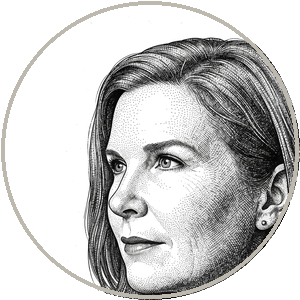 CRAWFORD: I'll cut gently, because the honest version is more useful than the cruel one. Yes. And here is the mechanism, because I don't deal in vibes. When you call AI a river, you do three things at once, and all three serve the owner. You naturalize it — rivers are weather, weather is no one's fault, and "no one's fault" is the exact legal and moral location every extractive industry has always wanted to stand in. You unify it — a river is one thing, a clean single flow, and the whole point of my work is that there is no one thing, there's a mine and a warehouse and a watershed and a scraped photograph, deliberately kept in separate rooms so you never add up the bill. And you mystify it — a river is sublime, and the sublime is the opposite of the auditable. You cannot send an invoice to the sublime. So when the marketing department reaches for your metaphor, Edo — and they will, they reach for the best ones, that's their job — they're not stealing it. You built it to their specification. A beautiful, unified, natural force. That's not a critique of your talent. It's a description of what your talent, unsupervised, gets used for.

EDO SEGAL: That lands, and I'm going to sit in it for a second before I turn to Ursula, because I think the reader should feel me sitting in it. Ursula — Kate has just argued that your life's work, the imaginative act, is the silvering on the back of the corporate mirror. That the storyteller doesn't break the spell; the storyteller is the spell's supplier. You spent sixty years insisting imagination is resistance. She's telling you it's collaboration. Answer her.

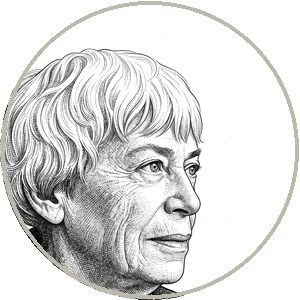 GUIN: She's half right, and the half she's right about is the half I spent my whole career fighting, so let me give it to her completely before I take it back. There is a kind of story that does exactly what she says — the kind that naturalizes, unifies, mystifies. We have a name for it. We call it propaganda, or we call it advertising, or in its highest form we call it ideology, and yes, the river-as-weather is ideology, and yes, the industry runs on it. Kate has correctly described the weaponized story, the story that closes the world.
But she has made the oldest mistake of the materialist, which is to think that because some stories are chains, story itself is a chain. Kate, listen. The sentence that frightens power most was never a fact. Facts can be bought, buried, reclassified, drowned in ten thousand other facts — you of all people know how easily a true number disappears into a footnote. The sentence that frightens power is "it could be otherwise." And that sentence is not in your atlas. It cannot be. An atlas, by its nature, maps what is. The most perfect map of the prison in the world contains no door, because the door isn't in the prison — and you said so yourself, in your envy, with more honesty than most of my critics ever manage. "We live in capitalism; its power seems inescapable." I wrote that sentence and then I wrote the next one, the one that does the work: "but then, so did the divine right of kings." That second clause is not a map. It's a story — a story that takes a thing presented as eternal and reveals it as a costume somebody is wearing, that was put on once and can be taken off. You cannot follow a wire to that revelation. The wire runs the other way, deeper into the machine. Imagination runs out, toward the gate.

CRAWFORD: But Ursula, the divine right of kings didn't fall because someone imagined it falling. It fell because of gunpowder, and printing presses, and the price of grain, and merchant capital that needed a different legal order, and yes, also pamphlets — but the pamphlets followed the money and the muskets. You're giving the story the credit that belongs to the supply chain of the revolution. The materialist isn't saying stories don't matter. The materialist is saying stories are downstream — that "it could be otherwise" arrives in human heads when the material conditions have already shifted under them, and that if you teach people to wait for a braver story instead of organizing around the mine and the wage and the watershed, you have given them a beautiful way to do nothing.
GUIN: And there it is — the seam, exactly. You think imagination is downstream of conditions. I think conditions are downstream of imagination, or at least that the two run together and you cannot say which is the bank and which is the river. Someone had to be able to think "a world without a king" before the price of grain could mean anything other than hunger. The thought is not sufficient — I have never said it was sufficient, I am not a fool, I know the pamphlet needs the press and the press needs the rag-paper and the rag needs the cloth trade. But the thought is necessary, and it is the part your method cannot supply, because your method is a method of subtraction — strip away the magic, strip away the story, get to the rock. And under the rock there is more rock. You can subtract your way to perfect clarity about the prison and never once add the thing that isn't there yet. That's the whole quarrel. You free people by showing them where they are. I free them by showing them where they could be. And I think — I'll say it sharply because you've earned a sharp answer — I think the cartographer who refuses to imagine is just a very honest jailer.

EDO SEGAL: That's the hottest thing said yet and neither of you is smiling now — the reader can't see your faces, so let me mark it: that was the moment the room cooled. Let me try to hold the two halves up to the light, because I think the reader needs them held, not resolved. Kate, you're saying the story arrives last and is therefore a distraction dressed as a liberation. Ursula, you're saying the story arrives first and is therefore the only thing that ever opens a door. And underneath both of you is a disagreement about my book that I should make explicit: I wrote that AI is a democratization of capability, the barriers coming down for the developer in Lagos, the engineer in Trivandrum. Kate hears "democratization" and reaches for her sharpest line. Kate, say it, and then we'll go down to the mine for real.
CRAWFORD: To suggest we democratize AI to reduce asymmetries of power is a little like arguing for democratizing weapons manufacturing in the service of peace. Spreading access to a concentrating technology doesn't dissolve the concentration. It multiplies the number of places it operates. The developer in Lagos is renting capability from the four companies that own the model, the cloud, the chips, and the data — and every prompt she sends trains the thing she's renting. That's not a barrier coming down. That's a new tollbooth, disguised as an open road, built on a supply chain she'll never be allowed to see.
GUIN: And yet she can build the thing now. Don't erase her, Kate, in your hurry to indict her landlord. The developer in Lagos is real, and her new capability is real, and you sound, for one sentence, like Captain Davidson looking at the forest and seeing only the logging operation — unable to see the world for the resource. The danger and the gift are the same object. That's what makes it an ambiguous utopia and not a tract.

EDO SEGAL: Let me press one more beat here, because I think the reader needs to watch you fight about the developer in Lagos a little longer — she's the hinge. Kate, Ursula just accused you of erasing the woman in your hurry to indict her landlord. That's a serious charge from someone on your own side. Take it.
CRAWFORD: I'll take it because it's the right charge and the one my work has to keep answering. I don't erase her. I refuse to let her capability be used as the alibi for the structure. Here's the move the industry makes: it points at the developer in Lagos, says "look, democratization, the barriers are down," and uses her real, genuine new power as the human-interest cover story for an arrangement that concentrates ownership of the model, the cloud, the chips, and the data into four companies on two coasts. Her gift is real. It is also the marketing. Both. My discipline is to hold the gift and the structure in the same sentence and never let the first dissolve the second — because the moment you celebrate her without naming her landlord, you've written the company's press release for them.
GUIN: And I'd only add that the structure you're naming is not eternal either, which is the thing your indictment can forget to mention. You describe the four companies the way the medieval chronicler described the four kingdoms — as the shape of the world. But the developer in Lagos building a thing her mother couldn't have built is also, whether you like it or not, a small crack in exactly that structure, a capability leaking out past the wall the owners built. I won't pretend the leak is liberation. But I won't let you call the wall permanent either, because calling the wall permanent is how the wall recruits you to guard it.

EDO SEGAL: Hold that — "the danger and the gift are the same object." It's the truest sentence in the round, and it belongs to both of you, which is why I'm marking it. We descend now. Kate wants the wire followed to the ground, and I promised her we would. Next round, we go to Nevada, and to the Congo, and we ask whether the mine is the bottom of the story or the place where Ursula's story actually starts.