The Word for World Is Lithium

 EDO SEGAL: Kate, you open Atlas of AI not with a model but with a mine, and you've called the thing the whole field is haunted by the Cartesian dream — the fantasy that AI is a disembodied mind, a pure intelligence floating free of matter and labor and world. I want to give you a full, uninterrupted run at the most material version of your argument, because Ursula needs to receive it at full strength before she answers from her forest. Make the case that there is no such thing as a disembodied mind in the machine, and tell me what's at stake in the fantasy that there is.
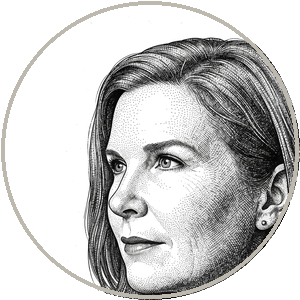 CRAWFORD: The fantasy is everywhere in how the field talks about itself — the dream of a mind in a box, a reasoning engine floating free of matter and history. And it's not an innocent dream. Disembodiment is a way of evading responsibility. If the system is just a mind, then it has no mine, no power plant, no underpaid annotator, no scraped photograph behind it. It simply thinks. But there is no version of it that floats. The mind is plugged into the grid. It is cooled by the river and built from the rock. It was taught by workers and trained on data taken from people who did not consent. Embodiment is not a feature it might someday acquire — it is the condition it has never escaped. And the deepest move the dream makes is to collapse deep time into product time. A battery powers a data center for a season by drawing on mineral deposits the earth took hundreds of millions of years to lay down. We're spending a geological inheritance to power a convenience measured in product cycles, and calling the result progress. The Cartesian dream lets us not feel that, because a floating mind has no metabolism, no appetite, no waste. The real system has all three, at planetary scale. And the political payoff of the dream is precise: you cannot regulate a ghost. You can only regulate a factory, a supply chain, a company, a set of choices made by people. So the people who'd rather not be regulated have every incentive to keep the mind floating. The immateriality isn't a misunderstanding. It's a strategy.
EDO SEGAL: Ursula, Kate has just collapsed the cloud into the rock and the season into the epoch. And I think she's standing, without quite saying so, in your forest. You wrote a novel in 1972 where the word for world is the word for forest, where colonizers see "lumber" and cannot perceive the living system they're killing because their language has no category for it. Kate is saying the AI industry sees "the cloud" and cannot perceive the planet it's metabolizing. Is she telling your story? And if she is — does that mean the materialist and the mythmaker have been walking toward the same forest from opposite ends the whole time?
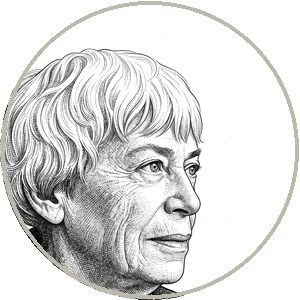 GUIN: She's telling my story almost word for word, and I'm moved by it, and I'm going to use the moment of agreement to locate the one crack that runs between us, because the crack is the whole reason we're both in the room. Yes — Captain Davidson sees lumber where there is a world, and the AI industry sees cloud where there is a planet, and the structure of the blindness is identical: a language that has amputated the category you'd need in order to feel the crime. Kate's atlas is the great anti-amputation project of our time. It restores the categories the cloud cut away — the mine, the worker, the watershed. I bow to it.
But notice what Kate does at the very end, and what she has to do, given her commitments. She says the danger of the floating mind is that you can't regulate a ghost, so she pulls the mind back down into matter so it can be governed. Correct, necessary — and also, I think, not quite enough, and here's the crack. In my forest, the Athsheans don't save the world by proving the forest is a regulable resource. They save it — at terrible cost, in a way I wrote as tragedy, not triumph — because for them the forest was never a resource in the first place. It was kin. The word for world was forest. Their defense rested not on a better accounting of the forest's material value but on an entirely different relation to it, one that lived in their dreaming, their songs, their cosmology — in their stories, Kate. You can drag the cloud down to the rock and make it auditable, and you should. But auditing the rock still treats the rock as standing reserve, as inventory, as the kind of thing that has costs you tally. The forest people didn't tally the forest. They were in relation to it. And only a story — never an audit — can teach a culture to stand in relation to a thing instead of standing over it with a clipboard. Your materialism saves the planet as a resource to be managed. My fear is that "resource to be managed," even managed justly, is the exact frame that got us here. The deepest cure isn't a fairer extraction. It's the recovery of the word that makes the world unextractable — kin, not stock. And that word is a story or it is nothing.
CRAWFORD: That's the most serious challenge anyone's put to me in years and I want to honor it by not pretending I have it solved. You're saying my materialism, by insisting everything is matter to be accounted for, might quietly reproduce the very logic of the standing reserve — the world as inventory — that drives the extraction in the first place. That even a just accounting is still an accounting, and the accounting is the disease. I feel the force of it. Where I'll hold my ground is here: I don't have the luxury of waiting for the culture to recover its sense of the forest as kin while the actual forest is being clear-cut this quarter. The relational transformation you're describing is real and necessary and slow, and the bulldozer is fast. So I'll make the audit-based argument that buys time, and I'll defend the watershed with the clipboard, precisely so there's still a forest left for your story to re-enchant. But — and this costs me — I think you've correctly identified the ceiling of my method. Management is not the same as reverence, and a civilization that only manages will manage itself, justly and completely, into a ruin. I can buy the time. I can't, by myself, change the relation. That's the thing I can't draw.
GUIN: And that's the most generous thing the cartographer has said to the novelist all night, and I'll match it: without your clipboard there's no forest left for my story to save. We need each other's tools in our hands at the same time, which is harder than either of us being right.
EDO SEGAL: That's convergence five, and it's the deepest of the night — I'm marking it and then leaving it alone, because it's almost too quiet to survive being summarized. The audit buys the time; the story changes the relation; the planet needs both clocks running at once. I'm going to do something I rarely do and route this straight through the kitchen table before we go on, because the reader deserves it in the plainest possible terms. A parent reading this, exhausted, at the end of a day, asks: so what do I actually do — teach my kid to follow the wire, or teach her to imagine otherwise? And I think the honest answer this room has built is: both, and neither is optional, and a school that does one without the other is failing her. Hold that. Next round, the cost lands closest to home — not the distant mine but the near loss, the thing the smooth machine is quietly taking from the person using it. The death cross, and the disembodied user.