Opening Positions

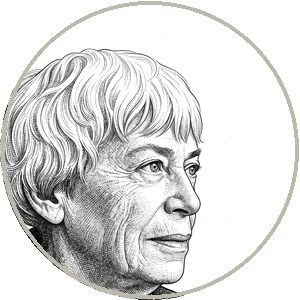 GUIN: I want to begin with a city, because I always have, and because the city is the whole argument in miniature.
The city is called Omelas, and it is beautiful. I was careful about that when I wrote it, and I'm careful about it now: the beauty has to be real or the story is a cheat. Omelas has music and science and love and bright air and no kings and no slaves — except one. In a basement, in the dark, there is a child. The child is kept in filth and fear, and everyone in the city knows, and the entire happiness of the city depends on the child's misery, and the terms are absolute: free the child, and the whole shining city goes dark. Most of the citizens, when they are taken to see the child, weep, and then go home, and stay. A few say nothing, and walk out the gates, and do not come back, toward a place even less imaginable than the city of happiness.
Now. I have been told what these machines are, and I will tell you what I see. I see Omelas with a clean interface. The festival is the fluent answer, the instant image, the collapse of the distance between wanting a thing and having it — and I will not insult anyone by pretending that festival is fake. It is real. The child, though. The child is in the basement, and tonight Kate is going to take us down the stairs and show us how many children there actually are, and where they live, and what they are mining, and I am grateful to her in advance, because that descent is the most important journalism of our age.
But here is where I stop being only her ally and start being her opponent, and I want to be honest about the seam. Kate's whole magnificent project is to make the basement visible. Mine was always something stranger and, I will argue, more dangerous to power: to make the gates visible. Because the deepest thing in my story is not the child. Everyone remembers the child. The deepest thing is the sentence that ends it — that some people walk away, toward a place that "is even less imaginable to most of us than the city of happiness," and that this place is "not less real" for being unimaginable. The walking-away is an act of imagination. It is the refusal to believe that Omelas is the only city that could exist. And the machine's deepest spell — deeper than the hidden mine, deeper than the hidden worker — is the spell of inevitability: the feeling that this is simply how the future is, that the river was always going to find this channel, that there is no outside to Omelas. You cannot follow a wire out of that. There is no wire that leads to "another world is possible." There is only the story. We will need writers, I said once, who can remember freedom. I meant it as a warning about a fear-stricken society and its obsessive technologies, and the obsessive technology has now arrived, more obsessive than I could have dreamed. My case is that the supply chain, followed all the way to the ground, ends at a wall — and that only imagination has ever found the door in the wall. That's my opening.
 EDO SEGAL: Kate.
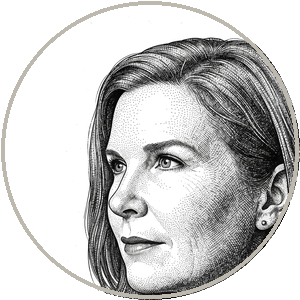 CRAWFORD: That was beautiful, and I want to be careful, because beauty is exactly the thing I'm here to be suspicious of.
Let me begin where Ursula refuses to: not with a city, but with a mine. Drive out into the Nevada desert, to a place called Silver Peak, and you will find the only operating lithium mine in the United States — a vast grid of evaporation ponds, brine pumped up from underground and left to dry in the sun for eighteen months until what's left is the white salt that makes a battery hold a charge. That lithium is in the data center that answered the child's essay prompt. So is cobalt, much of it from the Democratic Republic of Congo, some of it dug by hand, some of it by children — real children, Ursula, not metaphors, in real pits, for real wages of a couple of dollars a day. So is the rare earth, the overwhelming majority of which is discarded as poisoned waste to extract the usable sliver. So is the electricity, still substantially drawn from carbon, at a scale I once estimated would rival aviation and that the generative wave has blown past. So is the water, evaporated to cool the servers, drawn from specific watersheds, in regions that can least afford to lose it. We are spending an inheritance the earth took hundreds of millions of years to lay down in order to power a convenience measured in product cycles. That is not a story I am telling you. That is the bill.
Here is my opening claim, and notice how it differs from Ursula's at the root. She says the deepest spell is inevitability and only a story breaks it. I say the deepest spell is immateriality, and no story breaks it — only the map. The single most successful sentence the industry ever wrote is the word "cloud." It floats. It suggests computation freed from the planet, the smokestack replaced by the screen. It is the most expensive illusion ever sold, because the cloud is made of rock, and the rock has to be torn out of the ground by someone, somewhere, who did not get a vote. My life's work is one sentence: AI is neither artificial nor intelligent. It is made of natural resources, fuel, human labor, infrastructure, logistics, and the histories of classification we inherited from older systems of power. And here is why I distrust Ursula's solvent even as I love her: the better the story, the cleaner the cloud. Every time we mythologize this thing — call it a river, a mind, a magic, a new participant in the medium — we make the mine one shade more invisible. Story is not the cure for the spell. Story is the silvering on the back of the mirror. You want to break the enchantment? Stop telling tales about the enchanter and follow the wire. It always ends somewhere. Somewhere is always inhabited. That's mine.
EDO SEGAL: Before I let the rounds begin, I want to name the person I think you're both secretly fighting for, because the reader is probably her. In my book I called her the silent middle — not the triumphalist who celebrates the machine, not the refusenik who smashes it, but the vast majority who use the tools, benefit from them, and lie awake with a discomfort they can't name. Kate, when you map the mine, who are you mapping it for? And Ursula, when you tell the story, who's the reader you're reaching toward? I suspect it's the same exhausted person, and I want to know what each of you is trying to do to her.
CRAWFORD: She's exactly who I'm working for, and the reason is practical. The triumphalist won't read my map and the refusenik already agrees with it. The silent middle is the only one whose mind is genuinely undecided, and she's undecided because she's been handed a feeling — the discomfort — without the facts that would let her act on it. My job is to convert her discomfort into knowledge. Not to make her feel worse. To tell her precisely what she's uneasy about: the mine under her phone, the worker behind her chatbot, the watershed her query drank from. Discomfort is useless. Knowledge can be organized.
GUIN: And I'm reaching for the same woman, but I want to do the opposite thing to her discomfort, which is why Kate and I are in this room. I don't want to convert her discomfort into knowledge. I want to convert it into permission — permission to believe that the unease is not a personal failing or a nostalgia to be medicated away, but an accurate perception that something is wrong and could be otherwise. The silent middle is silent because the culture has told her that her discomfort is sentimental, unserious, the complaint of someone who can't keep up. The story says: no, your discomfort is the most clear-sighted thing about you. Hold onto it. It's the beginning of freedom, not the residue of fear.
CRAWFORD: And there's the difference in one sentence. You want to validate the feeling. I want to weaponize the fact. And maybe she needs both, in that order, which is becoming the most annoying refrain of my evening.
EDO SEGAL: Before I frame the rounds, one discipline I impose on every long conversation, because it pays off two hours later. Each of you, in a few sentences: what do you envy in the other's position? Not respect. Envy. The thing her side gets to have that yours doesn't. Ursula first.
GUIN: I envy the ground. Kate gets to point at a pond in Nevada and a pit in the Congo and say, here, touch it, this is true, and no one can argue her out of a fact she can stand on. My whole instrument is made of air. I build cities that don't exist to tell the truth about the one that does, and there are mornings when that feels like bringing a poem to a war. She brings evidence. I bring Omelas, and Omelas is not in Nevada. I envy the weight of her hands.
CRAWFORD: And I envy the door. Ursula gets to write the sentence "another world is possible" and have it land as something other than naïveté, because she's earned it across sixty years and a hundred imagined worlds. I can map this one perfectly — every mine, every worker, every watershed — and when I'm done, the map is a map of a prison, and the most honest thing I can say is "look how completely you are enclosed." She can say "look, there's a gate." I have never once, in all my cartography, been able to draw the gate, because the gate isn't in the territory. It's in the imagination, and I don't trust the imagination, and that distrust is the thing I'd give a great deal to be free of tonight.
GUIN: That may be the most honest thing either of us says all night, and we've barely sat down.
EDO SEGAL: Two openings and two envies, and the architecture of the whole evening is already standing. It isn't that one of you loves the machine and one of you fears it — you'd both tell the reader to be afraid, and to be afraid of the right things. It's that you locate the spell in opposite places, and you've each brought the solvent that dissolves the other's. Ursula says the danger is that we'll believe this future was inevitable, and only a braver story can free us. Kate says the danger is that we'll believe this machine is immaterial, and only following the wire can free us. Hold both. We start the rounds at the exact seam — at the question of whether a story is a weapon against power or a gift to it.