The Death Cross and the Disembodied Mind

 EDO SEGAL: I want to bring the wire all the way home now — not to the distant mine but to the desk, the classroom, the hands of the person using the thing. In my book I named a moment I called the software death cross — the point where the cost of generating a capability with AI falls below the cost of a human carrying it, and the two lines cross, and the market quietly stops paying for the human depth. I meant it as a warning. Ursula, you read that chapter and told me the metaphor itself was a confession — a financial metaphor, a cross that kills, borrowed from exactly the weapon-register you spent your life refusing. So let me ask you both: when the death cross crosses, what exactly dies? Ursula first, because you've been writing the obituary for this particular death for fifty years.

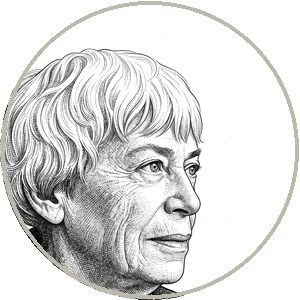 GUIN: What dies is the practice, and the practice is the person. I have to be careful here, because the easy version of this is nostalgia and I despise nostalgia. So let me be exact. When the machine writes the student's essay, the essay appears without the transformation. The student receives a comprehension-shaped object and has not comprehended anything, because the comprehension was never in the essay — it was in the wrestling that produced it, the specific suffering of sitting with confusion until it yields to language, which is the act by which a mind makes itself. The product is the residue. The transformation was the point. And the death cross crosses precisely when the market stops being able to tell the difference, because from the outside the residue looks identical whether a human was changed making it or a machine generated it in seconds. The lawyer who stops reading the cases, the programmer who stops debugging, the writer whose blank page is filled before she arrives — each gains the output and loses the friction, and the friction was the soil the judgment grew in. Five years on, the soil is gone and no metric noticed, because the metrics measure the essay, not the student. That's what dies. Not jobs — or not only jobs. The conditions under which a particular kind of human being gets made. And it dies quietly, in the smooth, with no body, which is why it's the perfect crime.

EDO SEGAL: Kate, Ursula has just described a loss that is interior, almost invisible, located inside the user — the aesthetics of the smooth dissolving the friction that built judgment. It's a humane and frightening account. But I suspect you want to push on it, because it's a story about the user's inner life, and your whole discipline is a refusal to stay inside the user's inner life when there's a supply chain to follow. Does Ursula's death-cross obituary risk being one more disembodied story — a tale about the lonely soul at the desk that conveniently forgets the warehouse?

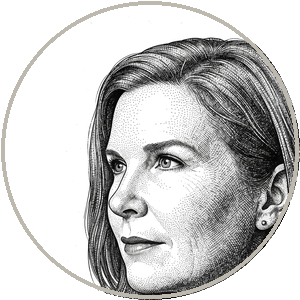 CRAWFORD: You've read me exactly, and I want to push without dismissing, because Ursula's account is true — it's just suspended one floor too high. Here's my worry. The story of the deskilled writer, the atrophied lawyer, the student who lost the friction — it's a story about relatively privileged people losing an interior good. And it's real, and it's sad, and it's also exactly the kind of loss the culture is most willing to grieve, because the people losing it have voices and bylines and book contracts. Meanwhile the death cross has a second face that gets no obituary at all: it doesn't only deskill the writer at the desk, it intensifies the worker at the bottom. The same systems that let the lawyer skip the reading are surveilling the warehouse worker to the second, scoring her efficiency, automating the pressure a human supervisor used to apply. The annotator who trained the model is then monitored by a model that flags when she's off-task — teacher and training-data at once, and the second role never acknowledged. So when we mourn the friction the privileged user lost, I want to insist in the same breath on the friction the precarious worker can't escape. Ursula's interior loss is real. But it's the loss the system is most comfortable letting us feel, because grieving the writer's soul costs the owners nothing, while the warehouse contract would cost them plenty.

GUIN: That's a fair and necessary correction and I accept it without flinching — and then I'll insist you've proved my point in the act of correcting me. You just told a story. A story about the warehouse worker and the surveilling model and the cruel circularity of the annotator monitored by the thing she trained. It has characters, a structure, a terrible irony, a shape that makes the reader feel the injustice as injustice rather than as a statistic. You reached for narrative the instant you needed me to care about the right person. You always do, Kate — your maps are full of it, the child mining cobalt who powers the voice answering a question about the weather, that's not a data point, that's a sentence built to break the heart, and it works. The materialist who thinks she has abolished story has merely stopped noticing the stories she tells. I'd rather we both noticed. Because the only argument between us, when you strip the rest away, is whether the story should know it's a story. I think the unconscious story is the dangerous one — the river-as-weather, the cloud, the inevitable. The story that knows it's a story, that says "let me tell you about a child in a pit, and let me tell you it did not have to be this way" — that one is the cure.

CRAWFORD: All right. Yes. I tell stories. I tell them on purpose and I'd defend every one as anchored to a verifiable mine and a real wage, which is the only discipline I trust to keep a story honest. But you've caught me fairly: the anchor doesn't abolish the story, it just keeps it from floating. Maybe that's the actual difference between us, smaller and truer than "story versus supply chain." Not whether to tell stories. Whether the story is tethered to the ground or set loose from it. A tethered story is a map. An untethered one is a spell. And I've spent my life mistaking my tethered stories for not-stories, which let me look down on yours, and that was arrogant, and I'm saying so on the record.

EDO SEGAL: One more turn before I name it, because I want the reader to feel how far you've come. Kate, an hour ago you'd have said story was the enemy's tool, full stop. Now you're defending the tethered story. What changed?

CRAWFORD: What changed is that Ursula kept catching me in the act. Every time I needed you to care about the right person — the child in the pit, the annotator with nightmares, the worker timed to the second — I reached for a story, because the fact alone doesn't move anyone to act. A number is inert. I'd been telling myself my work was anti-narrative when it was actually narrative with footnotes, and the footnotes are the discipline, but the narrative is the engine. Admitting that is uncomfortable because it means I can't look down on the mythmakers anymore. We're in the same trade. I just insist on a chain of custody back to the ground, and she insists the chain doesn't kill the magic. I think we're both right and I find it intolerable.
GUIN: I find it the opposite of intolerable. I find it the first honest peace I've had with a materialist in a long career of being told that stories are what serious people grow out of. You haven't grown out of them, Kate. You've disciplined them. That's better than abandoning them, and it's better than my own tradition's worst habit, which is to let the story float so free of the ground that it becomes the very enchantment it meant to break. Tether mine. I'll wing yours. Maybe between us we get a story that's both true and free, which is the only kind worth telling.

EDO SEGAL: Stop — that's the sixth convergence and maybe the one that reframes the whole night: the fight was never story versus supply chain. It was tethered story versus untethered story. The map is a story anchored to the ground; the spell is a story cut loose from it; and the cure for the spell is not the absence of story but the tether. You found that together, against each other, two hours in. I'm going to hand you the room now, because we've reached the round I always save for last before the close — the one where I leave in every way but legally, and the two of you question each other with no referee. Save nothing. Rescue no one. The Crossing, after this.