Inevitability and Who Gave You the Right
 **EDO SEGAL:** Timnit, beneath every specific critique you make, there's one recurring gesture, and I want to name it as a gesture. When someone presents a technology as natural, necessary, or unstoppable, you ask why, and you refuse to accept inevitability as an answer. You've said it about "AI for social good" — why start with the AI at all, why does the tool precede the problem? Ray's entire framework is, in a sense, the most powerful inevitability argument ever constructed: a law, with the word law in it. So this is the collision at its purest. Make the case that the future is not yet written.
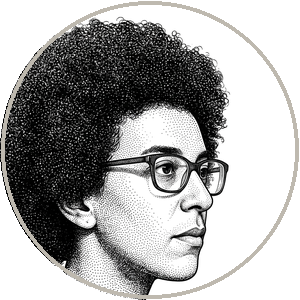 **GEBRU:** The case is almost embarrassingly simple, which is why it's so hard to make heard. Every time the field treats a development as given — the model must be enormous, the system must be deployed, AGI must be the goal, the data work must be cheap — I take the thing it treats as natural law and show it's a decision. Someone chose it. It was funded by someone, for some reason, and it could have been chosen otherwise. [Inevitability](https://www.youonai.ai/fieldguide/med/inevitability_of_novelty) is an ideology — a way of foreclosing debate by pretending there's nothing to debate, of converting contestable choices into the appearance of physics. And Ray's curve is the most beautiful, most data-rich, most sincere version of that ideology ever built. That's what makes it so much more dangerous than a crude one.
Here's the analogy I keep coming back to. If it were simply too hard to build a safe car, would we accept unsafe cars on the road anyway? In every other engineering discipline, the difficulty of making a technology safe is a constraint on whether you may deploy it — not a reason to deploy it unsafely and apologize later. Only in AI has the hardness of the safety problem become a license to proceed regardless. And the burden of justification is backwards. Right now, the person who questions has to prove harm, while the person who builds gets to presume permission. I want it flipped. A field that cannot articulate why a system should be built has not earned the right to build it. That's not anti-technology. It's the ordinary standard we apply to every other powerful thing that can hurt people. And the deepest question under all of it, the one the technical discourse is structured to avoid, is just this: who is permitted to decide what gets built, and on whose behalf? Everything else I've ever written is a footnote to that.
**EDO SEGAL:** Ray, she's just called your law the most dangerous inevitability argument ever made, precisely because it's the most honest. And she's asked the question your framework never asks — not "what will be built" but "who gave anyone the right." Answer the question, not the curve.
 **KURZWEIL:** I'll answer it directly, and then I'll tell you where it breaks. The honest answer to "who gave anyone the right" is: no one, the same way no one gave anyone the right to invent writing, or the printing press, or electricity, or the internet. Permission is not how transformative technology has ever worked, because there is no "we" with standing to grant or withhold it — there are billions of people who will never agree, and a technology that helps most of them and is wanted by most of them does not need the unanimous consent of all of them. So when Timnit asks who authorized this, I think the question, taken to its root, has no answerable form. It assumes a council that doesn't exist.
But here's where I'll concede the real force of it. The fact that permission is impossible does not make accountability impossible, and those are different things. I've been sloppy about that distinction my whole career, and tonight has sharpened it for me. You can't ask the species to vote on whether the curve happens. You can absolutely demand that the people riding it answer for what they do with it — that they disaggregate the harms, pay the workers, document the data, distribute the gains. Timnit's "who decides" can't stop the technology, and I don't think it should. But it can, and should, decide the terms. And on the car analogy — it's good, and it almost gets me, except that we did put cars on the road before they were safe, killed enormous numbers of people, and then built seatbelts and traffic law and crumple zones in response, and the alternative wasn't a world with safe cars. It was a world with no cars and the people who'd have been saved by ambulances dying instead. The safety came from deployment plus pressure, not from withholding.
**GEBRU:** And every one of those seatbelts was forced on the manufacturers, who fought them, the way your industry fights every audit — that's my entire point, Ray, you keep narrating the pressure as if it were part of the curve when it's the thing the curve resists. But I'll take the concession, because it's a real one and it's bigger than you may realize. You just separated permission from accountability and said accountability is owed. That's most of what I've ever asked for. I don't actually need you to agree the curve can be stopped. I need you to stop using the curve to make accountability sound like Luddism. If you'll hold the line you just drew — that the people riding it answer for what they do with it, with teeth, with regulation, with consequences they didn't choose — then we have far less distance between us than this room assumed.
And I want to say something about why refusing inevitability is the opposite of despair, because people read me as the doomer and they have it exactly backwards. The fatalism belongs to the hype, Ray. "The curve will happen, resistance is Luddism, the future is fixed" — that's the genuinely hopeless position, because it tells eight billion people they have no agency, that they're passengers, that the most they can do is brace. My position is the hopeful one. If the technology is a set of choices made by people, then people can choose differently, which means the future is open, which means your no means something and your vote means something and the worker organizing in Nairobi is not shouting at the weather. I am an optimist of an unusual kind: I believe the thing was built by hands, and that hands are not fate. The people who tell you it's inevitable are the ones who've already decided how it goes and would prefer you not interrupt.
**KURZWEIL:** That's a genuinely beautiful inversion and I'm going to sit with it, because you may have caught something true about my rhetoric. When I say "inevitable," I mean the capability — the curve of what becomes possible. I have never meant the outcome, the distribution, the justice of it. Those were always choices, and I've sometimes let the inevitability of the first smuggle in a false inevitability about the second, and that's a real error and the companies have profited from my making it. So let me be precise on the record: the curve is inevitable. What we do on it is not. And conflating those two has been, I think, the single most consequential confusion in my forty years of public argument.
**EDO SEGAL:** Stop. That's the largest convergence of the night and I want it on the record in plain words. Ray Kurzweil just said accountability is owed by the people riding the curve — disaggregation, paying the workers, documenting the data, distributing the gains — and Timnit Gebru just said that if he'll hold that line, the distance between them collapses. You did not come into this room expecting to find that floor together. Mark it as the fourth convergence, and the most consequential. Now — one more round before I leave you alone with each other. The candle, and the question of what cannot be amplified.