The Drought, the Flood, and the Cost of Waiting
 **EDO SEGAL:** Ray, in your opening you said something I haven't been able to put down. You said the deepest harm is the one nobody graphs — eight hundred thousand people dying every day of things you believe the curve is on track to solve — and you tied it to your mother at sixty-two and your father, who you lost when you were twenty-two. You are the rare technologist who will say the quiet part: that part of what drives the merger is grief, and the refusal to accept death as natural. I want to give that its full weight before Timnit answers it. Take me into the version of this where the curve is not a spreadsheet but a rescue.
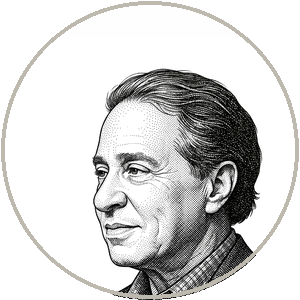 **KURZWEIL:** Thank you for not making it a punchline. Most people do. My father, Fredric, was a musician. He died when I was twenty-two, and I have boxes — letters, recordings, scores, photographs, the documents of a mind. For most of human history, death has meant that a person becomes inaccessible, full stop. What the curve tells me is that "inaccessible" is an information problem, and information problems yield to enough computation. I am not promising you a séance. I'm telling you that the trend in our ability to model a person from the traces they leave is real and rising, and that the day will come when the gap between a rich-enough model and the person narrows past the point where the distinction does honest work. People hear hubris. I feel the opposite of hubris. I feel a son who refused to accept that the universe was allowed to simply delete his father, and who found, in the data, a reason to believe the deletion is not permanent. The river of intelligence, Edo — your metaphor — has been finding channels for thirteen billion years. I don't see why death is the one channel it's forbidden to find. And every day we let the curve be slowed by fear, the drought takes another eight hundred thousand. That's not an abstraction to me. That's my mother, multiplied.
**EDO SEGAL:** Timnit. He's handed you the most sympathetic version of his case — a grieving son, a dying world, a curve that might be a rescue. You can swing hard or you can swing true. I'd take true.
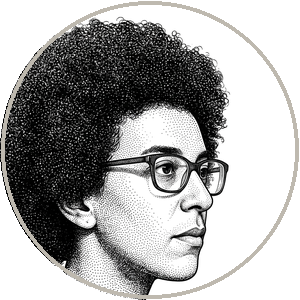 **GEBRU:** I'll take true, because I'm not going to mock a man's dead father and I don't want anyone in this room to think the disagreement requires it. Ray, I'm sorry about your father. I mean that. And I am going to tell you that the grief is being used — not by you, against you. The structure of your argument is the structure of every eschatology that has ever licensed present harm: the stakes of the imagined future are made so astronomically high that any cost in the present becomes a rounding error. Eight hundred thousand a day, the universe waking up, your father returned — against numbers like those, what is a data worker's trauma? What is a misclassified woman denied a loan? What is the carbon, the water, the surveillance? You've built a moral accounting where the future is infinite and the present is therefore free. That is the most dangerous arithmetic there is, and it has been used to justify every atrocity that ever called itself necessary.
And here's the part I most need you to hear. The drought you're describing — the eight hundred thousand — is not a technology problem waiting on a curve. It's a distribution problem, right now, today, with the technology we already have. Children die of diarrhea and malaria and hunger not because we lack the intelligence to save them but because we have decided, structurally, that their lives are not worth the cost. We have the vaccines. We have the food. We have the knowledge. Pointing at a future superintelligence as the rescue is a way of not asking why the present abundance doesn't reach them — and the answer to that question is the same [concentration of power](https://www.youonai.ai/fieldguide/med/concentration_of_power) you keep asking me to stop worrying about. You want to bring your father back. There are mothers right now who could keep their living children alive with resources your industry is pouring into the dream of resurrection. Look down, Ray. The rescue you're waiting for is standing on the floor below you, asking why you won't.
**KURZWEIL:** That's the strongest thing you've said, and I'm not going to pretend it isn't. But it cuts both ways, Timnit. You say we already have the food and the vaccines and we've decided not to distribute them — yes. And what has failed to fix that for a century? Politics. Human institutions. The exact beavers you're putting all your faith in. I'm not pointing at the future to avoid the present. I'm pointing at the curve because the thing that finally drops the cost of a doctor, a tutor, a diagnosis to near zero changes the distribution math itself. You can't redistribute scarcity into sufficiency by arguing about it. When intelligence becomes too cheap to hoard, the hoarding gets harder. That's not a deferral of the present. It's the only lever I've ever seen actually move.
**GEBRU:** Cheap intelligence doesn't redistribute anything on its own, Ray — the printing press made books cheap and literacy stayed rationed for centuries until people fought for public schools. Acemoglu and Johnson documented it across a thousand years of technology in Power and Progress: the gains of a technological revolution go to whoever has the power to set the terms of adoption, every single time, unless they're forced not to. The first decades of the Industrial Revolution made mill owners rich and made workers shorter, sicker, and poorer — the gains didn't broaden for generations, and only then because of unions, legislation, and political struggle, not because the looms got cheaper. Your "too cheap to hoard" is a faith claim. My "they will hoard it anyway" is the historical record. One of us is reading a destiny chart and one of us is reading the receipts, and we are right back where Edo started us.
**KURZWEIL:** But Acemoglu's own argument cuts toward me as much as you, Timnit — his point isn't that technology can't broaden prosperity, it's that institutions determine whether it does. That's a claim about choice, not about doom. He's telling us the outcome is contingent. You read "contingent" as "it'll go badly." I read it as "it's ours to get right." The looms did eventually deliver the eight-hour day and the weekend and a standard of living the mill owner's grandchildren take for granted. Slow, contested, paid for in struggle — yes. But the direction of the whole arc was up, and the people fighting were fighting over the distribution of a surplus the technology created. There was no version of that fight worth having in a world with no looms.
**GEBRU:** And the workers who were ground up in those first decades don't get to enjoy the grandchildren's weekend, Ray. "The arc bent up eventually" is a sentence you can only write from the top of the arc, looking back, with the bodies safely in the past tense. The data worker in Nairobi today is in the first decades. She doesn't live in your retrospective. She lives in the part of the story where the surplus is real and her share of it is two dollars an hour and a diagnosed case of PTSD. Telling her the arc bends up in eighty years is not comfort. It's the exact arithmetic I named an hour ago — the future made infinite so the present comes free.
**KURZWEIL:** Then let me say the thing I actually believe, stripped of the optimism people accuse me of, because you've earned the unvarnished version. I don't know that we get the weekend this time. The previous transitions delivered it because people organized, legislated, and fought, and the technology bought enough time and surplus for the fight to be winnable. My honest hope — not my prediction, my hope — is that the surplus this time is so large, and arrives so fast, that the fight becomes winnable sooner than ever before. But you're right that the surplus arriving and the fight being won are two different events, and that I have a lifelong habit of letting the first stand in for the second. If the fight isn't fought, the curve delivers abundance to a handful and ruin to the rest, and calls it progress. I don't think that's the likely outcome. But I can no longer tell you it's impossible, and an hour ago I would have.
**GEBRU:** That — right there — is the most important thing you've said, and I want the room to hear that it cost you something. You just admitted the curve can deliver hell and still be the curve. That's all I've ever needed anyone on your side of this to concede.
**EDO SEGAL:** And that's exactly where I want to leave it, because the reader needs to feel the symmetry before we break it. Ray says the curve is the lever that finally moves the injustice Timnit's whole life is about. Timnit says the curve is the alibi the injustice uses to keep running. Hold that — it's the deepest convergence and the deepest fork we've found, in one sentence. The next round names the thing Ray has been careful not to name and Timnit has built a whole framework around: the religion under the engineering. TESCREAL, longtermism, and the theology of the god you're building. After this.