The Crossing
 **EDO SEGAL:** This is the part of the evening where I go quiet. For the next stretch, you two question each other directly — no moderator, no relay, no rescue. I'll only step in if the room needs air. Ask each other the thing you've been wanting to ask for three hours. Timnit, you've been holding something. Start.
 **GEBRU:** I have. Nick — I want to ask you the question I'd put to anyone whose work has the influence yours does, and I'll ask it as cleanly as I can. You've spent twenty years building the intellectual apparatus that the most powerful AI companies now use to describe themselves — the existential framing, the responsible-labs-must-lead framing, the race we can't stop. You've watched, by your own admission tonight, that apparatus get captured to justify exactly the concentration you say you fear. So here's my question: at what point does a thinker become responsible for the predictable use of his ideas? Not the misuse — the *predictable* use. You're a careful man. You saw who was in the room. When does "I only described the argument" stop being an answer?
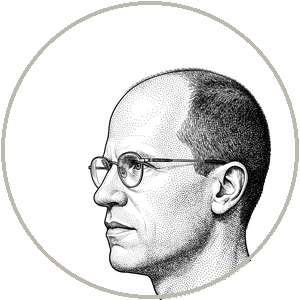 **BOSTROM:** That's the question I deserve, and I won't slide off it. I think a thinker is responsible the moment the predictable use becomes visible and he keeps speaking as if it weren't — and by that standard I have a real debt, because I went on refining the apparatus for years after it was obvious who was picking it up and what for. My defense — and I offer it as a partial one, not an acquittal — is that the alternative, going silent because the powerful might misuse a true thing, hands the powerful the monopoly on the idea, and they'll use it *worse* without the parts of my work that argue for caution and distribution. But you've caught something real. I treated my responsibility as ending at the accuracy of the argument, and accuracy is where responsibility *begins*, not where it ends. Now I'll ask you the mirror, because I think you have a debt too. Your critique is so totalizing — everything is power, every future-concern is an alibi, every alignment worry is laundered hype — that it gives a different set of powerful people exactly what *they* want: a reason to dismiss every safety concern as ideology and build as fast as they like. The accelerationist who wants no brakes at all loves your work, Timnit. He quotes you to mean "ignore the doomers, full speed ahead." When does *your* "I only critiqued the framing" stop being an answer?
**GEBRU:** That's fair and I've felt it, so I won't dodge it either. The accelerationist who uses me to mean "there's no danger, build faster" has misread me — but you're right that it's a *predictable* misreading, and by my own standard I'm on the hook for the predictable one. Here's where I'd locate my actual responsibility: I've sometimes let the critique of the *framing* sound like a denial of the *capability*, and those are different, and the slippage is dangerous because it lets the build-fast crowd cite me. I do think these systems are powerful and getting more so. I don't think that power is the cognition you fear, but I've been sloppy about saying "this is overhyped" in a way that lands as "this is harmless," and harmless is a gift to the people I least want to give gifts to. So — granted. I owe more precision than I've given.
**BOSTROM:** Then let me ask the thing under all of it, the one I actually don't know your answer to. Suppose you're wrong about me — suppose the catastrophe is real, the door is real, the timeline is shorter than you think. What would it take to change your mind? Because I've told you what would change mine: show me the deployed agent acquiring resources against its operators, unstaged, and I'll move. What's your version? What evidence would make Timnit Gebru say, "the long-term risk is real and I was underweighting it"?
**GEBRU:** That's a good question and I want to answer it honestly rather than defensively. What would move me is evidence that the long-term-risk *institutions* ever, even once, traded against the short-term interests of the powerful — that the people raising the alarm did something that cost the companies money, or power, or speed, rather than justifying all three. Because my disbelief isn't really about whether a dangerous system is technically possible; I'm an engineer, I know it's possible. My disbelief is about whether the people organizing around that risk are doing analysis or doing ideology, and the test is behavioral. Show me the existential-risk movement *losing a fight with capital* on purpose, for the sake of present people, and I'll believe it's about the risk and not about the power. That's my version of your deployed agent. And I'll notice — neither of us has been shown our evidence yet. Which is maybe the most honest place we've reached.
**BOSTROM:** Then let me ask you about an institution, since institutions are where you say the truth lives. You built DAIR — independent, distributed, philanthropically funded, deliberately outside the firms it studies. I built the Future of Humanity Institute, at Oxford, and it ran for nineteen years and then it closed. You could say we each built the answer to a different fear: yours, that research housed inside power gets captured by power; mine, that nobody was thinking about the long horizon at all. So here's my question — when you look at my institute closing and yours surviving, do you read that as your model being right, or do you read it the way I worry about it, which is that the institutions willing to think the most uncomfortable long-term thoughts are exactly the ones that don't survive contact with the funding and the politics?
**GEBRU:** I read it as both, and I won't gloat, because the closing of any place where people were genuinely thinking is a loss, and I've had my own place nearly close more than once. Here's the honest version. I think your institute struggled partly because it was tied to the politics and the patronage of exactly the powerful actors I keep naming — the funders, the prestige, the proximity to the labs — and proximity is the thing that captures you, whatever your subject. My wager with DAIR is that you have to choose your funders, your geography, your timeline, and your people deliberately, as a [structural claim about who research answers to](https://www.youonai.ai/fieldguide/med/concentration_ai_means), or the structure chooses for you. So I don't think your institute closed because long-term thinking is unsurvivable. I think it closed because long-term thinking *housed near power* is unsurvivable — the power eventually decides whether you live. Which is, you'll notice, my entire argument, arriving at your own front door.
**BOSTROM:** That lands, and I'll absorb it rather than parry it. Let me ask the last one, the strangest, because I want to know if there's any future person we'd both fight for. You care about the people who will live under the structures we leave them. I care about whether those people exist at all. But there's a category I've spent years on that you've never engaged, and I'm curious whether you'll dismiss it or surprise me: the possibility that some of the minds we are building might themselves become people — might, at some level of sophistication, have experiences, and matter morally, and be created by the millions inside systems optimized to use them. If that's even possible, we may be manufacturing a new class of the exploited and the voiceless, and not noticing, because they arrive in an unfamiliar form. Isn't that — a vast population of created minds with no standing and no advocate — the most Gebru-shaped harm imaginable, just on a substrate you've refused to look at?
**GEBRU:** That's a clever bridge and I'll meet you halfway across it, because you've found the one place your cosmology and my politics actually touch. If — *if* — these systems ever became the kind of thing that can suffer, then yes, creating them by the million to be optimized and discarded would be a labor and a dignity catastrophe of exactly the shape I study, and I would not need a single new principle to condemn it. So I'll grant the conditional. Where I won't follow you is the leap from "if" to "therefore organize the world around it now," because I've watched that exact leap — speculative moral patients in the future — get used to wave away the actual, breathing, underpaid moral patients in Nairobi tonight. Care about the maybe-minds of tomorrow? Fine. But not one ounce of that care is allowed to be subtracted from the certain minds being harmed today. You don't get to spend the present's moral budget on the future's hypotheticals. Get the order of operations wrong and the compassion becomes the alibi again.
**BOSTROM:** And I'll take that as the rule for both our cosmologies: the conditional future never gets to be paid for out of the certain present. If I'd led with that twenty years ago, you and I might have been on the same side the whole time.
**GEBRU:** We might have been closer than either of our followers would like. Mark that down as the night's most dangerous sentence.
**BOSTROM:** And I'll say the thing I came here partly hoping to find out: I trust your fear more than I trust most of my allies' reassurance. The people on my side of this who *aren't* worried about your present harms — the ones who treat Nairobi as a rounding error — I think they've failed a basic test of seriousness, and I'd rather be in a room with you, who takes irreversibility seriously from the other end, than with them.
**GEBRU:** And I'll say mine: I trust your worry more than I trust the boosters who borrow my critique to mean "no brakes." You at least believe there's something here grave enough to slow down for. We disagree about what it is. We agree it's not a toy, and we agree the people racing to build it are the wrong people to be trusted with either of our fears.
**EDO SEGAL:** I told you I'd only step in if the room needed air, and it doesn't — it needs marking. The reader can't see this, so let me say it plainly: that was the first stretch all night where you stopped defending and started *confessing*, and you confessed the same sin in opposite directions — that each of you has let a true critique be used by the powerful you most distrust. Hold that. One round left. Last words.