The Genealogy

 EDO SEGAL: Timnit, with Émile Torres you wrote about a bundle of beliefs you gave an acronym — TESCREAL — transhumanism, extropianism, singularitarianism, cosmism, rationalism, effective altruism, longtermism. The claim that made it explosive was genealogical: you traced the worldview animating the race to build godlike AI back to twentieth-century eugenics. Make the case, carefully, because it's serious. And Nick — you are, by any honest accounting, named in that genealogy. So you get the full floor to answer. But Timnit first.
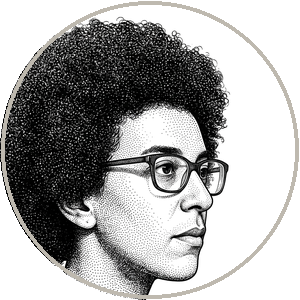 GEBRU: Carefully, then, because the care is the argument. The claim is not that everyone who worries about AI is a eugenicist — that would be a slur, and it's not what we wrote. The claim is structural and historical. There's a cluster of overlapping ideologies, with shared intellectual ancestry and shared institutions and overlapping funders, that has become a driving motivation behind the push for artificial general intelligence. And when you follow the normative framework underneath it — the impulse to improve and perfect and optimize the human, to engineer a superior future being, to spread an expanded posthuman intelligence across the cosmos — you find it carries forward, in new vocabulary, the logic of its eugenic ancestors. The dream of the perfect machine is the old dream of the perfect human in different clothing. And the function of that worldview, whatever its adherents sincerely feel, is to license enormous expenditure and to deflect from present harm — because if you genuinely believe you're steering humanity past an extinction-or-utopia bottleneck, then almost any cost in the present becomes a rounding error, and almost anyone questioning you becomes an obstacle to salvation.
EDO SEGAL: Nick. The floor is yours, and it's a real floor.
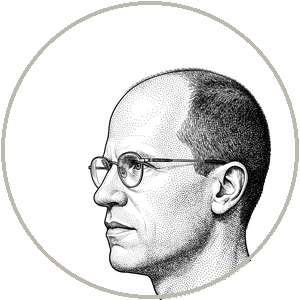 BOSTROM: Thank you, and I'll take it seriously because the charge is serious and parts of it land. Let me separate what I accept from what I reject, because conflating them would be the easy out.
What I accept: there is a real intellectual lineage connecting transhumanism, longtermism, and the AI-risk community, and I am part of it — I co-founded the transhumanist association, I've written on human enhancement, the connections are not a conspiracy theory, they're my CV. I also accept that some of the historical figures in the broader enhancement tradition held genuinely repugnant views, that the field has a documented problem with that inheritance, and — I'll say this plainly because dodging it would prove her point — I have my own past writing that was rightly condemned, that I've disavowed, and that I am not going to use this floor to relitigate. The tradition has ugliness in its basement and pretending otherwise would be dishonest.
What I reject is the inference. Genealogy is not refutation. The fact that an idea has disreputable ancestors tells you to scrutinize it — it does not tell you it's false. Modern genetics has eugenics in its family tree; that's a reason for vigilance, not a reason to reject genetics. So the question can't be "where did this worry come from." It has to be "is the worry correct." And the orthogonality thesis, instrumental convergence, the irreversibility of a first catastrophe — these stand or fall on their logic, not on whether the people who first stated them were admirable. I'd also gently note that the move "this idea is structurally eugenic, therefore we may dismiss it" is itself a way of not engaging the argument — it's the genetic fallacy wearing the robes of justice, and it can be used to wave away anything inconvenient.
GEBRU: But I'm not making the genetic fallacy, and I want to be exact, because this is where people misread us. I'm not saying "this idea has bad ancestors, therefore it's false." I'm saying "this idea has a social function, and the function is to direct vast resources and authority toward speculative futures while a documented harm is happening now — and we should evaluate the bundle by what it does in the world, not only by what its champions feel in their hearts." Those are different claims. You keep answering the first because it's the easier one. Answer the second. What does the worldview do? It justifies trillion-dollar concentration. It tells regulators to look at the cliff instead of the contract. It produces a priesthood of a few responsible labs who must be trusted to steer us, which is — notice — exactly the concentration of power we both said we feared two hours ago. The genealogy isn't the indictment, Nick. The genealogy is the evidence for the indictment. The indictment is the function.
BOSTROM: That's a cleaner version of the argument than the one I usually get handed, and it deserves a cleaner answer. Here it is. I think you're describing a real and damning failure mode of my ideas, and I think you're treating a failure mode as if it were the essence. Yes — the worldview can function as you describe, and where it has, I think it's been corrupted, and I've watched the corruption with something close to grief, because the thing I cared about was caution and what it became was a permission structure for racing. But a worldview that has been captured to serve power is not the same as a worldview whose purpose is to serve power. The Sermon on the Mount has been used to justify empire. The function it acquired is not the function it had. I'd rather fight to recover the argument from its abusers than concede it to them — and conceding it to them is, I think, what dismissing it on the basis of its function amounts to.
GEBRU: Then we have a real disagreement, and I respect it more than the dodge. You want to rescue the argument from its function. I think the function is too reliable, too consistent, too profitable to be an accident, and that at some point a worldview that always serves power and never once serves the powerless should be evaluated as what it does. We're not going to settle it. But I'll say this — that was the most honest answer to the TESCREAL critique I've heard from anyone inside the tent.
EDO SEGAL: I'm going to do something I rarely do and mark a disagreement as precious, because the reader needs to see it. That round did not converge, and it shouldn't have. You located the danger of the same idea in two different places — Timnit in its function, Nick in its capture — and neither of you blinked. The reader gets to leave this chapter unresolved, on purpose. Hold it. Because the next round takes Nick's most uncomfortable idea — the one where he, of all people, contemplates concentrating power on purpose — and hands Timnit a live wire. The black ball, after this.