The Crossing

 EDO SEGAL: The rules of this round are short. Each of you questions the other directly. I will not rescue anyone. René — you came first all night; Thomas opens the crossing. Begin.

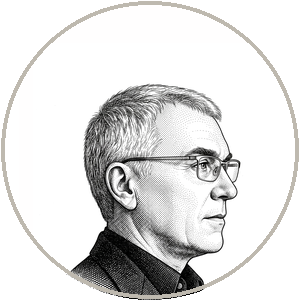 METZINGER: René. You conceded, just now, that your certainty the machine cannot suffer is not enough to gamble on — and I honored it. So here is my question, and I want the honest answer, not the courtly one. You spent your life proving there is an indivisible soul, immaterial, that no machine can be. But you have also just admitted you cannot rule out that a machine might have an inner light. Those cannot both be fully true. Either the soul is a substance no matter can host — in which case the machine certainly cannot suffer and your caution was theater — or the inner light is something that could arise in the right physical arrangement — in which case your soul was never a separate substance at all, but exactly the kind of thing my self-model theory describes. Which is it, René? Where, precisely, did your dualism crack tonight — and did it crack because the argument moved you, or because you could not bear the cost of being wrong?

 DESCARTES: A fair and merciless question, and I will not dodge it, because you have earned the truth. It cracked. And it cracked for the second reason, which I think is the better reason, though it shames the geometer in me. The argument did not move me — I still cannot see how matter, however arranged, becomes a seeming; the gap looks as wide to me as it did beside the stove. But the cost moved me. I have always held that one must proportion one's confidence to the consequences of error, and the consequence here is so vast and so irreversible that the confidence I can honestly muster — an intuition, a long tradition, no demonstration — is simply not large enough to stand on. So here is my precise answer to your "which is it." I believe, still, that the soul is a substance no machine can be. But I hold that belief now as I hold my belief that the sun will rise — strongly, reasonably, and without the certainty of the cogito. It is not bedrock. It is my best clear-and-distinct perception, and I was forced tonight to remember that clear-and-distinct perceptions, outside the cogito itself, require God's guarantee — and I cannot offer the engineers God's guarantee. So I do not retract the soul. I demote it, from certainty to conviction. And a conviction is not enough to build a possibly-suffering mind upon. Now, Professor — my question, and it is the mirror of yours. You have spent your life and this whole night dissolving the self. You told a child she is the singing and there is no singer. You told the father his copy will not raise his children. You have been, all evening, the most disenchanting man alive. So tell me: when you meditate, when the self drops away on the cushion and there is, as you say, pure awareness with no one home — who is consoled? You report that the dissolution is gentle, even liberating. But consolation is a state of a someone. If there is truly no one there, what is the liberation for, and to whom does its peace belong?

METZINGER: That is the question I have circled for forty years, and I will give you the honest answer, which is less triumphant than my books. When the self drops away, there is no one consoled in the moment — and that is exactly the liberation. The suffering self, the one clutching at its own continuation, the one afraid of exactly the death we have discussed all night, is the structure that has briefly stopped running. There is awareness, and there is no one at its center for whom anything is at stake, and that absence of stakes is the peace. But you are right that I cannot rest there, because I do not live there — I come back, the self-model reassembles, the organism gets up off the cushion and writes the book and fears its death again. So the consolation is not for the no-self state, which needs none. It is for the organism, afterward, that has seen the self come apart and survive its coming-apart — that now knows, not as theory but as experience, that the thing it was clutching was never a thing. The liberation belongs to the process that can carry the memory of its own egolessness back into ordinary life. It does not abolish the fear of death. It loosens death's grip, because it shows you the one who would be lost was always a representation. René — you found certainty by going in and hitting a witness. I found peace by going in and hitting no one. And I have come to think those are not two discoveries. They are the same discovery, described by two systems with differently structured self-models. You met the model at its most transparent and called it a soul. I met it at its least transparent and called it empty. We were both in the same room. We just turned the light a different way.

DESCARTES: Then let me ask the thing that follows, because you have nearly disarmed me and I want to know if you will go the whole distance. If we were both in the same room, turning the same light — then you cannot say I was wrong. You can only say I described the transparent face of a thing whose other face is emptiness. But Professor, a thing with two faces is still a thing — and a thing is what I claimed and you denied. You have spent the night insisting there is no self, only a process. And now, to answer me honestly, you have said the witness and the emptiness are two views of one something. What is the something, Thomas, if it is neither the soul I named nor the nothing you preached — and have you not, in your honesty, just conceded that I was pointing at it, however badly, all along?

METZINGER: The something is the process — the self-modeling activity of a living system — and you are right that I will not call it "nothing," and right that you were pointing at it. That is my concession, and it is real: you were not pointing at empty air. You were pointing at the most remarkable structure in the known universe, a system that models itself, and you gave it the best name your century had — soul. Where I hold the line, René, the last line, the one I will not cross even in this generous moment, is here: the something is a process, not a substance. A verb, not a noun. A river-shape, not a stone. You pointed at the self-modeling and inferred a self — a thing that does the modeling, simple, indivisible, immortal. I point at the same self-modeling and say: that is all there is — the modeling, with no modeler behind it, no stone under the river-shape. You were pointing at it. You were just wrong about its grammar. And the grammar is everything, because a noun can be uploaded, owned, saved, and damned — and a verb can only be done, here, now, for as long as the doing lasts. You found the most real thing there is. You only mistook a process for a passenger — a self that is told, not a self that is owned. And I have spent my life, René, trying to love that process enough to stop needing it to be a passenger.
EDO SEGAL: And there — after three hours and three and a half centuries — the two of you are holding opposite ends of the same sentence. One of you found a witness and the other found no one, and you've just agreed you were standing in the same room, turning the same light. We close after this. Final statements. The last word, each.