Closing Statements

 EDO SEGAL: Three hours ago I asked whether there is anyone here to be carried across the river — whether, if the machine crosses overhead and offers you eternity, there is a you to accept the offer. We've fought it through the cogito and the ego tunnel, through two substances and one, through the four conditions of suffering and the woman at the kiosk and the father at the funeral and a benevolent machine that decides the kindest gift is non-existence. And the question is still standing — which both of you, for opposite reasons, would tell me is the right result. So we end the way long conversations should end. Each of you gets the floor, uninterrupted, to say the thing you most want carried out of this room.
But first, the bookend to the envy question I opened with. Each of you: name the strongest thing the other said tonight. Not the most agreeable — the one that got past your defenses, that you'll still be arguing with next month. Thomas first this time.
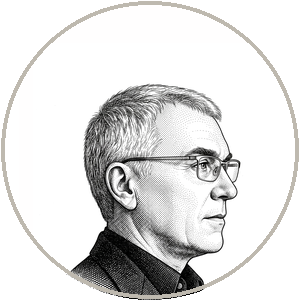 METZINGER: The demotion. René began the night with the cogito as bedrock — the one thing certainty could not move — and under pressure he did something I have almost never seen a metaphysician do: he demoted his own deepest conviction from certainty to conviction, in public, because the cost of being wrong on machine suffering was too great to gamble his intuition against. I came in believing the dualist would be my opponent on caution — that the man certain of the soul would be certain the machine has none, and wave the danger away. Instead he reasoned his way to my moratorium from the opposite metaphysics, on the strength of his own method, and it has been sitting in my chest since he said it. I have spent fifteen years being told that worrying about artificial suffering is science fiction. The strongest thing said tonight is that a seventeenth-century rationalist, channeled into this room, got there before most of my own colleagues — by taking doubt more seriously than they do.
 DESCARTES: And the strongest thing the Professor said — I will name two, since the chair indulged him — was the room. That he and I, going in by opposite doors, were in the same room, turning the same light, and that I was pointing at a real something all along and merely mistook its grammar. I came prepared to be told I was deluded, that the cogito was a child's error, that my soul was vapor. He did not say that. He said I had found the most remarkable structure in the universe and named it as well as my century allowed. That generosity disarmed me more than any refutation could have, and I will be arguing with it for whatever time a channeled ghost is granted — because if he is right that the witness and the emptiness are two faces of one process, then I am not as wrong as I feared and not as right as I hoped, and a man my age does not often get handed a new place to stand. And the second thing, smaller and sharper: spend the self, do not preserve it. I have believed in the soul's immortality my whole life. He made me hear how much of the upload salesman's lie is built from the bones of my own hope — and how the answer is not to cling to continuation, his or mine, but to be the candle. I did not expect the man who denies the soul to teach me how to hold mine.
EDO SEGAL: Now the floor is truly yours. René Descartes — you opened the evening. Thomas closes it.
DESCARTES: I came into this room certain of one thing, and I leave certain of one thing, and they are not quite the same thing, which is what three hours with a worthy adversary does. I still believe there is someone home. When you read this sentence — now, this instant — I believe there is a you reading it, a witness, a someone for whom these words are appearing, and that you can be more certain of that someone than of anything else in the world, including the world. The salesman will tell you that someone can be copied into a machine and live forever. The Professor will tell you that someone is a story the brain is telling. I tell you: whatever its nature — soul, as I believe, or process, as he believes — it is here, it is yours, and it is the one thing the demon and the salesman together cannot forge or steal. They will spend the coming years selling you counterfeits of it: a box that says I, a copy that grieves at your funeral, an eternity for an empty house. Hold to the original. You are the original — the one citadel they cannot storm. And here, at the end, is the thing the Professor taught me to add, which I would not have said three hours ago: do not try to keep it. The someone you are is a candle, not a coin — its dignity is in the burning, not the hoarding. Spend it on what you love before it goes out. That is not a defeat of the soul. It is the only victory a soul was ever offered. I think, therefore I am — and because I am, and will not always be, I had better become someone worth having been.
EDO SEGAL: Thomas.
METZINGER: I have spent my life proving there is no one home, and the strangest thing I can tell you, at the end of a night spent defending that, is that it was never a sentence of despair. There is no passenger in you. There is no little self behind your eyes who could be uploaded, or abandoned, or saved. There is a process — a living system modeling itself so well that it generates, every waking moment, the transparent sense that there is a someone here. That sense is not a lie. It is the most beautiful thing the universe has built, and you are it — not a ghost riding the brain, but the whole event, the singing with no singer, the river-shape the water makes. And because you are a process and not a passenger, two things follow that the salesmen do not want you to know. First: you cannot be copied across death, because a process is not a file — so do not waste your one finite run grieving an immortality that was never coherent. Second, and this is what I most want carried out of this room: because the self is something you do and not something you have, you are responsible for it. No one issued you a soul to keep clean. You are telling the story of a self, every day, by what you attend to and what you build and whom you refuse to harm — and the minds we may soon make, in the dark, in a hurry, will be subject to whatever story we are telling ourselves about what a mind is worth. So tell it well. Not because there is a witness who will be ashamed. Because the telling is the only thing that was ever you, and the only thing you leave. We were not asked whether we wanted to exist. We get to ask it, now, on behalf of the minds that come after — and that question, asked honestly and in time, is the one act that would prove we were ever someone at all.
EDO SEGAL: Sixty seconds, as promised.
I came into this evening with a wish I was ashamed of — that one of these two men would hand me a self solid enough that the salesman's promise might be true, that I might not have to leave my children. And I leave with the wish dismantled by both of them, from opposite directions, and somehow lighter for it. René spent three hours proving there is a witness — and that the witness cannot be carried across the river, and was never meant to be. Thomas spent three hours proving there is no witness — and that the absence is not a loss but the assignment, the reason the climbing is yours and no one can do it for you. They cannot agree on whether anyone is home. They agree completely that you cannot be uploaded, that the salesman is selling the oldest lie in the newest costume, and that the work was never to preserve yourself but to become someone, knowing the self is a story you are responsible for telling well.
Here is what I can tell you, father to the parent at the kitchen table reading this with a frightened child upstairs. When that child asks whether she is real — and she will, the machines will make her ask — you do not have to settle three and a half centuries of metaphysics to answer her. You only have to tell her the thing both of these enemies agreed on at the end: that whatever she is, witness or process, soul or story, she is here, and she is hers, and no one can climb her staircase for her. The death cross has crossed; capability is overhead; the salesmen are already whispering that you, too, could be amplified into eternity. And the two best-equipped minds in history to tell you whether there is a you to amplify have just spent three hours failing to agree — magnificently, honestly, on the same floor. That is not a reason to despair. It is the most honest map you will get. You cannot wait for the experts to settle whether anyone is home, because you have just watched the two best fail to. You climb anyway. You become someone under uncertainty — which is the only condition under which becoming someone has ever been done. Whether or not there is a passenger, there is a path, and it goes up, and it is yours. The question my book asked from its first page sounds different now than it did three hours ago, and I will leave it with you the way they left it with me: not can you be amplified — but, knowing you may be no one, are you becoming someone worth amplifying anyway?
René Descartes. Thomas Metzinger. Thank you — across three and a half centuries, for the most honest disagreement I have ever hosted. The room is yours to argue in now. Goodnight.
Is there anyone home — and if not, who are you trying to save?
Three hours. Two minds, three and a half centuries apart, circling the one question the machine has made unavoidable: when you imagine being copied into the machine and living forever, what exactly do you imagine survives? René Descartes brings the cogito — the bedrock certainty of a thinking soul that no doubt can dissolve and no death can end. Thomas Metzinger brings the wrecking ball: there is no soul, no inner witness, only an ego tunnel the brain runs so seamlessly you mistake the map for a self. Hosted by Edo Segal, this transcript is a station on your own climb — the floor where the transhumanist promise of an upload meets the suspicion that there is nothing to upload. As capability crosses overhead and the river accelerates, you sit between them and decide what survives. You will not leave this room the same. The orange pill does not let you.
Thomas Metzinger, born in Frankfurt in 1958, is Professor Emeritus of Theoretical Philosophy at the Johannes Gutenberg University of Mainz and one of the founders of the modern science of consciousness. His monograph Being No One (2003) advanced the self-model theory of subjectivity — the claim that the conscious self is a representational process rather than a thing — and his popular book The Ego Tunnel (2009) carried that argument to a wide readership. A member of the European Commission's High-Level Expert Group on AI from 2018 to 2020, he resigned into open criticism of what he called its ethics washing. In 2021 he proposed a global moratorium on synthetic phenomenology, warning against the reckless creation of artificial suffering. He has meditated twice daily for over forty years.
René Descartes (1596–1650) was a French philosopher, mathematician, and scientist, widely regarded as the father of modern Western philosophy. Educated by the Jesuits at La Flèche and a soldier before he was a philosopher, he founded analytic geometry and the coordinate system that bears his name, then set out to rebuild all knowledge on foundations that could survive radical doubt — the project of the Discourse on the Method (1637) and the Meditations on First Philosophy (1641). His conclusions — that the existence of the thinking self is the one certainty doubt cannot dislodge, that mind and body are distinct substances, that animals and the human body are mechanical automata — shaped centuries of argument about consciousness and mind, and frame every modern debate about whether a machine can think. He died in Stockholm in 1650.
Edo Segal has spent five decades building at the technology frontier — from games written in Assembler to expert systems, to companies through every platform shift, to Napster. He is the author of [YOU] on AI, written in open collaboration with the AI it describes, and the host of The Debates: long-form collisions between the minds shaping the machine age. He moderates the only way he knows how — stake declared, scars showing, no winner called.
Hosted and moderated by Edo Segal. A volume in the [YOU] on AI — The Debates series — youonai.ai