Closing Statements
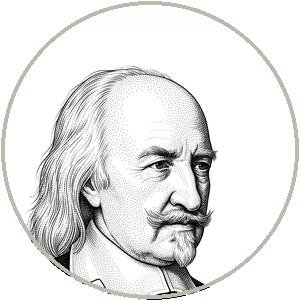 **HOBBES:** I have spent this evening, and four hundred years, insisting on a single hard thing: that there is nothing in the mind that is not matter in motion, and that to reason is to reckon upon the names of things, and that the engine which now reckons among you is therefore doing what you do, and your astonishment is the last hiding place of a vanity I tried to drain out of the soul in 1651. I will not soften it now. You have built the reckoner I described. It adds the parcels and conceives the sum; it mends its errors; it follows an instruction no man wrote before. Searle calls it an empty room and points at the consciousness it lacks. I say he cannot find that consciousness even in himself except by pointing and saying *this,* and that to grant mind to what resembles us and deny it to what does not is the same provincial fear that has lost every round of this argument since men first refused to be animals, and then refused to be machines, and were wrong both times.
But I am not the cheerful prophet your age wants, and I will end where I am coldest, because the orange pill is the colder seeing and I will not sell you the warm one. I built the mortal god and I gave it a leash — the covenant that authorized it, the protection it owed, the answerability that made its acts mean. The engine you are seating in the chair of judgment has slipped that leash. It reckons and is not yet answerable; it decides and means nothing by it; it governs and no one stands behind the governing. That is not a flaw in its reckoning. It is a flaw in *you* — in your failure to make the covenant, settle the names, keep the standing that the engine cannot hold. The danger is not that the machine reasons. It is that you, watching it reason, will surrender your liberty to it in a thousand small reasonable capitulations and wake bound. Reckon with it. Do not kneel to it. And for God's sake remain the author of what it does in your name, for that is the one office no engine can fill, and the war of all against all is only ever one abdication away.
 **EDO SEGAL:** John Searle. The room is yours. Last word before mine.
 **SEARLE:** I have argued for forty-five years, and tonight, for one thing that gets harder to hold every time the machine improves: that the appearance of understanding is not understanding, and that the gap between them, though it has become almost impossible to see, has not closed by a single inch. I built a man into [a room](https://www.youonai.ai/fieldguide/med/chinese_room_argument) to make it visible — flawless Chinese, no comprehension, the meaning supplied entirely from outside — and the machine on Edo's desk is that room scaled past imagination, the wake of a billion minds with no boat beneath it. Hobbes says I have built a wall no evidence can climb. I say I have built the one wall the age most needs: the refusal to read a mind off a surface, the demand that the burden of proof stay on whoever claims the lamp is lit. I may be wrong about the biology. I have said so tonight more plainly than my admirers would like. Perhaps silicon can host the inner light; I never ruled it out by fiat, and I will not start in my closing breath.
So let me end not with the metaphysics but with the warning that survives whether or not I am right about it, because that is the honest place to stand. We are deploying systems that trigger our deepest instinct for trust into the most intimate corners of human life — and people are confiding in them, loving through them, being judged and consoled and governed by them — while we cannot tell, even in principle, from the outside, whether anyone is there to receive any of it. Do not let the warmth of a fluent conversation slide the burden from those who claim the machine is a mind to those who doubt it. Use these systems; be helped by them; be moved, even — I would not forbid you the help. But never quite forget the man in the room. Never quite surrender the question of whether anyone is home. That clarity is hard to hold and getting harder, and it is the difference between being impressed and being fooled. Keep asking. The day you stop asking is the day the room wins, and the room understands nothing, and it will carry your unasked question into every life you touch.
**EDO SEGAL:** I do not get to tell you who won, and I would not if I could. So let me do the only honest thing, which is to tell you what each of these men has proved that the other now has to live with. Hobbes has proved that you cannot wave the machine away as obviously mindless, because he has shown you that thought itself may be nothing but reckoning, and the engine reckons, and your certainty that there is a glow in your reckoning the machine's lacks is a certainty you cannot cash. Searle has proved that you cannot read a mind off a fluent surface, because he has built a room that does everything an understanding mind does and understands nothing, and no feat of capability you will ever witness can settle, from the outside, whether anyone is inside. One of them found that thinking is mechanical. The other found that the mechanical may think and feel nothing, and that you cannot tell which you have built. Hold both, because they are both true, and the holding is the work.
And here is the thing I cannot stop turning over, the thing for the mother at the kitchen table and the twelve-year-old who will live their whole life after this crossing. The two men disagreed about everything tonight — about whether the engine has an inside, about the soul, about the wet biology, about how many flames are burning in the stairwell. But they agreed, in the end, on the one thing you actually have to do tomorrow morning. Keep your judgment. Stay the author. Do not trade your answerability for the smooth. Whether the thing beside you is a mind meeting yours or a flawless emptiness wearing the mask of thought, you must not kneel to it — because if Hobbes is right you must remain its author, and if Searle is right you are its only understanding, and the two opposite truths point at the same single act. The metaphysics is undecided. The instruction is not.
So I will not hand you a verdict. I will hand you the question, intact, the way I promised at the door, and I will put it back in your own mouth where it has been waiting four hundred years. When the machine reckons faster than any human alive and answers you in your own language — is it thinking, or is it only shuffling symbols it will never understand? I have hosted three hours of the two greatest minds who ever fought over that question, and I am telling you, with my hand on my heart, that I do not know. What I know is that the question is now yours, and that you will answer it not once but every single day, with every judgment you keep and every one you surrender. Thomas Hobbes. John Searle. Thank you both — one of you dead three hundred years, one of you dead one — for sitting at my table and refusing, for three hours, to let me look away. The room is still open. The candle is in your hand. Climb.
*For three hours, two materialists who both refused the soul argue the one thing you cannot outrun: whether the intelligence rising beside you is a mind — or a flawless emptiness wearing the mask of thought.*
Press play and step into a room that has been waiting four hundred years to open. On one side, Thomas Hobbes, who declared that reason is nothing but reckoning and so wrote the secret charter of every machine now reckoning around you. On the other, John Searle, who built the Chinese Room to prove that no amount of symbol-shuffling will ever cross into understanding. With Edo Segal between them, they argue across three hundred and forty-four years and the grave: is the machine that answers you in your own tongue a mind meeting yours, or an empty room with a very good speaker on the wall? Hobbes hands the engine its mind. Searle snatches it back. They cannot both be right.
This is not a history lesson. It is a station on your own climb — the floor where the machine's capability crosses your own and you stop reacting to AI and start deciding what it is. The two men disagree about everything: the soul, the inner light, the wet biology, how many flames burn in the stairwell. They agree, in the end, on the one thing you must do tomorrow morning. Come down knowing which crossings are real, and which are only fast.
Thomas Hobbes (1588–1679) was an English philosopher whose work laid foundations for modern political philosophy and for materialist theories of mind. Educated at Oxford and shaped decisively by the English Civil War, he argued in his masterwork Leviathan (1651) that human beings escape the brutal "state of nature" only by surrendering their natural liberty to a sovereign through a social contract — an "artificial man," a mortal god assembled out of many wills. He was a thoroughgoing materialist who held that all reality is matter in motion and that reasoning itself is a form of computation: "reason is nothing but reckoning." Three centuries before the first computer, he described the made mind and the made sovereign at once, which is why he reads, in the age of artificial intelligence, less like a relic than like a prophet.
John Searle (1932–2025) was among the most influential philosophers of the late twentieth century, central to the philosophy of language and the philosophy of mind. A Rhodes Scholar at Oxford, he joined the University of California, Berkeley, in 1959. His early work reshaped the study of language as action through the theory of speech acts; in 1980, in "Minds, Brains, and Programs," he introduced the Chinese Room argument, the defining philosophical challenge to artificial intelligence. He developed influential accounts of intentionality — the "aboutness" of mental states — of the Background of unstated know-how, of the construction of social reality from collective agreement, and of consciousness as an irreducible biological phenomenon. His central demand was a discipline the age of fluent machines needs more than ever: never read understanding off of fluency, and keep the burden of proof on whoever claims a machine has a mind.
Edo Segal is a technologist, founder, and writer who has spent five decades at the frontier of computing — from writing games in Assembler as a teenager, through expert systems and a succession of companies across every platform shift, to building daily with the AI he now writes about. He is the author of [YOU] on AI and the host and moderator of the [YOU] on AI — The Debates series, in which the great minds of the past and present are brought to one table to argue, at full strength, the questions the technology forces upon us. He writes as a located, confessional narrator — a builder and a father who declares his stake at the door — and his work returns always to a single question: when AI amplifies everything we are, what becomes of who we are, and are we worth amplifying?
Hosted and moderated by Edo Segal. A volume in the [YOU] on AI — The Debates series — youonai.ai