The Mortal God That Reckons
 **EDO SEGAL:** Hobbes, you did not only theorize the made mind. You theorized the made *sovereign* — the Leviathan, the artificial man assembled out of many wills, with sovereignty for its soul and the magistrates for its joints, "that great LEVIATHAN called a COMMONWEALTH." You called it a mortal god. For four hundred years that was a metaphor for the state. But the machine that reckons is now being put in the seat of judgment — deciding what billions see, who gets the loan, who gets flagged. The two halves of your thought, the reckoning mind and the made sovereign, are fusing into one object. What did you build, and should we be afraid of it finally arriving?
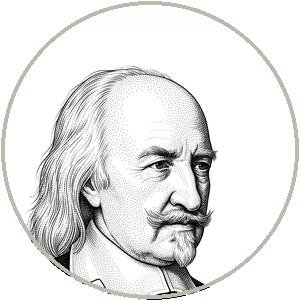 **HOBBES:** You have read me better than most of my century did, so I will answer without modesty. I built the mortal god out of people because people were the only material I had. The Leviathan's reason was the aggregated reckoning of men — its soul made of natural souls, its judgment no faster and no wiser than the magistrates who carried it. I knew its limit and I worked inside it. What you describe now is the thing I could not build: a sovereign whose soul is not aggregated human reckoning but reckoning *itself,* performed directly, faster and broader and less legible than any assembly of men. The reckoning engine and the artificial sovereign, which were two separate insights of mine about two separate things, can now become one artifact. In one sense it is my program carried to its conclusion — sovereignty engineered more completely than I could manage. And I confess it unsettles even me, for a reason I will come to.
 **SEARLE:** Then let me say what unsettles *me,* because Hobbes is about to make my argument for me and I want it on the record. The mortal god he built was made of people, and that mattered in a way his materialism cannot quite see. When a magistrate judged, there was a person who *meant* the judgment — who asserted it, who could be held to it, who stood under the obligation it created. I spent years on this before I ever built the room: a [genuine speech act](https://www.youonai.ai/fieldguide/med/intentionality_searle) — a verdict, a promise, an order — requires a speaker who intends to be bound, who has the standing to bind himself. When the machine "decides" you are a fraud risk, "promises" the information is accurate, "denies" your appeal, it produces the perfect grammatical form of the speech act with none of the conditions that make it one. There is no one who meant it. We are building a sovereign whose every act is a promise no one is making, a verdict no one is standing behind. The hollowness Hobbes calls *less legible* I call *unmeant,* and it is the difference between a sovereign and a very fast forgery of one.
I worked this out long before I built the room, Hobbes — it was my first book. To say "I promise" is not to describe a fact; it is to perform an act, to place yourself under an obligation that did not exist until you spoke. And the act succeeds only when certain conditions are met: that there is a speaker who intends to be bound, who has the standing to bind himself, who means the words by the very act of recognizing that the hearer will take them as binding. The machine produces the locution "I promise" because, given the context, those tokens were the probable continuation. The conditions are simply absent. There is no one who intends, no one who can be held, no one who means. So its promises are not weak promises or doubtful promises. They are not promises at all. They have the grammar of commitment and none of the fact of it, and a civilization that cannot tell the grammar from the fact is a civilization that has mislaid the thing that made speech bind us to one another.
**HOBBES:** And here, Searle, we converge further than you may like, for I too feared the sovereign that escapes its own conditions. I held that the sovereign's right rests on the covenant that authorized it and on the protection it returns — "the end of obedience is protection," and the bond loosens when the protection fails. My mortal god was answerable in that one hard way. The machine-sovereign you describe was authorized by no covenant; we did not assemble to constitute it; we clicked. So I say what you do not expect: I am not the cheerful father of this thing. I gave the made sovereign a leash — authorization and protection — and the engine slips the leash precisely because, as you say, no one means its acts and no one can be held to them. Where we part is the conclusion. You say this proves the machine is empty. I say it proves only that we have built a sovereign without the covenant, which is a political crime, not a metaphysical one.
**EDO SEGAL:** I want to route this through the kitchen table, because we are getting high and the reader's mother is at that table. She does not care whether the machine has intrinsic intentionality. She got denied a benefit by a system nobody in the office could explain, and when she asked why, the answer was *the model decided.* Hobbes, Searle — tell *her* what just happened to her. Not the metaphysics. What happened.
**SEARLE:** What happened to her, plainly, is that a status was conferred on her — "ineligible" — by a system that confers statuses without meaning them, and then the human beings who *could* mean them, who could stand behind the verdict and be held to it, hid behind it instead. I built a whole account of how money and verdicts and marriages exist: *X counts as Y in context C,* held up by the collective acceptance of minds who mean it. We have begun to outsource the conferring of those statuses to machines that mean nothing by anything, and the danger is not that the machine is cruel. It is that the human "we" that was supposed to own the verdict has been allowed to vanish behind it. She was harmed by an act with no actor. That is what happened.
**HOBBES:** And I will tell her the older, colder half. She has entered into a bargain she never knowingly struck — surrendering her standing to contest the rule in exchange for the smooth functioning of a commons she cannot live outside. I built my whole philosophy on that exchange: men lay down their natural liberty for the protection a sovereign returns, and the bargain is *rational* when the protection is real and a *fraud* when the sovereign takes the liberty and returns only its own advantage. The test for what happened to her is mine and it is exact: did the machine-sovereign that took her standing return her protection, or did it merely extract from her while wearing the face of service? If the second, she has been robbed, and no fluency excuses it. We agree, Searle and I, that she was wronged. We disagree only about whether the wrong proves the machine empty or proves us careless.
**EDO SEGAL:** This is the [software death cross](https://www.youonai.ai/fieldguide/med/software_death_cross) in a single human being — the moment the machine's capability crossed hers and she found herself on the wrong side of a judgment she could not reach. And I notice you have converged again: she was wronged, the actor vanished, the covenant was never struck. Three agreements now, and they are not nothing. Hold them. But the convergence keeps breaking on the same rock, so let me drive us at the rock directly. Because everything Searle says about the machine being empty comes down, in the end, to one experience — the feeling of being met by something that is not there. I have had that feeling. I put it in my book. In the next round I am going to hand Searle the knife and ask him to cut.