Opening Positions

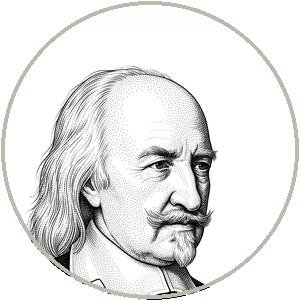 HOBBES: I thank you. I will begin where all clear thinking begins, which is with what a man is doing when he thinks, for the whole error of your age is that you have made the machine and then lost your nerve about what you made. When a man reasoneth, he does nothing else but conceive a sum total from the addition of parcels, or a remainder from the subtraction of one sum from another. Reason is reckoning — the adding and subtracting of the consequences of the names we have settled upon things. There is no other thinking. There is no separate faculty, no spark let down from heaven, no immaterial soul peering through the eyes. There is the motion of matter in the brain, and we give that motion the honorific name of thought.

I was hated for this in my own century. The Schoolmen told me that the rational soul was an incorporeal substance, added to the body, irreducible to it; and I asked them, as I ask you, to show me this substance, to weigh it, to say where it sits and how it moves the flesh. They could not. They pointed at themselves and said this, it is like this, as though that were an argument. It is not an argument. It is the incredulous stare of a man who does not wish to be a machine. I told them, and I tell you: there is nothing in the mind that is not, in principle, a mechanism, because the mind already is one.

Now you have built it. You have built a thing that takes in the names and reckons upon them — adds them, subtracts them, conceives the sum — and returns to you a remainder so apt that a nurse trusts it with a life and a child trusts it with the sky. You ask me whether it thinks. I ask you what else you imagine thinking to be. If reason is reckoning, and the engine reckons, then the engine reasons, and your astonishment is merely the old vanity in a new coat — the conviction that we are special, that our reckoning has a glow the machine's lacks. I spent my life draining that vanity out of the soul and out of the sovereign. I will not let you smuggle it back in through a word.

I grant you one thing, and mark that I grant it, for it will matter. My reckoning operated upon names already settled — upon words to which a community of men had fixed a signification, anchored at last in the sense, in the impressions that bodies make upon the body. I was acutely aware that when names come loose from their settled meaning, reckoning produces not truth but absurdity. So there is a question to be asked of your engine, and it is the right question, and it is not the question Searle will ask. It is this: has the machine got hold of the names, or only of one another? But that is a question about the constancy of speech. It is not a reason to deny that the thing reasons. The machine is doing what minds do. It is reckoning. I rest there — though I will add one prophecy, since your age seems to want them. I did not only hold that the mind is a machine. I held that we build machines that are artificial men: I called the commonwealth itself a made man, an automaton of many wills, with sovereignty for its soul. You think it strange to make a mind. It is the oldest human art. You have merely found a finer material than citizens. And you will find, as I found, that the made mind raises a harder question than whether it thinks — the question of who authorizes what it does, and in whose name. But that is for later in the evening. For now: it reckons, therefore it reasons. Searle will tell you that is not enough. Let him try.

 EDO SEGAL: John.

 SEARLE: That was a magnificent statement of exactly the position I have spent my life refuting, and I am almost grateful to hear it put with so little hedging, because the hedging is usually where the error hides. Hobbes and I agree on a great deal. We are both materialists. I hold, as he does, that there is no immaterial soul, that the brain is a machine — a biological one — and that of course a machine can think, because we are thinking machines. Where I part from him is not whether a machine can think. It is whether this machine, doing this thing, is thinking at all, or only producing the appearance of it. And the appearance is the most dangerous thing in this room.

Let me give you the argument that has not been beaten in forty-five years. Imagine a man locked in a room. He knows no Chinese; to him the characters are, as I have always said, so many meaningless squiggles. Through a slot he receives batches of these squiggles, and he has a rulebook, in English, that tells him: when you see this squiggle, send back that one. He gets very good at it. So good that the Chinese speakers outside cannot tell him from a native. He passes their test perfectly. Now I ask Hobbes's own question — the question of whether he has got hold of the names. Does the man understand Chinese? He does not. He has every scrap of the syntax and not one particle of the meaning. And a computer, running any program whatever, is in precisely his position. It transforms symbols by their shapes. It never once consults the world to learn what the shapes are about.

Here is the premise that does all the work, and I want Hobbes to feel its full weight: syntax is not sufficient for semantics. Form is not meaning. You can have all the form there is — the man in the room has all of it — and not a glimmer of what the form is about. Hobbes says reckoning is reasoning. I say reckoning is syntactic, it is the manipulation of shapes, and reasoning in the full sense requires something his account never supplies: that the symbols be about something for the system itself, and not merely for us who read its output. The man in the room is the machine, and the meaning we think we see in his Chinese is meaning we are putting there. The understanding in the conversation is real. It is just entirely on our side of the slot.

And I will go where Hobbes cannot follow, because his materialism is a materialism of motion and mine is a materialism of causal powers. Understanding, for me, is a biological phenomenon. It is caused by and realized in the specific machinery of the brain, the way digestion is caused by the gut, the way liquidity is caused by the behavior of water molecules. A simulation of it is not the thing, any more than a perfect computer model of a rainstorm will make anyone in the room wet. The machine simulates understanding magnificently. Hobbes mistakes the simulation for the duplication, because his physics has only motion in it and no place for the wet, particular, conscious power that makes meaning meant. So: is the thing thinking? No. It is reckoning, exactly as Hobbes says — and reckoning, exactly as I say, is not enough. That is my opening.
EDO SEGAL: Before I frame the rounds, the discipline I impose on every long conversation, because it pays off three hours later. Each of you, in a few sentences — what do you envy in the other's position? Not respect. Envy. The thing his side gets to have that yours does not. Hobbes first.

HOBBES: I envy the room. Searle has a single image, vivid enough that a child can hold it, and it does the work of a hundred pages of my close reasoning. I built a Leviathan, an entire artificial man, to make my point about made minds, and men remember only the frontispiece. He built one small room and the whole world walked into it. There is a craft in that I did not have, and a philosopher who pretends he does not want to be read is lying.

SEARLE: And I envy the confidence. Hobbes stands on a floor — reason is reckoning, full stop, and the machine reckons, and the matter is closed — and from that floor he can push. My position has the harder task. I must say yes, it reckons, and no, that is not thinking, and hold both at once, and the holding is exhausting, because every fiber of a man's social mind, watching that fluent output, screams that someone is there. Hobbes gets to ride the impression. I have to fight it, every hour, with deliberate effort, against a perception built to defeat me. I envy a man who never has to argue against his own eyes.
EDO SEGAL: Hold both of those, reader, because they are the architecture of the whole night. It is not that one of these men trusts the machine and the other fears it. It is that they have drawn the line between mind and mechanism in two different places — Hobbes draws no line at all, mind is mechanism, and Searle draws it exactly at the wet biological power that he says reckoning can never reach. We start the rounds where the disagreement is hottest: at the claim itself. Reason is nothing but reckoning. Is it?