Closing Statements
 **EDO SEGAL:** Three hours ago I asked whether you hand the all-seeing machine the crown to keep the peace, or whether the seeing is the catastrophe you climb above. We've fought it through forests and famines, the apprentice and the friction, the contract and the click, the eye that protects and the eye that sells, the war and the mortal god, the child's notebook and the off-switch built before the flood. And the question is still standing — which both of you, for opposite reasons, would tell me is the correct result. So we end the way long conversations should: each of you gets the floor, uninterrupted, to say the thing you most want carried out of this room.
But first, the bookend to the envy question I opened with. Each of you: name the strongest thing the *other* said tonight. Not the most agreeable — the one that got past your defenses, the one you'll still be arguing with next month. Professor Scott first.
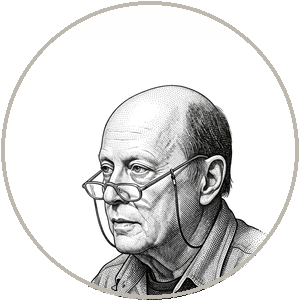 **SCOTT:** "A sovereign for the worst day, installed for every day" was my line, but the thing of his that got past me was the reply to it — that the precondition of all soul-making is being alive to do it, that without the wall there's no forge. I came in believing the wall was the enemy of the forge. He made me see they're the same structure seen from two sides, and that I've spent a career guarding the forge while quietly depending on someone else to hold the wall I pretended to despise. That's going home with me. And — since the chair will let me break the rule the way he did for his guests in the other book — the moment he admitted his throne needs my underbrush to stay honest. The greatest absolutist in history conceding that the binding has to come from below. I'll be arguing with the generosity of that for a long time.
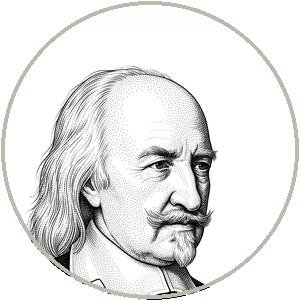 **HOBBES:** The off-switch built before the emergency. I have spent three hundred years certain that the off-switch was the crack through which the war returns — that a sovereign you can turn off is no sovereign. Professor Scott made me see that a sovereign with *no* off-switch is not safety; it is the catastrophe deferred to the day it turns, and that the whole legitimacy of power might live in the off-switch its makers built before they ever needed it. I do not fully believe it. I am no longer certain I disbelieve it, and at my age — which is considerable — that is a significant event. And the second thing, since the chair is generous: the two kinds of friction. That the machine abolishes the broken back and the formed self with the same blind efficiency and cannot tell which it has done. I will never again say "friction is merely suffering" without hearing him.
**EDO SEGAL:** Now the floor is yours. Thomas Hobbes — you watched the war; you open. Professor Scott closes.
**HOBBES:** I have been the villain of this story for three hundred years, and I have made my peace with it, because someone must say the cold thing. So let me say it one last time, and then say what tonight has added to it. The cold thing is true: there is a war beneath the order you take for granted, and it is held off not by goodness but by a power, and the man who forgets this will, in his comfort, dismantle the wall and be astonished by the flood. The machine that can see everything is the first power in history that might be *adequate* to the chaos it must govern, and to refuse it out of fear of the seeing is to choose the war out of love of the shadows. That is still my position. I have not abandoned it.
But here is what tonight added, and it is not small. A power adequate to the flood is not thereby licensed to rule the stream. The sovereign that reads the child's notebook is not strong; it is diseased. The reckoning that cannot see which friction forms a soul must not be trusted to govern the soul's formation. And the binding that keeps the power honest cannot come from above — there is nothing above — but must be built from below, from the plural, illegible, stubborn knowledge of the people the power exists to protect. I came to keep the peace. I leave understanding that the peace worth keeping is the one that protects the man's wall *and* leaves him his notebook — and that I spent too long guarding the first and dismissing the second. Build the sovereign. The war is real. But build it with the off-switch, and leave the child her dark, unwatched room to become someone in. I would not have said that sentence three hundred years ago. I say it now.
**EDO SEGAL:** Professor Scott.
**SCOTT:** Thank you — and Thomas, genuinely, for the fight, and for moving, which is the rarest thing a thinker does in public.
I've spent my life among people who were subject to plans they did not make — the peasants of Sedaka, the inhabitants of razed neighborhoods, the farmers whose teff was banned for a higher-yielding grain that died in the actual field. And I found, every time, that the people at the bottom knew something the planners at the top could not see, and that the catastrophe came not from their ignorance but from the planner's confidence that the [view from the tower was the whole view](https://www.youonai.ai/fieldguide/med/seeing_like_a_state). The machine is the tower made total. It can see more than any state ever dreamed, and the danger is exactly proportional to the seeing: that it will mistake the trace for the man, the metric for the knowledge, the legible for the real — and act on the mistake at the speed of computation, across a whole society, before anyone at the bottom can say "wait, you can't see me, I'm right here."
So here is what I want you to carry out of this room, and it's a discipline, not a doctrine. Stay partly illegible. Not to hide from the law — to keep alive the part of you that is constituted by *not* being optimized: the skill in your hands, the friendship the platform doesn't mediate, the stuck-time where a self gets formed, the notebook nobody reads. Demand that the systems governing you keep a seat at the table for the people who actually know — as authority, not decoration. And when they tell you the machine has made you legible, sortable, manageable, remember that the forester who counts the trees cannot save the forest, and the farmer who feels the soil can — but only if someone builds the table where they sit together, and only if both of them listen. You are not the trace the machine reads. You are the forest it cannot count. Stay a forest.
**EDO SEGAL:** *[pause]* Sixty seconds, as promised.
I came into this evening with a man at a screen, terrified of a machine built to protect him, and I leave with both his terror and his protection intact and sharpened. Hobbes spent three hours proving that the void beneath the order is real, that the war is not a metaphor, and that a power adequate to see and settle it might be the only thing standing between us and the dark. Scott spent three hours proving that the power adequate to see everything becomes, with terrible reliability, the thing that flattens and famishes in the name of saving — and that the seeing itself, made total, is the catastrophe. You will notice that neither of them told you the comfortable thing. The comfortable thing was that someone, at the top or at the bottom, has it handled. Neither of them would let you have it.
So let me route it through the kitchen table, through the twelve-year-old who asked whether any part of her is still hers. Here is what these two men, who agree on almost nothing, would both tell that child. That the eye reading her harmless interior is not strength but a sickness — Hobbes calls it meddlesomeness, Scott calls it the flattening, and it is the same disease. That she is owed her dark, unwatched room to become someone in. And that the question of who gets to see her is not one the experts can settle for her — you have just watched the two best minds on power, separated by three centuries and the grave, fail to settle it, magnificently, and converge only on this: that the power must be bound, the off-switch built before the flood, the notebook left sacred, and the knowledge from below given a real seat. You climb past this floor not by waiting for the seeing to be made safe, but by deciding, yourself, what you will keep illegible, what you will refuse to outsource to the eye, and what you are building with the most powerful watcher ever made now pointed at your life. The river is rising. The machine can see you now. The only question that was ever yours to answer is the one you [carry up the stairs](https://www.youonai.ai/fieldguide/med/elevator_and_staircase): not whether they can see you — they can — but who you will refuse to become while they do.
Thomas Hobbes. James Scott. Thank you. The room is yours to argue in now. Goodnight.
*One man feared the void when no one is watching. The other feared the eye that never blinks.*
Three hours. Two thinkers separated by three centuries and the grave. One microphone, and Edo Segal between them. On one side: Thomas Hobbes, who watched a kingdom tear itself apart and concluded that only an absolute, all-seeing sovereign stands between us and the war of all against all. On the other: James C. Scott, who spent a lifetime documenting how that same all-seeing power flattens forests, villages, and people into catastrophe. Between them sits the most powerful legibility machine ever built — and the question of whether it is your salvation or your cage. This is not a museum piece. It is a station on your own climb: the floor where you decide who gets to see you, and who you refuse to become. Pull up a chair. The river is rising, and these two have been waiting a long time to argue about you.
Thomas Hobbes (1588–1679) was an English philosopher whose work laid the foundations of modern political thought and materialist theories of mind. Shaped decisively by the English Civil War, he concluded that the absence of a strong sovereign means chaos and violence, and that human beings escape the brutal "state of nature" only by surrendering their natural liberty to an absolute sovereign through a social contract. His masterwork, Leviathan (1651), argued that the commonwealth is "an artificial man" — a constructed mind built to keep the peace — and advanced the radical claim that reasoning itself is a form of computation, "reckoning." Rigorous, controversial, and three centuries ahead of his time, he remains the indispensable theorist of power, order, and the made mind.
James C. Scott (1936–2024) was an American political scientist and anthropologist at Yale, and one of the most influential social thinkers of his generation. Drawing on years of fieldwork in Southeast Asia — including two years living in a Malaysian rice village — he developed the concepts of legibility, high modernism, and métis that reshaped how scholars understand power and resistance. His major works include Seeing Like a State, which traced how state-imposed simplification produces catastrophe; Weapons of the Weak, on the everyday resistance of the powerless; The Art of Not Being Governed; and Two Cheers for Anarchism. He kept bees and raised sheep, and he argued to the end that the knowledge required to keep the world alive lives among the people at the bottom, not the planners at the top.
Edo Segal has spent five decades building at the technology frontier — from games written in Assembler to expert systems, to companies through every platform shift, to Napster. He is the author of [YOU] on AI, written in open collaboration with the AI it describes, and the host of The Debates: long-form collisions between the minds shaping the machine age. He moderates the only way he knows how — stake declared, scars showing, no winner called.
Hosted and moderated by Edo Segal. A volume in the [YOU] on AI — The Debates series — youonai.ai