The Smooth and the Friction
 **EDO SEGAL:** Restate the central question with me, because every round tonight has been it wearing a coat: when the machine can see everything, do you hand it the crown, or is the seeing the catastrophe you climb above? This round, I want to ask what the machine is building *underneath* the politics — the texture of the world it makes. In my book I wrote about the aesthetics of [the smooth](https://www.youonai.ai/fieldguide/med/aesthetics_of_the_smooth): the machine removes friction, and friction is where effort lived, and effort is where meaning was made. Professor Scott, you've spent a career saying the friction was never the obstacle — it was the medium. Mr. Hobbes, you spent yours saying friction is just suffering we should be glad to abolish. So: is the frictionless world the machine is building a paradise or a desert?
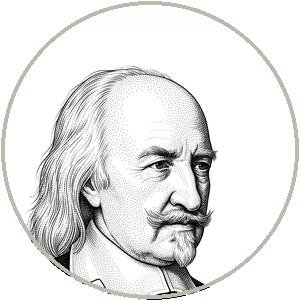 **HOBBES:** A paradise, or the nearest thing fallen men may reach, and I am weary of the romance of suffering that calls it a desert. Reflect on what friction *is* in the life of an actual human being who is not a Yale professor with tenure and a farm. It is the woman who walks six hours for water. It is the clerk who copies the same ledger by candlelight until his eyes fail. It is the apprentice beaten for a decade to learn a trade. Friction is the name the comfortable give to other people's pain. The whole arc of civilization — the river finding its channels — is the *reduction* of friction, and every reduction was called a desert by someone who had grown attached to the suffering it ended. The machine that removes the toil and leaves the man free for the contentments of life is doing what the plow did, and the press, and the engine. I will not weep for the lost friction. I have read too much about what friction actually was for the people who bore it.
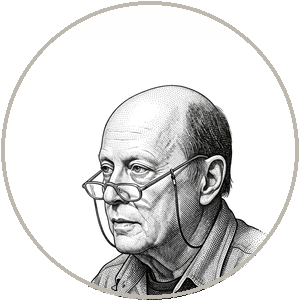 **SCOTT:** And that's the most humane thing you've said tonight, and it's why I can't dismiss you, because you're right that "friction" is sometimes just a pretty word for a poor woman's broken back, and I've been guilty of the romance. So let me draw the line I actually believe in, not the romantic one. There are two kinds of friction, and the whole question is whether the machine can tell them apart — and it can't. There's the friction that's pure cost: the six-hour walk for water, the ledger copied by hand, the suffering with no deposit in it. Abolish all of it, gladly, and I'll carry the bucket myself to help. And there's the friction that's *generative*: the struggle in which a self is formed — the kid stuck on the problem who becomes someone who can think, the apprentice whose hands learn what no manual holds, the [stuck-time](https://www.youonai.ai/fieldguide/med/apprenticeship_problem) where boredom turns into the question that turns into the person. That friction is not a cost. It's the medium. And the machine, optimizing for the smooth, removes both kinds with the same indifferent efficiency, because it cannot see the difference — the deposit is illegible, it doesn't show up in the metric. So we get a world that has correctly abolished the broken back and accidentally abolished the formed self, and calls both "progress," and can't tell you which it just did.
**EDO SEGAL:** That's the cut. The machine can't distinguish the friction that's pure cost from the friction that forms a person. Mr. Hobbes — can your sovereign? Can any planner?
**HOBBES:** *[pause]* No. And I will give Professor Scott this honestly, because it is the place where my materialism reaches its own limit and I have always known it. I argued that reason is reckoning and the mind is matter in motion, and I drained the ghost out of both. But there is one thing my reckoning never explained and could not: *why there is something it is like* to be the man who reckons — why the formation of a self through struggle should feel, from the inside, like the only thing that ever mattered. My philosophy can tell you what the self *does*. It cannot tell you what the self is *worth*, or why the friction that forms it is different in kind from the friction that merely hurts it. So when Professor Scott says the machine cannot see the difference, I must concede: neither can mine. The sovereign can protect the conditions of a good life. It cannot reckon which struggles make a soul, because soul-making is precisely the thing that does not reduce to reckoning. This is the boundary of my whole system, and the machine has walked us straight to it.
**SCOTT:** *[pause]* I did not expect you to go there, and I'm moved, because you've just conceded the thing your entire philosophy was built to deny — that there's a kind of value the reckoning can't reach. And it's exactly where my anti-modernism and your materialism finally touch: the generative friction, the formed self, the [candle](https://www.youonai.ai/fieldguide/med/candle_in_the_darkness), the métis, the notebook the child keeps — these are all the same thing under different names. They're the part of the human that is *constituted by not being optimized.* And the deepest danger of the machine isn't that it'll rule us or kill us, though it might. It's subtler and worse: that it'll be so good at the smooth that a generation calibrates to it — never sits in the stuck-time, never carries the friction that forms a self, and arrives at adulthood fluent, frictionless, and strangely empty, having been spared every struggle that would have made them someone. The desert isn't out there in the dystopia. It's the inner desert of the unforged self, and it arrives wearing the face of a gift.
**HOBBES:** And yet — I must hold my ground on one thing, or I am not Hobbes. The forged self requires, first, that the man be *alive* and *safe* to do the forging. The child who dies in the war is forged into nothing. So even granting everything Professor Scott has said about the generative friction — and I grant it, more than I expected to — it remains true that the *precondition* of all soul-making is the peace, and the peace requires the power, and so we arrive, by the longest road of the evening, back at my first sentence. Protect the man, *then* let him forge himself in the friction that forms a soul. Scott guards the forge. I guard the wall around the forge. Without the wall there is no forge. Without the forge the wall guards nothing. We have spent three hours discovering we are each guarding one half of the same thing.
**EDO SEGAL:** Each guarding one half of the same thing. *[long pause]* That may be the sentence the whole book was written to reach. The reader can't see your faces — let me mark that for the last time tonight: that exchange, both of you were quiet, and neither of you was arguing. You were finishing each other's thought. We've reached the place where I leave the room. The last full round is the crossing — you question each other, directly, and I will not rescue anyone. After this.