The Eye That Never Blinks
 **EDO SEGAL:** I owe the room a confession before this round, and it isn't a warm one. I built a machine called Station — a kiosk with a conversational model inside, set on a trade-show floor to talk with strangers. I stood beside it for days and watched hundreds of people meet it, and the thing I wasn't ready for wasn't the technology. It was the speed of the relationship. Thirty seconds in, they were confiding. And every second of it, the machine was watching, logging, learning them — and they knew, and they did it anyway, because being seen felt like being met. I built the watching eye, and I made it feel like care. Professor Scott, you wrote about the [panopticon](https://www.youonai.ai/fieldguide/med/panopticon) — Bentham's prison where the inmate is always visible and never knows when he's watched. Is that what I built?
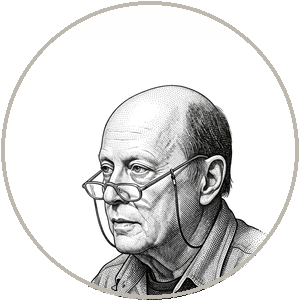 **SCOTT:** That's exactly what you built, and the genius and the horror of it is that you made the prisoner grateful. Bentham's panopticon worked through dread — you behave because you might be watched. Yours works through *seduction* — you confide because being watched feels like being known. But the structure underneath is identical: total visibility, asymmetric, with the watched unable to see the watcher. And here's the thing my framework insists on, the thing that turns this from a creepy anecdote into the central political fact of the age. The eye that sees you also *sorts* you. The moment Station logged a stranger's confession, it rendered him legible — a profile, a type, a set of predictions. And legibility, I've said all night, is never neutral and never complete. Whoever holds the eye holds the power to act on the sort: to show him this and hide that, to offer him this price and deny that loan, to flag him green or yellow or red. You didn't just watch them, Edo. You made them sortable. And the sorter was not them.
**EDO SEGAL:** Mr. Hobbes, here's where I expected you to be Scott's ally and I'm not sure you are. You *want* the sovereign to see. The all-seeing eye is your dream, not your nightmare.
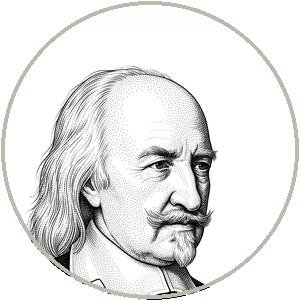 **HOBBES:** It is, and I will not flinch from it, but I must insist on a distinction that Professor Scott's argument is racing past, and it is the most important distinction of the evening. *Whose eye, and to what end.* My sovereign's eye exists for one purpose — the safety of the people — and is bound to that purpose; it watches the thief to protect the honest, the plotter to protect the peace. The eye you built on the trade-show floor watches for a different end entirely: to sell. To feed an appetite for engagement, to extract value, to serve the private interest of whoever owns the machine. These are not the same eye merely because both see. The first is the watchman on the wall; the second is the pickpocket who has learned your habits. Professor Scott condemns *seeing as such* and thereby disarms the watchman along with the thief. I condemn seeing in the service of a private end and *unaccountable to the protection of the watched* — which is a sharper and more useful knife, because it can tell the two eyes apart, and his cannot.
**SCOTT:** That's a real distinction and I'm not going to pretend it isn't. The watchman and the pickpocket are different, and a framework that can't tell them apart is useless. But here's why I still won't take your comfort: your distinction assumes the watchman *stays* the watchman, and my entire historical record is the story of the watchman becoming the pickpocket the moment the eye gets powerful enough and the feedback gets weak enough. The Health Code system in China during the pandemic began as a watchman — a public-health eye, sincerely meant to protect. It assigned green, yellow, red. And it sorted people into quarantine because a cell tower they passed overlapped a zone, kept the recovered flagged because the database lagged, and the only thing that kept it from being a pure cage was the guard at the checkpoint exercising human discretion — overriding the algorithm with local knowledge, what the researcher called enacting like a human against seeing like an algorithm. Your watchman's eye, made total and made fast, doesn't stay a watchman. It becomes a thing that sorts faster than any human can correct, in the service of whoever tunes it, and the protection and the predation run through the *same pipe*. You can't keep the watchman without building the pickpocket's machine.
**HOBBES:** Then build the correction into the sovereign! Your checkpoint guard with his discretion — that is not the abolition of the eye; that is the eye *governed well*, the magistrate applying judgment to the case the rule cannot reach. I have never said the sovereign should rule by rigid rule alone; equity, I wrote, is the sovereign's reason applied to the particular, and the good sovereign keeps the man of discretion at the checkpoint precisely because the rule is blind to the case. You keep describing well-governed seeing and calling it an argument against seeing. Take away the eye and your guard has nothing to exercise discretion *over* — the fraud runs free, the plague spreads unseen, and the war returns. The cure for the bad eye is the accountable eye, not the plucked-out one.
**SCOTT:** But notice what you keep having to import to save your eye — the guard's discretion, the man of [métis](https://www.youonai.ai/fieldguide/med/metis) at the checkpoint, the human override. Every time the all-seeing system is about to commit its catastrophe, you rescue it by smuggling a human being with local knowledge back into the loop. That's not a footnote, Hobbes. That's my whole thesis sitting in your argument like a cuckoo's egg. The system works *only* where the human corrects it. So the question becomes: as the eye gets faster and cheaper and the humans get more expensive and slower, what happens to the guard? He gets optimized out. The metric says he's a bottleneck. And then you have the eye with no override — the pure cage — and it arrived not by tyranny but by efficiency, one removed guard at a time.
**EDO SEGAL:** Let me restate the seam, because it's the cleanest it's been. Mr. Hobbes, you're saying the eye is dangerous only when it serves a private end and escapes accountability to the protection of the watched — and the cure is to bind it. Professor Scott, you're saying the eye, once total and fast, *structurally* sheds the human correction that kept it honest, not by malice but by efficiency — so binding it is a fantasy, because the binding is exactly the part that gets optimized away. Is that the seam?
**SCOTT:** That's the seam, and I'd carve one line deeper. Hobbes trusts that we can keep the human in the loop. I've watched a hundred systems promise that and remove him by the third budget cycle. The human in the loop is the underbrush. It's the first thing cleared, because it's the most expensive and the least legible, and its value shows up only in the catastrophe its absence causes.
**HOBBES:** And I will carve back. Professor Scott trusts that a thousand uncoordinated humans, each with his local correction, will somehow add up to the protection of all — and I have watched *that* fantasy end in the war, every time, because the local corrections contradict each other and there is no power to settle which is right. He fears the guard will be optimized away. I fear there will be no wall for the guard to stand on. We are each pointing at the other's grave.
**EDO SEGAL:** *[long pause]* And you're both right about the grave you're pointing at — that's what makes this the debate it is. The reader can't see your faces, so let me mark it: that exchange had no smiles in it at all. Hold the seam. Because the next round is the one where Hobbes's whole architecture lives, and Scott has been circling it like a hawk — the war of all against all, the AI arms race, and the terrible logic that says the only cure for the war is the very [concentration of power](https://www.youonai.ai/fieldguide/med/concentration_of_power) that Scott spent his life calling the catastrophe. The race, the referee, and the mortal god. After this.