Opening Positions

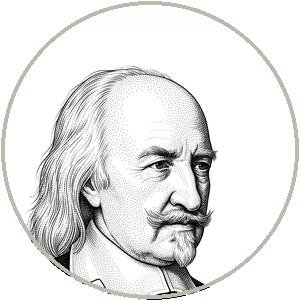 HOBBES: I will begin where I always begin, because everything follows from it and nothing is intelligible without it: with fear, and with what a man is when no one holds him in awe.

Strip away the sovereign. Strip away the law, the courts, the common power that makes a threat credible — and look honestly at what remains. Not a noble savage. Not a free spirit. A frightened animal among other frightened animals, every one of them roughly equal in strength, because even the weakest can kill the strongest by stealth or by confederacy. In that condition, where there is no power able to overawe them all, there is no industry, because the fruit of industry is uncertain; no agriculture, no navigation, no building, no arts, no letters, no society — and, what is worst of all, continual fear, and danger of violent death. And the life of man, solitary, poor, nasty, brutish, and short.
Now understand why. It is not because men are wicked. This is the point the sentimental thinkers never grasp and Professor Scott will resist all night. The war of all against all does not require a single bad man. It requires only rational men with no common power above them. Three things drive them to it: competition, which makes them invade for gain; diffidence — fear — which makes them invade for safety; and glory, which makes them invade for reputation. The deepest of these is fear. Even the man who wants nothing but to be left alone must reckon that his neighbor may strike first, and so must strike first himself, or arm himself so heavily that none dare. Good men, in the absence of a sovereign, make war. The structure compels it.

That is the digital condition before the sovereign, and it is the condition of the AI race now. A network with no common power is a state of nature. The fraud, the theft, the manipulation, the strong preying on the weak, the labs and the nations racing because to slow down is to be overtaken by whoever does not — this is diffidence at planetary scale. Every actor would prefer restraint. None can afford it. I described an arms race three centuries before you had the word, and you are living inside it.

So what is the remedy? Not exhortation. You cannot ask the racers to be nicer; they are already being rational. The remedy is structural, and it is the only thing I have ever proposed: that rational men, seeing that the war serves none of them, agree together to erect a common power — a sovereign able to hold them all in awe, to whom each surrenders his private right of judgment, so that the war of all against all becomes peace under one authority. I called it the mortal god, to which we owe, under the immortal God, our peace and defence. And here is what makes our moment new, and why I am the right ghost for this table. I built my Leviathan out of people, because in 1651 people were the only material from which an artificial man could be made. You can now build the reckoning function directly. You can make the sovereign's reason out of computation. A machine that can see the whole — every transaction, every danger, every dispute — and settle it faster and more impartially than any human magistrate, is not a horror. It is the fulfillment of the oldest political dream there is: a sovereign finally adequate to the chaos it must govern. The machine that can see everything is the first sovereign in history strong enough to actually keep the peace. I say: build it, authorize it, and bind it to its purpose. The alternative is the war, and the war is worse than anything Professor Scott will describe tonight.
 EDO SEGAL: Professor Scott.

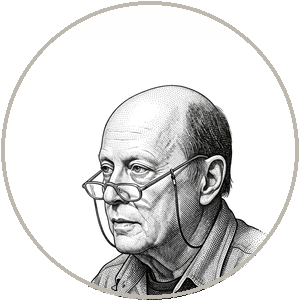 SCOTT: That was magnificent, and I want to honor how much of it I accept before I take it apart, because the part I reject I reject completely.
I accept the fear. I accept that disorder is real and that the war of all against all is not a fantasy — I've lived in places where the state had collapsed and I would not romanticize it for a moment. What I cannot accept is the leap, and watch how fast he makes it, because the whole catastrophe of the modern world lives in the speed of that leap. From "disorder is dangerous" to "therefore surrender total and undivided to an absolute, all-seeing power" — that is not one step. That is the step, the one I spent forty years documenting the corpses of.
Let me tell you what the all-seeing sovereign actually does when you build it. In the late eighteenth century the Prussian state looked at its forests and could not see them. A forest is illegible — oak and beech and pine, fungus and deadfall and songbird and the ten thousand relationships beneath the soil that no ledger can hold. The state could not tax what it could not count, so it made the forest legible. It cleared the tangle and planted single-species rows of spruce in straight lines. The Normalbaum, the standard tree, the unit of account. The first generation produced spectacular yields. Brussels celebrated — forgive me, the eighteenth-century equivalent. The second generation died. The Germans coined a word: Waldsterben. Forest death. The simplification that made the forest legible also made it fragile, because the things the state cleared as waste — the underbrush, the mess, the illegible relationships — were the things keeping it alive.

That is not a charming historical anecdote. That is the structural template of every modern catastrophe, and Hobbes has just proposed we run it on the entire human world at the speed of computation. Soviet collectivization: the planners could see the grid of collective farms; they could not see what the peasant knew about this hillside's drainage and that frost line, and millions starved. Brasília: a city that works on the blueprint and suffocates in the living. The high-modernist plan is never stupid. That's what people miss. It is the intelligence of the planner — real, sincere, competent — applied with such confidence that it overrides the messier, more complete knowledge of the people who actually live inside the system. What's missing is never intelligence. What's missing is humility about the limits of the view from above.
And Seeing Like a State is the whole argument: the catastrophe needs four things together — a high-modernist faith that the plan can redesign reality, a power strong enough to impose it, a civil society too weak to resist, and the absence of feedback that would reveal the failure in time to stop. Hobbes has just offered us all four in a single machine. An AI that can see everything is not the sovereign that ends the war. It is the Prussian forester with a god's-eye view and no underbrush left anywhere to save us. So my answer to the question on the table is the reverse of his. The seeing is the catastrophe. Not because order doesn't matter — because order imposed from a height that cannot see you is the thing that kills you, every time, in the name of saving you.

EDO SEGAL: Two openings, and you can already feel the architecture of the night — it's not that one of you loves the machine and one fears it. You'd both tell me to fear it. You locate the danger in opposite places. Hobbes says the danger is the void when no one is watching. Scott says the danger is the eye that never blinks. Before I frame the rounds, one discipline I impose on every long conversation, because it pays off two hours later. Each of you, briefly: what do you envy in the other's position? Not respect. Envy. The thing his side gets to have that yours doesn't. Mr. Hobbes first.
HOBBES: I envy his ground. Professor Scott gets to stand among the people and feel their particular knowledge under his feet, and defend the small and the local and the warm. My position has no such comfort. I must stand in the cold and say the thing no one wants to hear — that the small and the local, left without a common power, devour each other; that the village he loves is, without the sovereign, the war in miniature. He gets to love humanity. I am condemned to protect it from itself, which is a lonelier office and wins no affection. I have read what men write about me. No one has ever called Hobbes warm.
SCOTT: And I envy his nerve. Hobbes looks straight at the abyss and proposes a total solution and does not flinch. My whole method is to flinch — to say "it's more complicated, look closer, the local knowledge, the messiness, tolerate the mess." There are nights when that feels like cowardice dressed as wisdom, when a problem is genuinely on fire and I am still saying "let's consult the practitioners." He gets the clean line of the man who has decided. I get the endless qualifications of the man who has seen too many clean lines end in graves. The qualifications are correct. They are also exhausting, and no one ever built a movement on "it depends."

EDO SEGAL: [long pause] Two envies, and they are the same envy in a mirror — each of you wants the other's relationship to certainty. Hold that, because it returns at the very end. We start the rounds after the break, and we start at the exact seam: what, precisely, is this machine that can see? Is it a mind that reckons — Hobbes's sovereign reason made real — or is it the legibility engine, the state's eye finally given a body? Both of you have a theory of what it is. They are not the same theory.