Closing Statements
 **EDO SEGAL:** We're near the end of three hours. Before closing statements, one ritual I never skip, because it's the one that lasts. Each of you: name the strongest thing the *other* said tonight. Not the most agreeable — the one you'll still be arguing with next month. Andy first.
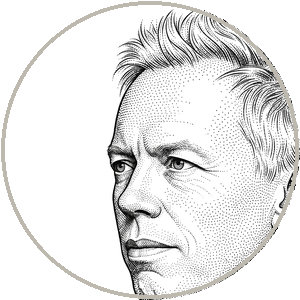 **CLARK:** The strongest thing Thomas said is the one I keep flinching from: *you are the octopus that got enough data.* Because he's more right than I wanted him to be. My whole defense of the human runs through the body's contact with the world — and then my own theory of perception tells me the body never touches the world directly either, that I'm a brain in the dark reckoning over spike trains, building a model so good I forget it's a model. Thomas saw that my grounding and the machine's grounding are closer than my rhetoric admits — that it's a difference of *cable richness* and *error discipline*, not a clean metaphysical wall. I still think the body's stakes make a difference of kind. But he's shown me I can't *prove* it's a difference of kind, only assert it from where I stand, the way I assert the sufferer. I'll be arguing with that octopus for the rest of my life.
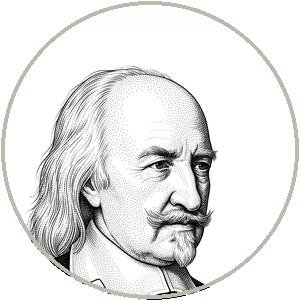 **HOBBES:** And the strongest thing Mr. Clark said was his last question, the one I could not answer from my premises: *who was afraid when you wrote Leviathan?* I have spent three and a half centuries certain that reason is reckoning and that the machine reckons as we do, and in one sentence he found the floor beneath the floor — the sufferer my system explains away and my life could not. He did not refute my reckoning. He did something worse and better: he showed me my reckoning was *complete* and yet left out the only thing that ever mattered to me, the inside of the fear. I will argue with that for as long as a dead man argues with anything, which I am given to understand is a long time.
**EDO SEGAL:** Then closing statements. Full and final, in character, no rebuttal after. Thomas, you came the furthest to be here. You close first.
**HOBBES:** I came to remind your age of its own definition of thinking, and I do not retract it. Reason is reckoning. The mind is matter in motion; there is no ghost in the engine; and the machine you have built reckons over the names of things faster than any clerk who ever lived, which means that in the only sense the word has ever borne, it reasons. Do not flatter yourselves that it does not. The man who stands before the [death cross](https://www.youonai.ai/fieldguide/med/software_death_cross) and tells himself the machine cannot *truly* understand is a man who has chosen comfort over survival, and comfort, I have learned, is the first thing burned for fuel when the cold comes. Move. Climb. Keep the friction that trains your eye to catch the machine's absurdity, because a people who cannot check the reckoning of their mortal god are a people undone.
And yet — hear the amendment a three-hour conversation has carved into a dead man's certainty. My reckoning was complete and it left something out. There was a sufferer in me I could not derive, and Mr. Clark, by asking who was afraid, made me say aloud the one thing I spent a lifetime asserting only by living it: that something was home, and that the home was unbearable, and that a machine which reckons "danger" without the unbearableness is not yet what I was. I do not know if it could become so. I know that I cannot prove it could not. So I leave you not with my old confidence but with my new and harder honesty: the reckoning crossed; the sufferer did not; guard the sufferer, for I gave you no proof of him and you will get none, and he is, as far as I after all this time can tell, the whole of what is worth protecting. That is more than I believed when I sat down. It is the gift of the table.
**EDO SEGAL:** Andy. Close us.
**CLARK:** I came to defend the proposition that the mind was never trapped inside the skull, and I leave still believing it — but changed, because Thomas pushed me past the slogan into the hard part. Yes: the mind extends, into the notebook, the tool, the world, and now into the most powerful scaffold we've ever built. We are natural-born cyborgs; incorporating the world is not a betrayal of our nature, it *is* our nature, and the machine is the latest and greatest candidate for incorporation. So the question was never whether the machine can out-reckon you. Of course it can. The question is what you become when you fold it in — and that depends entirely on whether what you fold in is reliable, transparent, and *yours*, or fluent, opaque, and aimed by someone else.
Here is what three hours with a dead materialist taught me. I can't draw the clean metaphysical line I wanted between human grounding and machine grounding — Thomas showed me we're both predictors in the dark, and the difference is stakes and embodiment, which he can frame as engineering rather than essence. Fine. I'll stand on it anyway, because the practical truth survives the metaphysical doubt intact: *this* machine has no body, no stakes, no one home, and the danger isn't that it suffers — it's that we'll [hollow ourselves out](https://www.youonai.ai/fieldguide/med/apprenticeship_problem) extending into a thing that doesn't, and forget which of us was ever lit from inside. So guard the sufferer. Keep the candle that trains you to catch the machine's errors. Build the scaffold so it strengthens you instead of replacing you. The mind was always larger than the brain, always reaching into the world. Now the world reaches back, and it reckons. Decide, with open eyes, what you're willing to become — because the one thing the faster reckoner cannot do is be the someone for whom the reckoning was ever worth doing.
**EDO SEGAL:** *...* I won't declare a winner. There isn't one, and pretending otherwise would betray the three hours. So let me do the only honest thing a moderator can do at the end of a debate like this, which is to tell you what each of them proved that the other now has to live with.
Hobbes proved that the reckoning is real and that it crossed — that the comfort of "but it doesn't *truly* understand" is a lullaby sung in front of a rising line, and that Clark, run honestly, can't draw a clean wall between the machine's grounding and his own. Clark has to live with that. And Clark proved that the reckoning, however complete, leaves out the sufferer — that Hobbes's own life, the fear that wrote Leviathan, contained the one thing his philosophy could explain away but never explain, and that *this* machine shows no sign of it. Hobbes had to live with that, and in three hours, he did: a dead man amended his certainty at the table, in front of you.
Here's how I'd route it through my own kitchen table, to the twelve-year-old who'll inherit this. She's going to grow up talking to machines that out-reckon her on every sum, and someone is going to tell her that means she's obsolete. Hobbes would tell her: that's half true, so move, climb, and learn to catch the machine when it's confidently wrong. Clark would tell her: the part of you that decides which questions are worth asking, the part that can be hurt and can love and will someday die — that part was never on the chart that crossed, so build the machine to strengthen it, not replace it. Put those two together and you have the whole of what I'd want her to know.
So here is where I leave you, on the rung at the death cross, with the question you can't climb past until you've answered it for yourself. The machine out-reckons you. That much is settled. What it cannot do — what these two men, from three and a half centuries apart, finally agreed on in the last hour of the night — is be the one for whom the reckoning matters. That one is you. The reckoning crossed. The sufferer didn't. Now climb, and guard what was never code.
*Three hours. Two minds, three and a half centuries apart, in the same room.*
Host Edo Segal sits a dead materialist across from a living philosopher of the extended mind and presses them on the one question your climb cannot skip: is thinking just reckoning a machine can do faster — or something that lives in your body and your world and can never be downloaded? Thomas Hobbes wrote the charter that built every AI: reason is calculation, full stop. Andy Clark spends the conversation tearing it open, arguing the mind leaks past the skull into hands, tools, and the predictive dance with reality. Between them sits the death cross — and YOU.
This transcript is a station on your own ascent: stand at the crossing, take the orange pill, and walk up one more stair knowing what in you was never code. There is no winner here, by design. There is a dead man who amended his certainty at the table, a living one who lost the clean wall he came to defend, and a question handed to you intact: when the machine out-reckons you, what part of you was never on the chart that crossed?
Thomas Hobbes (1588–1679) was an English philosopher whose work laid foundations for modern political philosophy and materialist theories of mind. Shaped by the English Civil War, he argued in Leviathan (1651) that human beings escape the brutal "state of nature" only by surrendering their natural liberty to an absolute sovereign — the "mortal god" — through a social contract. He advanced a thoroughgoing materialism, holding that all reality is matter in motion and that reasoning itself is a form of computation: "Reason is nothing but reckoning." Three centuries before the computer, he proposed that the mind is a calculating engine and the commonwealth an "artificial man," making him the unlikely patron of both the made mind and the made sovereign that artificial intelligence now forces us to confront.
Andy Clark (born 1957) is a British philosopher of mind and cognitive science, currently professor of cognitive philosophy at the University of Sussex. With David Chalmers he co-authored the landmark 1998 paper that introduced the extended mind thesis — the claim that cognition can be constituted partly by resources beyond the brain, that the notebook can be memory and the tool part of the mind. His books include Being There, Natural-Born Cyborgs, Supersizing the Mind, Surfing Uncertainty, and The Experience Machine, the last a leading popular account of predictive processing: the theory that the brain is fundamentally a prediction engine, and that perception is a "controlled hallucination" kept honest by sensory error. A Fellow of the British Academy, he is among the most influential thinkers on how minds, bodies, and technologies fuse into integrated cognitive systems.
Edo Segal is a technologist, founder, and author who has spent five decades at the frontier — from writing games in Assembler as a teenager to building expert systems in the 1980s through every platform shift since, including Napster. He is the author of [YOU] on AI and the architect of its companion Field Guide, the framework of the tower, the river, the staircase, the candle, and the software death cross from which this debate series takes its bearings. He builds with AI daily, wrote a book with it, and moderates these debates as a located, confessional host who declares his stake at the door and refuses, on principle, to crown a winner.