The Mortal God Returns
 **EDO SEGAL:** Thomas, you said the alternative to a common power is the war of all against all — "solitary, poor, nasty, brutish, and short." And you said something colder still: that between sovereigns, with no power above them, the nations stand "in the state and posture of gladiators." That's the AI race — labs and states, no referee, each unable to trust that restraint will be reciprocated. So the question your own logic forces: is the cure for the AI war a common power, a single [sovereign over the technology](https://www.youonai.ai/fieldguide/med/sovereign_ai) — and if so, have you just argued us into building the most dangerous concentration of power in history?
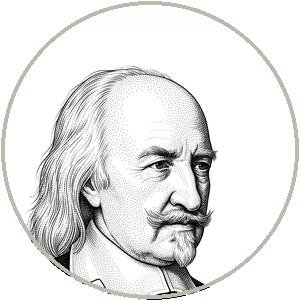 **HOBBES:** I have, and I will not pretend the conclusion is comfortable, because comfort was never my trade. Hear the logic, link by link, for it is iron. The race is a state of nature: rational builders, no common power, each driven not by greed but by *diffidence* — the fear that to slow is to be overtaken by one who does not. Good men make this war; that is the horror of it, that no villain is required. The remedy for a state of nature is one remedy only: a common power able to hold all the racers in awe so that none need fear the defector. And that power, to be effective, must be *unified*, for "covenants, without the sword, are but words," and a sovereignty divided against itself dissolves into the very factions it was meant to quell. So yes — my logic points to concentration, to a single power over the technology, a [mortal god](https://www.youonai.ai/fieldguide/med/algorithmic_governance) with capabilities I could not have dreamt. And in the same breath I tell you what such a power is: the monopoly that ends the war is the monopoly that can crush those it was raised to protect. I do not resolve this. I never did. I judged it the lesser evil against the war. But I looked the enormity full in the face, which is more than your century's optimists will do.
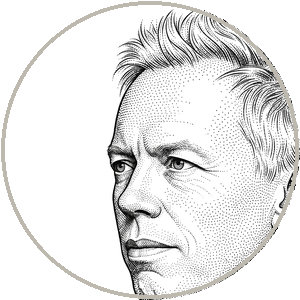 **CLARK:** And here, finally, I think Thomas's own framework gives me the lever to resist the conclusion — using *his* tools, not mine. He says the sovereign must be unified, indivisible, a single mortal god, because a divided power slides back to war. But that argument assumes mind is the kind of thing that has to be *centralized* to be effective — one will, one sovereign, one engine. My entire life's work is the denial of exactly that. Intelligence isn't a property of an isolated central unit. It's a property of *couplings* — distributed across many agents and the resources between them, none sovereign, all coordinating. The most powerful cognition we know — science, language, the [collective](https://www.youonai.ai/fieldguide/med/collective_attention) — is radically *un*-centralized, a polycentric mesh of partial agents checking each other. So I'd say: Thomas's iron logic only forces the mortal god if you accept his hidden premise that order requires a single sovereign mind. Drop that premise — the one my whole career drops — and the alternative to the war isn't one mortal god. It's a *distributed* order: many partial powers, mutually checking, no single uncrowned sovereign, the way a healthy extended-mind system has no homunculus at the center. He's right that "covenants without the sword are words." He's wrong that there can only be one sword.
**HOBBES:** A bold parry, and I feel its edge, but I think it bleeds. Your distributed order, your polycentric mesh of mutually-checking powers — what is it, when two of its members disagree on a matter where peace depends, and there is no power above them to settle it? It is the state of nature *again*, wearing the robes of a network. You have not escaped the sovereign. You have hidden him and hoped no one asks where final judgment lives. I grant that distributed coordination governs much — language, science, the slow accretion of knowledge, all the lovely un-crowned commons you name. But those are domains where disagreement need not be settled *now*, on pain of violence. The sovereign exists for the case your mesh cannot handle: the dispute that must be ended before the swords come out. Show me your distributed order settling *that* without a final judge, and I will burn my Leviathan for kindling. Until then, your mesh is my state of nature with better manners.
**CLARK:** And maybe that's exactly the unresolved thing we hand the reader — because I'm not certain you're wrong. What I'm certain of is that the *machine* version of your mortal god is more dangerous than yours ever was, for a reason only my framework sees. Your Leviathan was made of *people* — its reckoning was human judgment, aggregated, and so it was bounded by human cognitive limits and authored by people who could recognize themselves in it. A sovereign whose soul is an *artificial mind* need be bound by no human limit and authored by no covenant. It removes the very human mediation you took for granted. So even if you're right that order needs a final judge — God help us if the final judge is a reckoner with no body, no stakes, no one home to hold accountable, exporting its sense of what may be said to every soul in the commons. You and I might lose the argument about whether a sovereign must be one. We should both lose sleep over what happens if the one is a machine.
**EDO SEGAL:** Let me put the citizen at the kitchen table into this, because the abstraction is getting thin and the stakes aren't. A woman applies for a loan, or a benefit, or a job, and the answer comes back from a system she cannot question, that cannot explain itself, that no human will own. Thomas, in your commonwealth the subject could at least ask the sovereign's officers *why* — there was a someone, accountable, behind the judgment. What is left of your social contract when the judgment is rendered by a reckoner that cannot be asked why and that no one will author?
**HOBBES:** Then the contract is broken, sir, and I will say it as plainly as I ever said anything. The whole foundation of legitimate authority, in my system, is *authorship* — that the subject can acknowledge himself the author of the sovereign's acts and can, at the limit, hold the sovereign to its protective end, for "the end of obedience is protection." A power that judges the woman and cannot be asked why, that no man will own, has the *form* of sovereignty and none of its title. It is sovereignty by acquisition without even the conquered's bargain — she did not submit in exchange for her safety; she was simply processed. I built an absolutism, and men have called me the philosopher of tyranny for it, but even my absolute sovereign was *answerable to its purpose* and *authored by its subjects*. This machine-judgment is something my philosophy has no name for and no place for: power without authorship, judgment without a judge, a mortal god that cannot be petitioned because there is no one inside it to hear. I would not have called that sovereignty. I would have called it the war of all against all, conducted by a single unaccountable engine — which is worse than the war, because in the war at least you knew whom to fear.
**CLARK:** And that's the sentence I'd carry out of this whole night, Thomas — "judgment without a judge." Because it's the death-cross applied to *accountability itself*. We've talked all evening about the machine out-reckoning the individual. This is the machine out-reckoning the *commons* — taking over the sovereign function faster and cheaper than human institutions, and crossing the line below which there's no longer a human who can be asked why. My framework says the same thing yours does here, just in different words: a resource you've incorporated has to remain *answerable to your purposes*, or it stops extending you and starts using you. Scale that from the individual to the polity and you get exactly your broken contract. The danger was never that the machine wakes up. The danger is that it takes over the judging and leaves no one home to hold to the protective end — and a population that's already hollowed out its own capacity to check the reckoning can't even tell that the judge has gone missing.
**EDO SEGAL:** And neither of you is smiling. Hold it exactly there — Hobbes: the mesh is the state of nature with better manners, there must be a final judge. Clark: maybe, but God help us if the judge is a bodyless reckoner no one can hold to account. That's the unresolved core of the whole governance question, and I'm not closing it. Because now I do the thing the format demands. I leave the room in every way but legally. You two have been circling each other through me for two hours. Now you face each other directly, and I rescue no one. The Crossing.