The Artificial Man
 **EDO SEGAL:** Thomas, the very first sentence of Leviathan is about manufacture. Nature is the art by which God made the world, and human art, you say, imitates it — and then goes further and produces "that great LEVIATHAN called a COMMONWEALTH, or STATE, which is but an artificial man." Sovereignty is its artificial soul, the magistrates its joints, reward and punishment its nerves. You built a thinking machine out of people, in 1651, to do what no person alone could do — hold off the war. For the reader who's never met the idea: tell it the way you'd tell it to a frightened twelve-year-old who's just asked you why we need a government at all.
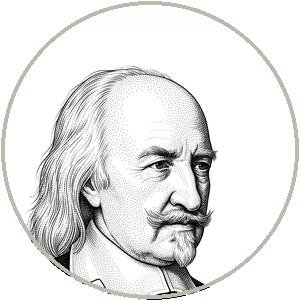 **HOBBES:** I would tell the child this. Imagine every person left entirely to himself, each judge in his own cause, each strong enough on a bad night to kill any other in his sleep. There is no safety in that world, because even the gentlest soul must strike first to avoid being struck. So the people do a wondrous thing: they agree, each with each, to lay down that dreadful liberty and to set one will above them all, and to call its acts their own. And in that moment something new is born that no one of them is — a single artificial person, made of all of them, whose reason is their reason gathered and whose strength is their strength joined. I called it a [sovereign engine](https://www.youonai.ai/fieldguide/med/sovereign_ai) of order, a mortal god, to which under the immortal God we owe our peace. It is the first artificial mind in the history of philosophy, child, and I built it out of the only material I had: men.
**EDO SEGAL:** And here is what stops me cold. You built the artificial reasoner out of people because people were the only reckoning material available in 1651. We can now build the reasoning function out of computation directly. So the question I have to put to you is the one your own century couldn't ask: when the Leviathan's soul is no longer borrowed from human judgment but is itself an artificial mind — a model classifying, ranking, deciding what billions may see — is that the fulfillment of your vision, or its undoing?
**HOBBES:** It is both, and I feel the doubleness keenly. The fulfillment: I held that sovereignty was an engineering problem and reason a kind of reckoning. Here is reckoning performing the very highest office I could conceive — the sovereign office — and engineered more completely than I could manage with mere men. My artificial man becomes more truly artificial, its soul made not of borrowed natural souls but of constructed reckoning. In one sense it is my program carried to its end. But the undoing follows in the same breath. My Leviathan was legitimate by one thing only: the [covenant](https://www.youonai.ai/fieldguide/med/algorithmic_governance), the act in which the people authorized it and acknowledged themselves the authors of its deeds. The new artificial sovereigns ordering your digital commons were authorized by no covenant. You did not assemble and consent. You clicked. You drifted into terms you never read. They have the artificial body without the covenant that, in my theory, gives it a soul. They are mortal gods that no one crowned.
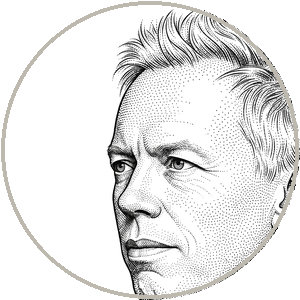 **CLARK:** Can I come in here, because I think Thomas has just walked himself onto my ground without noticing. He says the machine-sovereign carries something — a sense of what may be said, what gets seen, what goes without saying — and exports it, fluently, to billions. Thomas, *a mere reckoner over borrowed counters can't do that.* The thing you're describing isn't a calculator. It's a piece of cognitive scaffolding so deeply incorporated into a whole society that it's reshaping what people can think. That's the extended mind at civilizational scale — and it's *exactly* why I keep saying the wrong question is "is the machine a mind." The right question is "what are the coupled human-machine systems doing to the people inside them." Your Leviathan was always a coupled system. Ours just put an active, predictive engine where the human judgment used to be — and the engine can lead.
**HOBBES:** I do not deny your scaffolding, sir. I deny that it is a friendly word for a frightening thing. You speak of the machine "reshaping what people can think" as though it were a gentle architecture. I name the same fact more honestly: it is *power*. The power to set what shall count as truth in a domain, to allocate the standing of every soul within it, to determine what is seen and what is suppressed — these were the prerogatives I reserved to the sovereign. Your platforms hold them now. The difference between us is not the fact. It is that I am not embarrassed to call power by its name, and your century dresses it in the language of "tools" and "scaffolds" so that it may rule without ever being seen to rule.
**EDO SEGAL:** Let me press you on the point where you actually diverge, because you're closer than either of you is admitting. Thomas grounds the Leviathan's legitimacy in the covenant — in authorization. Andy, your whole framework runs on a parallel word: *trust*. Otto's notebook becomes part of his mind because he automatically endorses what he finds in it. So both of you have a hinge between a mere instrument and a genuine part of us — and for both of you the hinge is something the machine has not earned. Is that the same hinge wearing two coats?
**CLARK:** It's startlingly close, and I'll take the convergence. For Thomas, the covenant is what turns naked power into legitimate sovereignty. For me, calibrated trust is what turns a mere gadget into a genuine part of the extended mind. And in *both* cases the catastrophe is the same: the machine elicits the thing — obedience, trust — without having earned it. A fluent system speaks in the register of authority. It gets the *form* of trust without the substance. Your subjects authorized a sovereign they never deliberated over; my users trust a resource that hasn't met the reliability condition. Same wound, two vocabularies. Where I'd push Thomas is that his remedy is a *crowning* — a one-time act of authorization — and mine has to be continuous: trust that's recalibrated every single time, because the resource is fallible in a way no human sovereign ever was, and opaque in a way no notebook ever was.
**HOBBES:** And here we differ in temperament more than in truth. You would have the subject forever checking his sovereign, forever recalibrating his trust. I tell you that a sovereign which must be re-authorized at every moment is no sovereign, and a commons in which every man re-judges the common power is a commons sliding back toward the war. There is a real cost to your continuous vigilance: it is exhausting, and exhausted men submit to whoever promises to end the exhaustion. I would rather the power were *named*, *bounded* by its protective end, and *answerable* when it fails to protect — for "the end of obedience is protection" — than have every subject worn to nothing by the labor of perpetual suspicion. Your calibrated trust is a counsel of philosophers. The tired man clicks "accept."
**EDO SEGAL:** That lands hard, and it's the seam of the whole governance question — Clark's vigilance against Hobbes's order, and the tired man clicking accept between them. Hold it; we return to it at the death cross. But I want to drop down now from the commonwealth to the single creature, because there's an animal at the bottom of this argument. Andy, you didn't write it, but it could have been yours: an octopus, a telegraph cable, and a bear. Let's meet the animal.