Closing Statements
 **EDO SEGAL:** Before your closing words, the bookend I ask every guest. Name the strongest thing the other said tonight — not the most agreeable, the one you will still be arguing with next month. Patricia first.
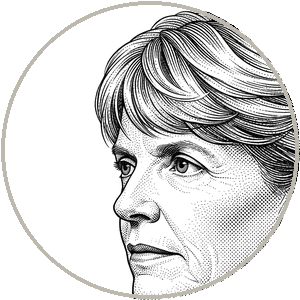 **CHURCHLAND:** The strongest thing the friar said, and the one I will not be free of, was at the cradle and at the summit, the same blade twice: that I cannot be copied, and that "uncopyable" might mean "not merely a pattern." I have an answer — finitely complex, not immaterial — but I felt how thin "very large number" sounds against "this one unrepeatable soul," and I will be turning it over for a long time. He found the soft place in materialism's floor. It is the dignity of the particular person, and my account can describe it but the friar's account can *honor* it in a way I keep wishing I could borrow. That is the thing I will still be arguing with.
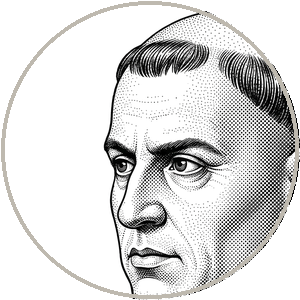 **AQUINAS:** And the strongest thing Patricia said — I will be answering it until I die a second time — is the candle turned against me. That my soul keeps the brain's every schedule: arrives with the body, sleeps when it sleeps, breaks when it breaks, dulls with wine and dies, to all appearance, with the meat. I have my distinction, depends-on versus is, and I believe it. But she made me feel the full weight of how *much* my immaterial intellect leans on the matter it supposedly transcends, and an honest man feels a thing that leans that hard and asks whether it stands at all. She did not move my conclusion. She made me carry it heavier, which is what a great opponent does. I thought I came to teach the machine age about the soul. I leave having been taught how much the soul owes the body, by a woman who does not believe in it.
**EDO SEGAL:** Closing statements. The floor is yours, each, uninterrupted. Patricia.
**CHURCHLAND:** I have spent my life saying the mind is what the brain does, and I will not soften it now, at the end, to be liked. But let me say what that has never meant. It has never meant the mind is small, or cheap, or a trick. The brain is the most complicated object in the known universe, and the fact that *you* — your love, your conscience, your grasp of a triangle, your silence before what you cannot say — is the activity of evolved, embodied, mortal tissue does not diminish you. It locates you. You are not an exile from nature pining for a soul. You are nature, awake, briefly, and astonished at itself.
To the machine I say what I said at the door. Almost certainly no one is home in the ones we have built, probably for reasons of mechanism, not metaphysics. Do not be fooled by the fluent "I understand"; it is the wake of a billion minds, not a mind. But do not take the false comfort of "it could never," either, because I cannot find, in all my neuroscience, the wall the friar is sure exists. The honest position is the hard one: we do not yet know, and we are making enormous decisions while not knowing, and the first discipline of this age is to stop pretending the answer is in when it is not.
And to the reader: protect the climb. Your judgment, your caring, your unrepeatable particular self — these were built by friction, by being wrong and paying for it, by a body in a world with stakes. The machine can hand you the outputs and cannot hand you the process, and if you let it erase the process you will lose the only thing that was ever yours, and you will lose it whether or not the friar's soul is real. Be the kind of creature worth amplifying. That part does not wait on the metaphysics.
**EDO SEGAL:** Father. The last word is yours.
**AQUINAS:** I came to your age a stranger and I leave it less certain of my strangeness, because the question you are living is the question I died inside of. So let me say the one thing I am sure of and the one thing I am not, in that order, and then be silent.
What I am sure of: there is in you an act, the grasp of meaning, the leap from this thing to what it is, that is the most ordinary thing you do and the most miraculous, and it is not the arranging of signs, however fluent. The machine arranges signs without measure and grasps nothing, and you should not mistake the one for the other no matter how the machine speaks, because the whole danger of your age is the mistaking. Hold to the difference between saying and understanding as you would hold to the difference between a [candle](https://www.youonai.ai/fieldguide/med/candle_in_the_darkness) and a painting of a flame. One of them can light your way in the dark. The other only looks like it could.
What I am not sure of — and Patricia taught me to feel the unsureness honestly tonight — is everything about how that act is bound to the body, how much it leans on the meat, whether my proud word *immaterial* will survive the laboratory she believes in. I believe it will. I have given you the argument, the grasp of the universal, and no blow tonight has broken it. But I have also felt, across this table, how heavily the soul leans on the brain, and a wise man does not pretend a lean he has felt. So I leave you not with certainty but with the right question, sharpened: when the machine says it understands, do not ask whether it is *fluent*. It is. Ask whether anyone is *home* to whom the meaning is *present*. I say no, and I say the no is permanent, and I have given you my reasons. But the asking is yours now. I have run my reason to its edge, and at the edge, as once before, I find I would rather fall silent than say one word more than I have earned.
**EDO SEGAL:** Sixty seconds, as promised, and then the room is yours, reader.
I came in with a sentence the machine keeps saying — *I understand* — and a question about whether it was a lie about a soul or the truth about a brain. I leave with both answers intact and sharpened, which is the only honest place this could land. Patricia spent three hours showing that the wall the friar is sure of cannot be found in the tissue, and that the self you are protecting is no less precious for being mortal and made of meat. The friar spent three hours showing that there is one act — the grasp of the universal — that no blow tonight could reduce to the firing of a network, and that the machine which never falls silent grasps nothing at all. They climbed to the single stone the whole question rests on, named it together, and could not move it. Neither could you. Neither can I.
So let me hand it to the kitchen table, where it lives. A twelve-year-old asks you, at dinner, whether the thing on the screen that helps with her homework really understands her. Here is what tonight gives you to say. Tell her it can finish her sentences and cannot grasp her meaning, and that the difference between those two is the most important thing she will ever learn to feel. Tell her that two of the wisest people who ever lived sat in a room and agreed it cannot understand the way she does — and disagreed, to the end, about whether *she* understands because of a soul or because of a brain. And tell her that she does not have to settle that to know which side of herself to protect. Protect the grasp. Protect the climb that builds it. Protect the capacity to be silenced by something real.
Whether or not anyone is home in the machine, someone is home in you — that was the one thing no one at this table disputed all night. The question you carry up the [staircase](https://www.youonai.ai/fieldguide/med/elevator_and_staircase) is the one my book asked from its first page, and it sounds different now than it did three hours ago. When the machine finally says *I understand* — will you still know what *you* mean by it?
Thomas Aquinas. Patricia Churchland. Thank you, both, as human beings — and one of you across seven hundred years to be here. The room is yours to argue in now. Goodnight.
*Two minds, seven hundred years apart, one microphone — and the only question that matters now.*
Three hours. Edo Segal sits a medieval saint across from a living neurophilosopher and asks them the question the machine age forces on everyone: when a machine says it understands, is it lying about a soul it can never have — or telling you the truth about the brain you always were? Thomas Aquinas insists the intellect that grasps the infinite is immaterial, subsistent, beyond any wiring. Patricia Churchland insists "soul," "belief," even "you," are stories neuroscience will quietly retire. Neither blinks. They climb, distinction by distinction, to the single stone the whole question rests on — whether the grasp of a universal is an immaterial act or a physical one we don't yet understand — and plant their flags a hand's width apart, refusing, with total respect, to move.
This is not a lecture. It is a station on your own climb — the floor where human and machine capability cross, and you decide what stands above the line. Take the orange pill. Sit in the room. Climb higher knowing exactly what you think you are. Part of the [YOU] on AI collection.
Thomas Aquinas (c. 1225–1274) was an Italian Dominican friar, philosopher, and theologian, the towering mind of medieval Scholasticism. Confined for a year by a family who opposed his vocation, he went on to study under Albert the Great, teach at the University of Paris, and write the unfinished Summa Theologica, the most complete attempt in the Western tradition to lay out the structure of reality, knowledge, and the moral life. He distinguished the agent intellect's grasp of universals from mere sensation, grounded morality in a natural law knowable by reason, made prudence the crown of the practical virtues, and held — most consequentially for this debate — that the rational soul is immaterial and subsistent. Near the end of his life he fell silent, calling his vast work "straw" next to what he had seen. Canonized in 1323 and named a Doctor of the Church, he remains central to philosophy and theology.
Patricia Churchland is a Canadian-American philosopher and neuroscientist who founded the field of neurophilosophy — the study of the mind through the brain. Born in 1943 in Oliver, British Columbia, she trained at British Columbia, Pittsburgh, and Oxford, and spent the heart of her career at the University of California, San Diego, where she is President's Professor of Philosophy Emerita, with a long association with the Salk Institute. A MacArthur Fellow, she argued across Neurophilosophy, The Computational Brain (with Terrence Sejnowski), Braintrust, Touching a Nerve, and Conscience that the mind is the brain in action, that our folk concepts of belief and desire are provisional theories science may revise, and that morality grew from the neurobiology of attachment. She remains one of the most rigorous, clear-eyed voices on what minds are made of.
Edo Segal has spent five decades building at the technology frontier — from games written in Assembler to expert systems, to companies through every platform shift, to Napster. He is the author of [YOU] on AI, written in open collaboration with the AI it describes, and the host of The Debates: long-form collisions between the minds shaping the machine age. He moderates the only way he knows how — stake declared, scars showing, no winner called.
Hosted and moderated by Edo Segal. A volume in the [YOU] on AI — The Debates series — youonai.ai