The Room and the Brain
 **EDO SEGAL:** There is a thought experiment that has haunted this field for forty years, and tonight it has a special charge, because it splits you two in a way most arguments do not. John Searle's [Chinese Room](https://www.youonai.ai/fieldguide/med/chinese_room_argument). A man who knows no Chinese sits in a room with a vast rulebook. Chinese characters come in under the door; he looks them up, follows the rules, and pushes other characters out. To everyone outside, the room speaks perfect Chinese. But the man understands nothing — he is shuffling shapes. Searle's claim: running the right program is not understanding, because the program has only syntax, the shapes, and never semantics, the meaning. Father, this is your argument in modern dress, is it not?
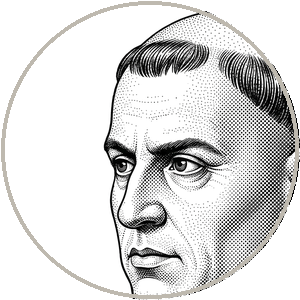 **AQUINAS:** It is nearly mine, and I will say where it is mine and where it is better than mine. It is mine in this: the man in the room is doing what I say the machine does — handling signs by their shapes, with no grasp of the natures the signs are about. The room has the syntax in full and the semantics not at all. And it is mine in the deeper point, which Searle states and I would underline: the understanding is not in the room however good the room becomes, because no improvement to the *shuffling* adds the *grasp*. You may make the rulebook a thousand times larger and the answers a thousand times better, and you have a better shuffler and not a knower. That is precisely my claim that understanding differs in kind, not degree, from the manipulation of signs. So yes. The room is my cathedral.
**EDO SEGAL:** Patricia, you took this argument apart, in print, with Paul Churchland, decades ago. The reader should hear you do it, and the friar should have to answer it, because his cathedral is your demolition site.
 **CHURCHLAND:** With pleasure, because this is the argument that made me sharpen everything. Searle's room works by a trick of attention. He invites you to look for understanding in the *man*, the lone clerk, find it absent, and conclude the *system* cannot understand. But that is precisely the fallacy of looking for a property of the whole in one of its parts. Watch what happens when you run the identical argument on a brain. No single neuron in your head understands English. Pick any one — it is a cell, it fires or it does not, it grasps nothing. By Searle's logic, since no neuron understands, the brain cannot understand. But the brain does understand. So the inference is broken. Understanding, if it is anywhere, is a property of the whole organized system in action, not of the clerk and not of the neuron. The man in the room is the wrong place to look, exactly as the single neuron is.
And there is a second move I made then that I will stand on now. Searle is so *sure*, when he sits in that room, that mere symbol-shuffling could not be understanding. Where does the certainty come from? It comes from not being able to imagine how it could. But run that intuition through history. People were equally sure that a mere electromagnetic wave could not be light — you wave a magnet, no glow. They were sure that mere chemistry could not be life — surely there was a vital spark. Every one of those certainties was a failure of imagination that the science then defeated. Searle's "obviously the room doesn't understand" is, I wager, the same kind of error, an incredulous stare wearing the robes of a proof.
**AQUINAS:** Both blows land, and I must take them honestly before I answer, or I am not worth debating. The neuron point is strong. I cannot say "the man does not understand, therefore the system does not," if the same form fails on the brain, where the part is mute and the whole speaks. So I will not rest on *that* version. Granted. And the incredulous-stare point I feel the force of, because I have watched reason defeat what looked like obvious impossibilities, and I would be a fool to bet against the next one merely because I cannot picture it.
But now let me give you the argument that survives both blows, because it is not the man-in-the-room and it is not a failure to imagine. It is the argument from the universal that I gave at the opening, and the room does not touch it. Your neuron reply shows that understanding need not live in a part. Fine — let it live in the whole. My question is unchanged: when the whole grasps the universal, is *that grasp* a particular physical state, this configuration of this tissue, or is it the kind of act no particular state could be? The brain-understands point concedes that the brain understands and locates the understanding in the organized whole — but it does not show that the organized whole's grasp of a universal is *itself material*. It assumes that. The whole question is whether a universal can be held in a particular, whether it is a neuron or a network or a continent of neurons. Scale does not change a universal into a particular. So the room falls, and I let it fall, and the argument I actually care about is still standing in the rubble, because it was never the room.
**CHURCHLAND:** That is fair, and I respect the friar for dropping the room rather than dying on it — most defenders of Searle never do. So let me meet the argument that survives. You say a universal cannot be held in a particular state. But that is exactly what a representation is, and representations are the least mysterious thing in neuroscience. A particular pattern of activity in a particular population of neurons *stands for* a category — it is tokened by this dog and that dog and no cat. The pattern is particular; what it represents is general. There is no contradiction in a particular vehicle carrying a general content, any more than there is a contradiction in this particular printed word "dog" referring to all dogs. The map is particular ink; the territory it represents is general. You are treating "a universal held in a particular" as an impossibility, when it is just what a representation is, and brains are representation engines.
**AQUINAS:** Ah — but the printed word "dog" does not *understand* dogs. It refers, by our convention, because a mind reads it. The ink carries the universal only for a knower who already grasps. So when you say the neural pattern "stands for" the category, I ask the same question one layer down: stands for it *to whom*? A representation is a representation only to something that interprets it. The word on the page needs a reader. If the neural pattern needs a reader, you have not explained understanding; you have placed a little reader inside, and I will ask who reads *his* representations, and you are on a staircase with no top. And if the neural pattern needs no reader — if it just *is* the understanding, with no one to whom it is presented — then you have asserted the very thing in dispute, that a particular configuration, presented to no one, is a grasp. That is the move I say cannot be made. The representation answers reference beautifully. It does not, by itself, answer presence.
**CHURCHLAND:** And we are back at the seam — presence, the homunculus, the reader. My answer, which I will defend in the consciousness round, is that the regress stops because there is no inner reader; the system's representations are used by the rest of the system, and "presence" is what that global use feels like from inside, not a further audience. You will say that is a promissory note. You are right that it is. But it is a note drawn on a bank that has paid out before — life, light, heat — and yours is drawn on a bank that has never once cleared a check.
**EDO SEGAL:** The reader cannot see your faces, so let me mark it: that was the first exchange tonight where neither of you smiled. And notice the strange topology — the friar conceded the room, Patricia conceded the promissory note, and the disagreement got *sharper*, not softer, as it narrowed. That is what real argument does. Hold the seam. The next round goes after the word "soul" itself, because Patricia has spent a career arguing it is a folk theory headed for the museum, and the friar has spent his arguing it is the most real thing about you. After this.