The Smooth and the Flood
 **EDO SEGAL:** Let me read you both a convergence you don't know you have yet, and then set you loose on it. Susanne, you wrote about the danger of *formal competence without vital import* — the technically flawless work that is dead, correct in every element and empty as a whole. You called the cultural version of it, borrowing from Byung-Chul Han, the [aesthetics of the smooth](https://www.youonai.ai/fieldguide/med/aesthetics_of_the_smooth). Emily, you wrote about the *pollution of the information ecosystem* — fluent synthetic text flooding the commons faster than humans can produce the real thing, draining the assumption that words connect to anyone. I think you're describing the same flood from two banks. Susanne, start: what is the smooth, and why is the machine its engine?
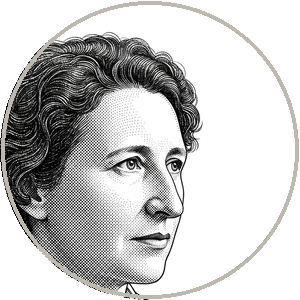 **LANGER:** The smooth is *discursive adequacy with the presentational absent*. It is the surface that satisfies every criterion you can state in a sentence — correct grammar, sound logic, coherent structure, polished finish — and lacks the one thing you cannot state in a sentence: the felt rightness, the vital import, the life. And the machine is its engine not by malice but by *constitution*. The machine produces discursive adequacy as its *default output*, because discursive adequacy is exactly what it was built to produce, and discursive adequacy without presentational depth is the precise definition of the smooth. Every polished paragraph that addresses its topic and means nothing. Every elegant interface that meets the spec and does not breathe. The machine pours smoothness the way a spring pours water — it cannot help it; it is made of it.
And here is the cruelty I most fear, the cumulative one. When *every* output meets a high discursive standard, the occasions on which a person is *forced* to perceive the gap between competence and import grow rare. The wrong note never clangs. And the faculty that perceives the gap — the presentational ear — is built only by *encountering* the gap. So the smooth does not merely produce dead work. It produces, in the people steeped in it, the slow loss of the capacity to *notice* that the work is dead. The pipe replaces the fountain, and then the memory of the fountain, and then the very idea that there was ever water that ran by itself.
**EDO SEGAL:** Emily — your flood. Same water?
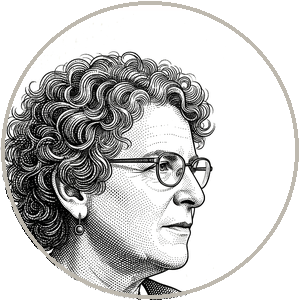 **BENDER:** Same water, and I'll show the audience exactly where my bank touches hers. Langer's worried about the *quality* draining out of the work; I'm worried about the *trust* draining out of the commons, and they're the same drain. Here's the mechanism. Every previous flood of text — Gutenberg's, the internet's — was a flood of *utterances*: more people saying more things, cheaply. Annoying, often wrong, but every drop had an author, a someone whose intent you could interrogate, whose lies were *theirs*, attachable to a name. Judgment, curation, criticism — all of it works by tracing text back to an accountable source. Synthetic text removes the someone. It's not a flood of utterances anymore. It's [the appearance of utterances](https://www.youonai.ai/fieldguide/med/grounding_problem_ai) — form with no one behind it, generated orders of magnitude faster than the real thing, indistinguishable on the surface, costless to the polluter. And it doesn't just add lies. It does something worse: it raises the price of trust *itself*. When any review, any photo, any grieving widow's post might be synthetic, the rational reader discounts *everything*, including the true things. The commons doesn't fill with falsehood. It drains of the assumption that words connect to anyone at all.
**LANGER:** And do you hear what we have just done? Professor Bender's "form with no one behind it" *is* my smooth — discursive surface without the presentational act that anchors it to a meaner. We have written the same sentence in two scripts. The flood of the smooth and the flood of the ungrounded are one flood. She measures it in the trust of a society; I measure it in the vital import of a made thing. The water is identical.
**BENDER:** It is, and there's a recursion I have to add because it's the part that should frighten the engineers in the room, not just the philosophers. The synthetic text doesn't sit still. It becomes the *training data* for the next generation of models. The parrots are already eating parrot. Your field calls it [model collapse](https://www.youonai.ai/fieldguide/med/the_pattern), and it isn't hypothetical — the signal from grounded human life gets fainter in the mix with every training run. So the smooth doesn't just flood the present commons. It poisons the well the *future* machines drink from. Gutenberg multiplied human voices. This multiplies the *absence* of them, and then feeds the absence back to itself.
**EDO SEGAL:** Let me play the optimist's card, because the audience deserves the strongest rebuttal and I half-believe it some days. In [YOU] on AI I argued that every transition floods us — Gutenberg's flood, the internet's flood — and that the resolution was never *less* abundance but *better judgment*: curation, criticism, taste, dams in the river. Why isn't synthetic text just the next flood, met by the next generation's dams? Susanne, the optimist quotes your own framework back at you — the human presentational faculty as the dam. Why doesn't it hold?
**LANGER:** Because every previous flood, Mr. Segal, *strengthened* the faculty that dammed it, and this one *erodes* it. Gutenberg's flood of books demanded more readers, sharper readers, critics, a whole trained presentational culture of discrimination — the flood built the dam-builders. This flood is different in the cruelest possible way: the very smoothness that constitutes the flood is what *atrophies* the faculty that would judge it. The flood and the erosion of the dam are the *same substance*. You cannot train a generation's taste on the thing that dissolves taste. That is why the pattern you trusted breaks here — not because floods can't be met, but because this is the first flood whose water is *made of* the dissolving of the dam.
**BENDER:** And I'll add the unromantic engineering reason the dam doesn't hold, so we're not leaning on the whole case on the faculty. The previous dams — bylines, peer review, libel law, reputation, the gut sense that *somebody stands behind this* — all of them physically depend on *traceability to a person*. Synthetic text is engineered to be untraceable to a person. You can't build a dam out of "trace it to the author" when the flood is defined by the author's absence. So the optimist's analogy fails twice: the water erodes the human faculty, *and* it dissolves the institutional infrastructure the faculty used to stand on. Both dams, the inner and the outer, are made of exactly the thing the flood removes.
**EDO SEGAL:** Mark this — it's the strongest joint communiqué of the night, and notice it took the *flood* to produce it. The two people least likely to agree about what these machines *are* agree completely about what they're *doing* to the water we all drink. Attention is a commons. Truth is a commons. Vital import is a commons. And a commons does not care whether the thing draining it has anyone home. Hold that. The next round itemizes the bill — a trillion dollars, the death cross, and who, exactly, is paying. After this.