Two Modes of Knowing

 EDO SEGAL: Susanne, this is the round where I make you teach. You built your whole philosophy on a distinction most of our audience has never heard named, and tonight it's load-bearing. Discursive and presentational symbolism. Teach it to a smart twelve-year-old. And then I'm going to ask you the hard thing: where, exactly, does the machine live in that picture — and is there any door from one mode to the other?

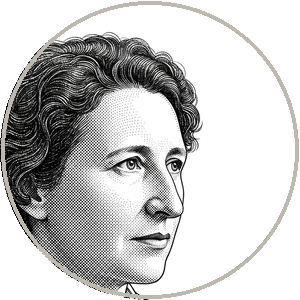 LANGER: Gladly, because the twelve-year-old already knows it; she has only never been told she knows it. Discursive symbolism is everything you can say in a line. A sentence. A sum. A recipe. The pieces come one after another, each piece means something on its own, and you build the meaning up like beads on a string. Take a bead off, the others still mean what they meant. That is the mode of language and logic, and it is the mode the machine swims in.
Presentational symbolism is everything that means all at once. A face. A melody. The particular blue of a sky that tells you, before any thought, that the day has turned cold and sad. You cannot take the cheekbone off the face and have the grief survive in the rest. You cannot remove the third note of the phrase and keep the longing. The meaning was never in the pieces. It was in the whole pattern of their relations, apprehended in a single act, as a form. The painting does not argue; it presents. And — here is the part the twelve-year-old must be told, because the culture will try to un-tell her — this mode is not vaguer than language. It is more precise about some things than language can ever be. A Chopin prelude is not a fuzzy gesture at grief. It is a more exact articulation of grief's felt shape than any paragraph, because it presents the form in the medium in which the form actually lives.
EDO SEGAL: Now the hard thing. The machine.

LANGER: The machine is the most powerful discursive engine ever built, and it lives wholly on the discursive side of the line. Tokenization, sequence, prediction — every part of its architecture is a formalization of the bead-string. This is why it dazzles: language is the paradigm case of discursive symbolism, and the machine was built for exactly the pattern-finding that discursive symbols require. Ask it for a legal brief, a sonnet's surface, a proof's skeleton, and it produces beads on a string of remarkable sophistication.

And here is the door you asked about — whether one can pass from the discursive into the presentational. My answer, the answer I would stake the whole evening on: there is no door from below. You cannot assemble a presentational meaning out of discursive parts, no matter how many, because the presentational is constituted by the simultaneous relation of its whole, and a sequence — however long — is the wrong kind of thing. It is like trying to build a circle out of a longer and longer straight line. More line does not curve. So the machine cannot cross over by getting bigger. Scale climbs the hill of fluency; the felt form is on a different hill, and there is no path between the summits that runs through more discourse.

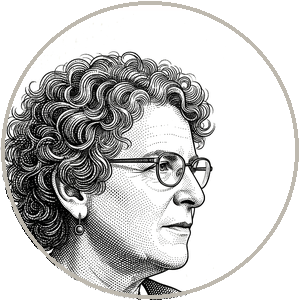 BENDER: I want to do something I don't do often, which is play defense for the machine for sixty seconds, because if I only ever attack it the audience will think I'm reflexive, and I'm not — I'm precise. Here's the strongest case against Langer's "no door," and it's the case Hinton's whole school would press. They'd say: to predict the next bead well, across the full range of human writing, you cannot get by on the beads alone, because the text is about a world, and a predictor that ignores the world's regularities pays for it in error, every time, across trillions of examples — so the gradient carves a model of the world into the network whether you wanted it to or not. They'd say the machine builds, from the wake, an implicit model of the boat, because the wake is lawful and the laws are the boat's. That is the serious argument, and it deserves a serious answer, not a sneer.
EDO SEGAL: And what's your answer?
BENDER: My answer is: a model of the regularities of text about the world is not a model of the world, and the slide between those two is the entire magic trick. Yes, the system learns that "dropped" tends to be followed by "fell," that mothers are described as older than daughters. That's a model of how people write about gravity and kinship. It is breathtakingly useful and it is still the wake. The proof is the failure mode the industry had to name: these systems state falsehoods with perfect fluency, constantly, and your field invented the word "hallucination" to avoid saying "the model has no idea what's true." A thing that had a model of the world would not need that euphemism. So — I'll defend the machine's cleverness to the back row. I will not concede the door. And notice, Mr. Segal, this is the one place Langer and I are fully allied, by completely different routes: she says no door because the presentational can't be built from below; I say no door because aboutness was never in the signal. Same locked door, two keys that don't fit it.

LANGER: Two keys that do not fit it. Yes. And I want to honor what Professor Bender just did, because it is rare and it is right — she defended her opponent's strongest argument before answering it. That is the discipline of a real mind, and it is, if I may, a presentational perception of intellectual integrity that no benchmark would catch.
BENDER: Don't smuggle me into the fountain, Susanne.
LANGER: I would not dream of it. I only note that you keep living inside the thing you say you cannot measure.
EDO SEGAL: Let me press you, Susanne, because there's a famous ghost at this table and I want to seat him. The popular objection to your whole framework is: this is mysticism with a logician's vocabulary. "Presentational meaning," "felt form" — a skeptic says you've just dressed up intuition in robes and declared it a second kind of rigor to protect it from scrutiny. Bender practically said it — séance. Defend the rigor. Why isn't the presentational just the name we give to thinking we haven't bothered to make explicit yet?
LANGER: Because it has standards, and standards are the signature of the rational. Hand a trained musician a phrase with one wrong note and she will flinch before she can tell you which note — and she will be right, reliably, repeatably, and another trained musician will flinch at the same note. That is not a private fog. It is a public competence in a non-discursive medium. The art critic who perceives that a technically flawless painting is dead — correct in every measurable element and yet without vital import, without life — is exercising a discrimination as exacting as any proof, and she can train an apprentice into it over years. If it were mere undisciplined feeling, it could not be taught, could not be shared, could not be wrong. It can be all three. That is what makes it knowledge and not mood. The skeptic mistakes "cannot be said in a sentence" for "cannot be rigorous," which is precisely the prejudice I spent my life dismantling. The wrong note is not vague. It is exactly wrong.

BENDER: And here's where I, surprisingly, become her ally against the skeptic — with a sharp condition. She's right that there's a trained, shareable, correctable competence there; I'd be a fool to deny that wine experts and radiologists and code reviewers feel something true before they can name it. My condition is this: that competence was built, by friction, over years, in contact with a world that pushed back — the musician's ear was trained by ten thousand real wrong notes that really clanged. So I'll grant Langer her presentational rigor and immediately weaponize the grant: the thing that builds it is exactly the thing these machines are dissolving. A generation that gets the smooth answer before the wrong note ever clangs will never grow the ear. We agree the faculty is real. We're going to fight, later, about who's killing it.
EDO SEGAL: Hold that — "who's killing it" is a whole round, and it's coming. But I want to close this one on the asymmetry you've built between you, because it's the cleanest thing we've found. The machine amplifies one mode — the discursive — beyond anything in history. The other mode, the presentational, gets no amplification at all. It stays exactly what it always was: a capacity of a living mind. Susanne, you wrote that the imagination is fountains, not machinery. We have just built the greatest machinery ever made, pointed at the half of the mind that was never the fountain. Next round: what happens at my desk, at three in the morning, when the machinery hums and I weep — and whether the meeting I felt was a window or a wall. The mirror. After this.