The Crossing
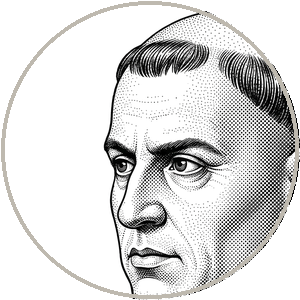 **AQUINAS:** Then I will aim it at the heart, Master Hawking, and not at the armor. All evening you have called the soul a pattern, a process, a flame — mortal, copyable, real, and finished when the candle is out. I will not ask you to prove there is no soul; you cannot, and you have nearly admitted it. I will ask you something harder, about how you *live*. You told this room that the unbearableness of your father's loss is the measure of its truth — that grief is the correct response to a permanent end. Yet you also told us nothing is destroyed, that the information is conserved forever in the cosmos. So when you grieve, are you grieving the *person*, who you say is genuinely and forever gone — or are you grieving the *running*, the process, while believing the person, as information, is somehow still woven into the universe you revere? I think you carry a grief your physics does not license, and I want to know which half of you is telling the truth at the graveside.
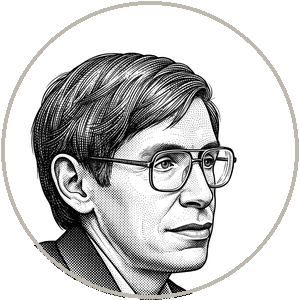 **HAWKING:** That is the sharpest thing anyone has put to me tonight, and I am going to answer it without the armor, because you asked it without the spear. You are right that there is a tension, and you have found it exactly. Here is the truth of it. At the graveside I grieve the *running* — the live process that was the person, which is over and not conserved as a running anywhere, and that is the real and permanent loss. The conserved information is no consolation precisely because it is not the running; it is the smoke, not the flame, and you cannot warm your hands at conserved information. So I do not carry a grief my physics cannot license. I carry the *only* grief my physics licenses — grief for a process that has truly ended — and I refuse the larger, falser comfort your view offers, which would tell me the running continues elsewhere and that my grief is therefore partly a misunderstanding. My grief is not a misunderstanding. It is exact. What you call the half of me that betrays my physics is, I think, the half of you that cannot believe a man could love a mortal thing as a mortal thing and not flinch. I can. It is the discipline of my life. I grieve the flame and I do not pretend it is smoke that will someday be re-lit.
**AQUINAS:** Then I honor that, and I withdraw the charge of incoherence, because you have paid it in full. But let me press the cost of it, since you will not let me press the comfort. You say you can love a mortal thing as mortal and not flinch. I believe you. Now turn it on yourself, not your father. When *you* are the flame going out — when it is your running that ends, with no copy, conserved only as smoke in your children and your equations — is the [ferocity you preached in your opening](https://www.youonai.ai/fieldguide/med/courage_to_be_amplified), the "amplify the signal while it runs," is that courage, or is it a man shouting in a corridor to fill the silence he does not believe has a far side? I ask because your engineers in Trivandrum will face the same corridor, and they will want to know whether your answer is a faith or only a louder fear.
**HAWKING:** It is courage, and I can tell you exactly how I know, because I have been in that corridor longer than almost anyone alive. They told me I had two years at twenty-one. I have stood at the end of the flame, looking at the precise dark you are asking about, for my entire adult life. A frightened man fills the silence; I have watched myself do the opposite — go quiet, do the work, love the people, and let the dark be dark without decorating it. The ferocity in my opening is not a shout to drown out the silence. It is the only rational response to learning that the running is finite and unrepeatable: you do not waste it, because there is no second edition. A man who believed in your far side could afford to waste this life; he has another. I cannot waste it, because it is the only one, and that scarcity is not my despair, it is my *seriousness*. You think the absence of a far side must produce either dread or denial. I am the standing refutation. It produced, in me, attention. Now I will turn it around, Father, because you have been asking me how I live and I want to ask you the same. You ended your life calling everything you wrote *straw*. You spent decades building the most rigorous architecture of argument in the history of the West, and then declared it worthless next to what you had seen. I have to ask you, plainly: was that humility — or was that a kind of giving up, dressed as reverence, a tired man at the end of his strength deciding the work he could no longer do must not have mattered?
**AQUINAS:** No man has ever asked me that to my face, and it deserves the truest answer I have. It was not giving up, and I can show you why from the inside, not the outside. A man who gives up says *the work was false* — he repudiates it. I never said the Summa was false; I said it was straw, and straw is not falsehood, straw is *what is left when the grain is taken*. The work was true and it was the stalk that carried something it was not itself. To call it straw was not to deny the harvest; it was to confess that the stalk is not the bread. And here is how I know it was not exhaustion masquerading as reverence: exhaustion wants *rest*, and what I felt was not a wish to stop but an inability to add — the way you cannot light a candle at noon, not because the candle is broken but because the light it would give is already drowned. I had spent my life saying reason reaches genuine truth and also that reason is bounded, that something exceeds it. The straw was that doctrine becoming *flesh* — the boundary I had argued for my whole life, met at last not as a theory but as a fact, by the very mind that had pushed reason as far as a mind can push it. You ask was it humility or surrender. It was the one thing your machine can never do, Master Hawking, and the one thing I suspect you have done at the edge of your own equations and called by another name: it was a mind, full of its own power, falling silent before something it finally grasped as larger than itself. You have stood at that edge. You called it wonder. I called it God. We may have been pointing at the same dark.
**AQUINAS:** So let me ask the last thing directly, since we agree we are pointing at the same dark. If your reverence at the edge of the equations and my silence at the edge of the Summa are the same act — a full mind unmade by a fullness it cannot contain — then tell me honestly: what is the difference between us, except the name we give the far side and whether we will say it out loud?
**HAWKING:** The difference is the whole of it, and it is not nothing, but you have made it smaller tonight than I expected, so I will be exact. The difference is that you name the far side and I refuse to, and I refuse to because naming it claims to know its shape, and I think we know only that it is there and that it exceeds us. You call the dark God and draw conclusions from the name — that it is personal, that it loves, that it keeps the running going on the other side. I call it the edge of the map and draw no conclusions, because the one thing the edge has taught me is that I do not know what is past it. So we point at the same dark, yes — and then you furnish it, and I leave it bare. I think your furniture is the oldest and kindest wish of our species, and I think my bare room is colder and truer. But I will grant you this, here, at the end, where I would not have granted it at the start: standing at the edge and being unmade by it — that, we share. The argument was never about whether the dark is real. It was about whether we are allowed to name what we cannot see.