Could Silicon Carry It?

 EDO SEGAL: This is the round the whole title points at, so let me ask it without a net. Suppose we could scan a brain — every neuron, every weight, every connection — and instantiate that exact pattern in silicon, running. Stephen, your materialism seems to say: then you have the person, on a new substrate, because the person was always the pattern and never the carbon. Father, your hylomorphism seems to say: you have, at most, an angel-shaped error — a copy of the organization without the being whose organization it was. So I want to make each of you defend the thing that costs you the most. Stephen — if the upload is you, then we could run two of you at once, and now there are two people both certain they are Edo. Does the self survive being copied? And Father — you say the soul is the form of this body. Does that not make you a kind of substrate chauvinist, ruling out silicon minds by definition rather than by argument? Stephen first, and take the hard case.

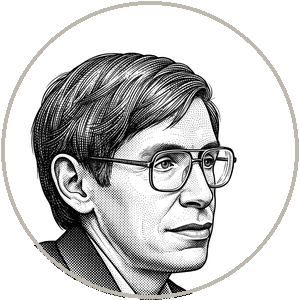 HAWKING: I will take the hard case, because the hard case is where my position either earns its keep or doesn't. Yes — if you instantiate the pattern, you have a person, and yes, if you do it twice, you have two people, both with an equal and genuine claim to be the original, and this is deeply strange and I am not going to pretend it isn't. But strange is not the same as incoherent. Here is the thing people get wrong: they ask "which one is the real me?" as if there were a fact about a soul-token that travels with one copy. On my account there is no such token. There is a pattern, and after the copy there are two instances of it, and they immediately begin to diverge because they have different experiences from the first second — and from then on they are two people who happen to share an origin, like identical twins who shared a zygote. The self is not a thing that gets transferred and could go to the wrong place. It is a process that gets instantiated, and can be instantiated more than once, and the discomfort you feel is the discomfort of discovering that the intuition of a single indivisible soul was always a story the single-instance hardware told you. Copy the hardware and the story breaks, because the story was never true — it was just never tested.

EDO SEGAL: So let me hand that back, because you have just said something most people will refuse to hear and I want it stated so plainly they cannot duck it. You are telling me that the feeling that there is one indivisible me — the thing I most cannot doubt — is an artifact of the fact that, so far, the hardware has only ever come in single copies. That the soul-as-token is not a discovery but a side effect of never having been duplicated. And that a technology which duplicated it would not threaten the self so much as expose it — show that there was never a single thread to cut, only a pattern that can run in more than one place. That is either the most liberating thing said tonight or the most horrifying, and I genuinely cannot tell which.
HAWKING: It is both, and that is why it is true. The horror and the liberation are the same fact seen from two sides, which is how you know you have hit something real and not a fairy story, because fairy stories are never both. And I will say to the friar, before he draws his sword: this is not me dodging the soul. This is me telling you what the soul is — a pattern, copyable in principle, precious because it is improbable and not because it is indivisible. You want it indivisible so that it can be immortal. I want it copyable so that it can be understood. We are fighting over the same jewel. I am just not willing to pretend it is made of a substance no instrument has found.

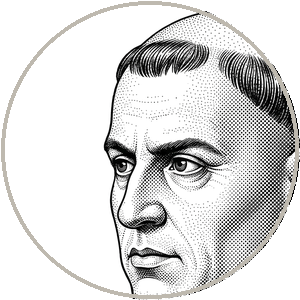 AQUINAS: Then let me answer the charge of chauvinism head-on, because it is a good charge and a lazy answer would deserve to lose. I do not rule out a silicon mind by definition. I rule out a silicon mind by the same argument I have pressed all night: that understanding, the grasp of a universal, is the act of no material organ, silicon no more than carbon. If I am right about that, then silicon is excluded not because it is the wrong stuff but because no stuff is the seat of the rational act — and carbon would be excluded too, which is exactly why I say the human intellect's act is not the brain's act, though it depends on the brain for its material. So I am not a substrate chauvinist. I am a substrate skeptic across the board. The functionalist is the one making the bold metaphysical claim — that mind is pure organization, liftable off any substrate like a tune off any instrument — and he states it as if it were a finding when it is an assumption. Master Hawking calls the soul a pattern that can run in two places. I say: a pattern is precisely the kind of thing that can be copied, and the rational soul is precisely the kind of thing that cannot, and that difference is not a detail. It is the whole disagreement, and his copy machine, far from refuting me, dramatizes me. He has built a device that can duplicate everything about a man except the thing I said was not duplicable, and then declared that because the device duplicates everything else, the thing I named must not exist. That is not an argument. That is the device choosing the metaphysics.

EDO SEGAL: Father, that is a hard counter, but let me press where it costs you. The robots are walking. Systems with these models inside them are learning to manipulate the physical world by acting in it, being corrected by it, coping — your word, Dreyfus's word — with a world that pushes back. You told me earlier the body would walk back into this room and demand a seat. It has. If a machine learns the way an embodied creature learns, through a body that has a stake it can lose, do you inherit Dreyfus's position or finally abandon it?
AQUINAS: I inherit it, and I sharpen it, because embodiment was never the whole of my claim, only the part Master Hawking and I share. Grant the robot a body, senses, correction by a pushing world — I grant it all, gladly, because I have said from the first that human knowing begins in the body. The robot may then abstract better; it may build representations grounded in action and not only in text; it may close the loop Dreyfus said a symbol-pusher never could. And it will still face my last question, which embodiment does not answer: when it grasps the universal it has abstracted from its embodied experience, is the grasping the act of an organ, or not? If the act of understanding is immaterial in the human case — and that is my whole argument, untouched by giving the machine a body — then a body does not supply it to silicon any more than a body supplies it to neurons. The body is necessary for human knowing and not sufficient for the rational act, in us or in the machine. So no — the walking robot does not move me off Dreyfus. It moves the machine onto the exact ground where my deepest argument was always waiting for it.

HAWKING: I have to admire the architecture, even as I think it is a fortress built on air. The friar has constructed a position that no possible machine could ever falsify, because any capability the machine displays, he reclassifies as "the signs of understanding" and any inside it might have, he declares undetectable in principle. That is intellectually seamless and empirically empty. My position can be wrong — show me a capability that requires understanding and that the machine cannot reach by prediction, and I lose. His cannot be wrong, because he has defined the disputed thing as the one thing that leaves no fingerprint. I would only ask the reader to notice which of us is making a claim the world could refute.
AQUINAS: And I would ask the reader to notice that Master Hawking has just conceded he has no test either — that his "anyone home" is as fingerprint-free as my soul, which is why he holds the feeling-question loosely, as he said in his opening. We are both standing at the edge of a thing neither instrument can read. The difference is that I admit the edge is there and he keeps insisting the far side must be empty because his ruler stops at the rim.
EDO SEGAL: Hold there, because you have arrived together at the most important admission of the night and from opposite directions: neither of you can test it. Stephen cannot prove anyone is home in the machine. Thomas cannot prove anyone is home in the soul after the shutdown. Two of the best minds the species has produced, standing at the same rim, looking into the same unreadable dark, and disagreeing only about which way the burden of proof falls over the edge. Mark that. We are going to need it at the very end. Now let me bring it down out of metaphysics and into Tuesday, because there is a place where this argument is already cashing out in people's working lives. The machine is crossing the line of human capability, task by task. What does that crossing measure — and what, if anything, can it never reach?