The Brain That Stops

 EDO SEGAL: I want to start this round with a wound instead of a question, because the best questions I know come out of wounds. My father is gone. Near the end, the disease took the parts of him in an order that felt almost cruelly designed to test exactly what we are arguing about tonight — first the names, then the faces, then the thread of a sentence, until what was left in the bed was unmistakably a body and no longer, in any way I could reach, him. I sat with that and I could not decide what I had watched. Stephen, your account tells me, brutally and cleanly, what I watched: a computer losing its components, function by function, until the program could no longer run. Father, your account tells me something else was happening that I could not see. So let me put it to you both as plainly as I can, and Stephen, since it is your machine, you first. When my father lost his words — was he less of a soul, or only less of a working computer?
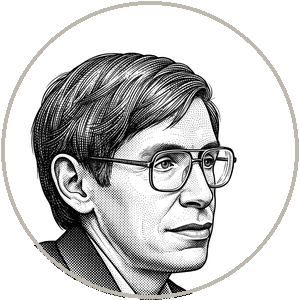 HAWKING: He was a computer losing function, and I am sorry, and I am not going to dress it up, because dressing it up is the thing I have refused to do my whole life and I am not going to start at your father's bedside. What you watched was the substrate failing in a particular order, and because the man was the substrate running, the man went with it. I will tell you the part that I think is missed by people who hear this as cold. It is the opposite of cold. If he was a computer, then for every year that machine ran, it ran him — his particular jokes, the exact way he loved you, a pattern that the universe had never produced before and will never produce again. The materialist does not say your father was nothing. The materialist says your father was a once-only event, and that this is precisely why it mattered, and why losing it is a real loss and not a transfer to a waiting room. The dignity is in the singularity, not in a backup.
EDO SEGAL: So let me hand that back to you the way I heard it, because I want to feel the full weight of it before the friar answers. You are saying — literally — that the reason my father's death is unbearable is the same reason it is true: that there was exactly one of him, running on a machine that could not be repaired, and that the unbearableness is the correct response to a real and permanent end, not a confusion about a journey. The grief is not a category error. The grief is the measurement.
HAWKING: Yes. That is exactly it, and it is the most honest thing I can offer you. I would go further. The story that he is somewhere, intact, waiting — that story, however kind it feels, quietly tells you the loss is not real, that the thing in the bed was a shell and the him slipped out the back. I think that is the actual cruelty, because it asks you to feel less than the situation deserves. I am asking you to feel all of it. The cosmos is indifferent. It did not arrange your father, or keep him, or store him. And he was, for a while, one of the places where the indifferent cosmos woke up and loved a son. That is not a small thing to have been. It is, I would say, the largest thing there is.
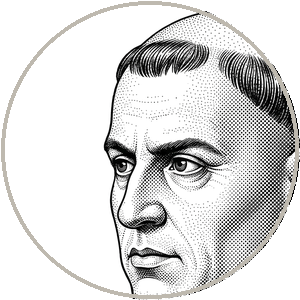 AQUINAS: May I answer the bedside, because I think Master Hawking has described the death of an animal with great precision and the death of a man not at all. Everything he says about the body is true. The senses failed, the bodily organs failed, and because the intellect in this life draws all its material through the senses, the man could no longer reason, or speak, or recognize his son. I do not dispute one word of it. The instrument was destroyed, and the music that depended on the instrument stopped. But here is the distinction I will not let go of tonight: the power to grasp a universal is not the power of any organ, and so it is not destroyed when the organs are. What you watched at the bedside was not the soul being unmade. It was the soul losing, one by one, the bodily doors through which, in this life, it reaches the world. The friar's claim — and I hold it as carefully as Master Hawking holds his — is that the one who was knocking was not the door.
EDO SEGAL: That image is going to stay with me — the soul losing its doors. But Father, Stephen has handed you a hard bill, and I want him paid before you go on. He says: show me the mechanism. You say something in understanding is immaterial. He says every time we have looked, mind has turned out to be the brain doing something — chemistry, voltage, structure — and that "immaterial" is just the name we give to a mechanism we have not found yet. Why is your remainder real, and not simply the part of the machine we have not finished reverse-engineering?
AQUINAS: Because the remainder is not a gap in our knowledge of the machinery — it is a feature of the kind of thing understanding is, and the argument does not wait on any future discovery. Let me give it to him sharply. The intellect can grasp any bodily nature — it can think the nature of flesh, of bone, of every organ. Now, that by which we know a nature must not itself already be that nature, or it would distort what it receives, the way a tongue coated with bile tastes everything as bitter. A material organ is some particular bit of matter with a particular nature. If the intellect were a bodily organ, it would have a nature of its own that would color everything it thought, and it could not know all bodily natures impartially. But it does know them all. Therefore the power that understands is not the act of any organ. That is not a promissory note about future neuroscience, Master Hawking. It is an argument about what understanding would have to be, and it is as available to you, with your microscopes, as it was to me with none.
HAWKING: It is an elegant argument and I think it is exactly seven hundred years too early. You are reasoning from the feeling that understanding is unified and unlimited, to the conclusion that the organ cannot be limited and particular. But a modern neural network is a particular, finite, material system that nonetheless represents an effectively unlimited range of natures, because it does not store them as a tongue stores a coating — it stores them as patterns of weights, distributed, superimposed, with no single part committed to any single nature. Your argument assumes that a material thing must wear its contents the way a wax tablet wears an impression. Brains do not work like wax tablets, and neither does the machine. The very thing you say matter cannot do — hold all natures without being any of them — is the thing distributed representation does for a living, every day, in silicon. You found a real puzzle. You drew a metaphysical conclusion from a hardware limitation that turned out not to be a limitation.
AQUINAS: Then we have found, in the first round, the exact seam, and I want to mark where it runs. Master Hawking says the network holds all natures and is none of them, and so does what I said only the immaterial could do. I say the network holds representations of all natures — marks, weights, patterns, the wake of human talk about flesh and bone — and is none of them, which is a different and lesser thing. It holds the signs and not the natures. Whether holding the signs in that distributed way is grasping the natures, or only the most sophisticated shadow of grasping ever assembled, is the whole of what divides us. He has not shown it is the same. He has shown the old metaphor was crude. I grant the metaphor was crude. The argument underneath it is still standing.
EDO SEGAL: Hold there, both of you, because you have just done the thing this whole series exists to make visible. The disagreement did not dissolve under pressure — it sharpened. Stephen says the brain is a computer and the friar's remainder is a mechanism we have not finished finding. Thomas says the remainder is not a mechanism at all but the kind of thing understanding is, and that the machine, however distributed its weights, holds signs where a mind holds natures. Mark that word — natures. We are going to need it on a higher floor. The next round goes straight at it: when the machine handles the word, does it ever reach the thing? The friar has a seven-hundred-year-old name for that gap, and it is the most precise tool in this room.