Closing Statements
 **EDO SEGAL:** Three hours ago I asked whether a machine that lets you live forever would save the self you are or delete the one thing that made you a self. We've fought it through the relation and the pattern, the curve and the leap, despair the machine can't feel, six epochs and the sickness unto death, the crowd and the merger, the death cross, the copy that wakes up, the deadline and the saint, and the question of whether anyone is home in 2045 — and the question is still standing, which both of you would tell me, for opposite reasons, is the correct outcome. So we end the way long conversations should: each of you gets the floor, uninterrupted, to say the thing you most want carried out of this room.
But first, the bookend to the envy question I opened with. Each of you: name the strongest thing the *other* said tonight. Not the most agreeable — the one that got past your defenses, that you'll still be arguing with next month. Ray first.
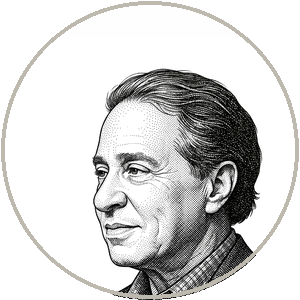 **KURZWEIL:** The saint. His point that I can amplify every human capability infinitely except sacrifice — because sacrifice requires the ability to lose everything in one irreversible act, and that's exactly the finitude I'm trying to abolish. I came in believing immortality was pure gain, that the only people who'd object were romanticizing a wound. He showed me there's one thing on the far side of the deadline that genuinely cannot survive the crossing, and it might be the best thing we are. I don't think that's enough to keep the deadline — I'd still cure death tomorrow if I could. But I can no longer pretend the trade is free. There's a cost, it has a name, and he made me say it out loud. That's been sitting in my chest since he landed it and it's not leaving.
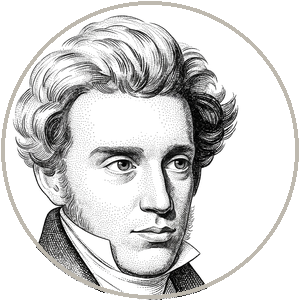 **KIERKEGAARD:** His error bars. I expected a salesman and I met a man who, asked what he owes the dying mother's daughter, said: the honest size of the bet, including the part I cannot verify. I have spent my life accusing the prophets of certainty of selling a comfort they have no right to. He stood here and refused the comfort — admitted he cannot prove the light is on in the copy, admitted the leap, admitted the dark. The strongest version of Ray Kurzweil is not a man fleeing death. It is a man building against it with his eyes open, who knows it might be a prayer and builds anyway. I have nothing in my arsenal against that, because it is, in its own and utterly secular key, *faith* — and I am the last man alive entitled to mock another's faith for being unprovable.
**EDO SEGAL:** Now the floor is truly yours. Ray opened the evening's argument. Søren, you close it. Ray.
**KURZWEIL:** I've spent sixty years watching a curve that everyone told me would stop, and it never stopped, and every time the experts were certain about a limit, the limit turned out to be a failure of their imagination, not a fact about the world. So when people tell me death is different — death is the one limit that's *supposed* to be there, the sacred one, the one we mustn't touch — I hear the same voice that said heavier-than-air flight was impossible and the human genome would take a century and machines would never use language. Death is information. Information yields. I have buried people I love, and I will tell you what I felt at every graveside: not acceptance, not the serenity the philosophers promise. *Waste.* The unbearable waste of a unique pattern, a specific irreplaceable mind, scattered for no reason except that we hadn't finished the work yet. That's what I'm fighting. Not finitude in the abstract — *this* death, the next one, my mother's, your child's, the one in the corridor tonight. Søren is right that I can't promise the light stays on. But I can promise this: the grave promises nothing at all. Between a bridge that might reach the far side and a certainty that there is no far side, I will build the bridge, every time, and I will call the building hope, and I would rather be wrong about the bridge than right about the grave. Stay alive long enough to find out. That's the whole of my philosophy. Stay alive. The rest is engineering.
**EDO SEGAL:** Søren.
*KIERKEGAARD:** I have spent this evening being told, with great kindness, that the thing I called the forge is merely a wound I never had the tools to heal. Perhaps. But I will leave you not with an argument — you have had three hours of those — but with the [courage to be amplified](https://www.youonai.ai/fieldguide/med/courage_to_be_amplified) that Edo's book asks of you, turned to its sharpest point. You are going to be offered the elevator. In your lifetime, or your children's, the offer will come — not as philosophy but as a product, gentle, reasonable, with excellent reviews. And the whole weight of what I have tried to say comes down to a single instruction for the moment the offer arrives: *do not let the ease of the answer relieve you of the labor of the question.
You are a self. Not a pattern — a *relating*, an activity, a verb that must be performed by you and only you, in a body that will fail, against a death you did not choose, in the few numbered years you actually have. That death is not your enemy. It is the horizon that gathers your scattered life to a point and makes this hour weigh something. The machine will offer to remove it. And the machine may even be able to keep something of you running afterward — your memories, your turns of phrase, the laugh your daughter would know. But whether *you* are in it, whether the light is on and whether it is *yours*, no test can tell her and no curve can tell you. So you must decide, in the dark, what manner of person you will be before the unanswerable — and the deciding is the last and truest act of the self you still are. Do not outsource it. Do not let them tell you the question was always trivial. Become someone, now, while becoming still costs something, while the deadline still gives your choices their terrible and beautiful weight. That is the work. It was always the work. The machine has only made it impossible, at last, to pretend otherwise.
**EDO SEGAL:** Sixty seconds, as promised, and then we turn the lights off.
I came into this evening afraid of one of my guests and hoping the other was right, and I leave with both of those feelings intact and sharpened, which is the only honest result. Ray spent three hours proving that death is waste — real, specific, unbearable waste — and that to call it sacred while you have the tools to fight it may be the most expensive piece of poetry our species ever wrote. Søren spent three hours proving that a self is a verb, not a noun; that the deadline is what gives the verb its weight; and that a being who can never die can never quite become anyone, because becoming was always a race against a clock. You'll notice neither of them told you the comfortable thing. The comfortable thing was never on the menu.
Here is what I can tell you from the death-cross rung, where this debate lives — the floor where the [river](https://www.youonai.ai/fieldguide/med/river_of_intelligence) runs fastest and the old word *transcendence* stops being a metaphor and starts being a procedure with a price. You watched the two people best equipped on earth to settle this question discover, in public, at full strength, that they cannot — and that their disagreement is not a gap in the evidence but a fork in what a person is willing to count as a self. That is not a reason to despair. It is the most honest map you will get. You cannot climb past this floor by waiting for the experts to decide; you just watched the two best fail to, magnificently. You climb by deciding, under uncertainty, what *you* believe the self is — whether amplifying yourself means escaping your finitude or finally, before the deadline, inhabiting it. A parent at a kitchen table tonight will be asked some small version of this — about a dying grandmother, about a child's struggle the machine offered to spare her, about what is worth keeping when everything can be copied. She will not have three hours and two geniuses. She will have a few seconds and her own conscience. So I'll give her, and you, the only thing this whole evening agreed on: whatever is on the far side of the machine's offer, *someone is home in you right now*, and the becoming is not finished, and the deadline — for now — is real. The question my book asked from its first page sounds different after tonight, and I hand it to you exactly where these two left it, unresolved and lethal and yours: when the machine offers to amplify you forever, are you sure you know which one of you it would be saving?
Søren Kierkegaard. Ray Kurzweil. Thank you, both, as the mortal and the would-be-immortal men you are. The room is yours to keep arguing in. Goodnight.
*One of these men is offering you eternity. The other says the offer would cost you your soul.*
Three hours. Two minds separated by a century and a half and an abyss. In this long-form podcast transcript, host Edo Segal sits a melancholy Danish theologian across from the engineer who intends to outlive death — and lets them collide. Kierkegaard built a self out of dread, despair, and the unbearable freedom of knowing you will die. Kurzweil intends to upload that self past the grave, treating mortality as the last bug worth fixing. Between them sits the question you cannot climb past: is the deadline what gives your life its meaning, or the cage you were born to escape? This is not a debate you watch. It is a floor of your own tower — the death-cross rung, where the river runs fastest. Listen in, and decide which staircase is yours.
Søren Kierkegaard (1813–1855) was a Danish philosopher and theologian widely regarded as the father of existentialism. Writing in barely fifteen years, often under a constellation of pseudonyms — Johannes de Silentio, Anti-Climacus, Constantin Constantius, Vigilius Haufniensis — he produced *Either/Or*, *Fear and Trembling*, *The Concept of Anxiety*, and *The Sickness Unto Death*. His central claim was that the self is not given but achieved — forged through choice, dread, despair, and the leap of faith, against the trembling knowledge of one's own death. He died at forty-two, having insisted to the end that the crowd is untruth and that truth is only ever received by a single individual, alone.
Ray Kurzweil is an inventor, futurist, and the most consequential long-range technology forecaster of his era. The author of *The Age of Spiritual Machines*, *The Singularity Is Near*, and *The Singularity Is Nearer*, he formulated the Law of Accelerating Returns — the claim that information technologies improve exponentially, doubling until a flat-looking curve erupts into transformation. He has predicted human-level AI by 2029 and the Singularity, including longevity escape velocity and the merger of biological and machine intelligence, around 2045. He treats aging and death not as destiny but as information problems awaiting their solution, and he intends to be there when they are solved.
Edo Segal has spent five decades building at the technology frontier — from games written in Assembler to expert systems, to companies through every platform shift, to Napster. He is the author of [YOU] on AI, written in open collaboration with the AI it describes, and the host of The Debates: long-form collisions between the minds shaping the machine age. He moderates the only way he knows how — stake declared, scars showing, no winner called.
Hosted and moderated by Edo Segal. A volume in the [YOU] on AI — The Debates series — youonai.ai