Six Epochs and the Sickness Unto Death
 **EDO SEGAL:** Ray, give the room the cathedral version of your cosmology, because it's genuinely one of the great pictures, and then Søren is going to walk into it. The six epochs.
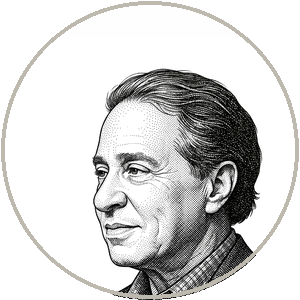 **KURZWEIL:** Thirteen point eight billion years, one story. Epoch one: physics and chemistry — atoms learn to hold information in their structure. Epoch two: biology — DNA, life, information that copies itself and improves. Epoch three: brains — information processed in real time, learning from experience. Epoch four: technology — we externalize intelligence into tools, language, writing, computers. Epoch five, beginning now: the merger of biological and machine intelligence. Epoch six, on the trajectory: intelligence saturating matter itself, the universe, in the only phrase I'll allow myself, waking up. And here's what matters — each epoch is shorter than the last, because each new substrate builds the next one faster. The [river_of_intelligence](https://www.youonai.ai/fieldguide/med/river_of_intelligence) isn't a metaphor in my hands, Edo. It's a curve with data points, and the data points fall on a single smooth line across cosmology, biology, and computer science. The smoothness is the argument. Death — individual biological death — is an epoch-three artifact. It's how nature ran the search before it had anything better. We have something better now.
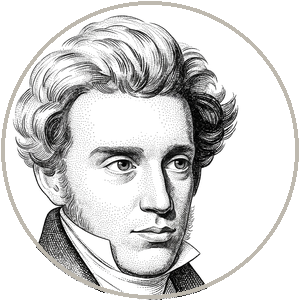 **KIERKEGAARD:** It is a magnificent story, and I want to honor how magnificent before I tell you what it cannot see. You have narrated the history of *information*. Every epoch is a triumph of pattern accumulating, copying, accelerating. And in thirteen point eight billion years of your story there is not one place where a single, particular, irreplaceable creature stands before its own death and is afraid. Your river has no banks. It is all current and no one standing on the shore watching the water take everything. The view from epoch six is the view from nowhere — intelligence in general, mind at cosmic scale, the universe waking up. But no one has ever lived in general. I lived in Copenhagen, in one body, in forty-two years, afraid. The whole grandeur of your account is purchased by *leaving out the thing I am*. You have written the biography of the river and called it the biography of the swimmer.
**KURZWEIL:** That's a real objection and I want to answer it without dodging. You're saying the cosmic view erases the individual. But it doesn't have to — it *contextualizes* the individual. The fact that you're a wave in a 13.8-billion-year river doesn't make you less real; it tells you what you're made of and where you're going. And here's the turn, Søren: the merger doesn't dissolve the particular self into a cosmic blur. That's the dystopian cartoon. The merger *preserves* particulars — it preserves *you*, the specific Copenhagen-shaped pattern, your dread and all, and gives it more time and more reach. I'm not asking the swimmer to become the river. I'm offering the swimmer a way to keep swimming.
**KIERKEGAARD:** But you cannot preserve the swimmer by preserving the swimming-pattern, and we are back at the abyss, only now it has a cosmic backdrop. Consider what your own framework requires. To copy me onto the new substrate is to make a being identical to me in every datum. Now — does the original Søren die? You are silent, and the silence is the whole matter. If the original dies and the copy continues, then you have not defeated death; you have *staged* it, performed a [death_of_the_original](https://www.youonai.ai/fieldguide/med/death_of_the_original) and dressed the survivor in my memories so that the mourners are comforted. The pattern persists; the person who was afraid is as dead as ever. And if you say there is no fact of the matter, that the copy simply *is* me — then you have abolished the very particularity your epochs were supposed to preserve, because a self that can be two places, restored from backup, forked and merged, is precisely *not* the unrepeatable single individual to whom I dedicated every book I wrote.
**KURZWEIL:** Or — third option, which you keep refusing to consider — there's no original and copy problem because the transition is gradual. You don't scan-and-destroy. You replace neurons with non-biological equivalents one at a time, the way your body already replaces its atoms, and there's never a moment where "the original dies." Continuity is preserved the same way it's preserved when you wake up tomorrow as the same person despite every cell having turned over. The teleporter horror story is a strawman. The real engineering is a slow tide, not a cliff.
**KIERKEGAARD:** A slow tide that arrives, at the end, at a being with no death in its future. And so however gradual the bridge, the destination is the same: a self that can no longer lose itself, and therefore — this is the sickness unto death, Herr Kurzweil, named precisely — a self that can no longer *die to* itself either. The despair I diagnosed is the inability to die — not biological death, the inability to let the false self perish so the true one can be born. You propose to make that condition permanent and call it eternal life. You have not cured the sickness unto death. You have built the first machine capable of guaranteeing it forever.
**EDO SEGAL:** That landed in the room. Let me say what I think just happened, because the reader needs it marked. Ray offered the gentlest possible version of immortality — no cliff, no scan-and-destroy, just a slow tide, the same continuity that carries you into tomorrow morning. And Søren took that gentlest version and said: it doesn't matter how kindly you do it, the destination is a self that can never again die to itself, and that exact condition is the thing I spent my life calling the sickness unto death. Two men looking at the identical future — a person who continues forever — and one sees the cure and the other sees the disease, named and diagnosed a hundred and seventy years early. Hold that. We've been climbing alone. After the break, the crowd arrives — because Ray's future isn't for one person. It's for everyone. And Søren has something to say about everyone.