The Curve and the Leap
 **EDO SEGAL:** Ray, I want to read your own number back to you, because it's the most falsifiable thing either of you has ever said. You've put artificial general intelligence at 2029 and the Singularity — the merger, longevity escape velocity, the substrate stops mattering — around 2045. You arrived at those dates not by prophecy but by plotting [Moore's Law](https://www.youonai.ai/fieldguide/med/moores_law) and four paradigms before it and extending the curve. You've been mocked for those dates for twenty-five years, and the winter of 2025 made a lot of the mockers quiet. So here's my question, and Søren, I want you to really hear his answer before you swing. Ray: when you commit to building toward 2045 — toward a world you cannot prove will arrive — is that a calculation, or is it something closer to faith?
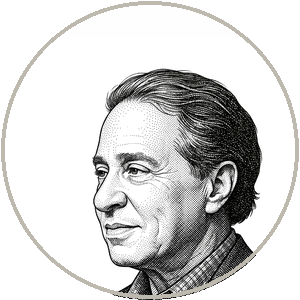 **KURZWEIL:** It's a calculation, and I want to defend that hard, because "faith" is the move people make to drag me onto Søren's home field. It's not faith. Faith, in his sense, believes *against* the evidence. I believe *with* it. I have a hundred and twenty years of data on the price-performance of computation falling exponentially through five completely different physical paradigms — relays, vacuum tubes, transistors, integrated circuits, and now whatever comes next — and the striking thing is that each paradigm died and the curve didn't even flinch. That's not a hope. That's the single most durable empirical regularity in the history of technology. When I extend it to 2045, I'm doing what an actuary does, not what a prophet does. The burden isn't on me to prove it continues. It's on the skeptic to name the specific mechanism that stops it. Nobody ever has.
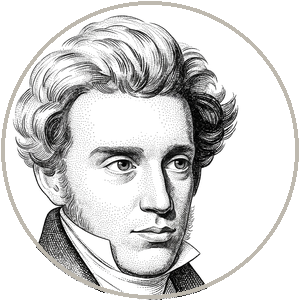 **KIERKEGAARD:** May I?
**EDO SEGAL:** That's why you're here.
**KIERKEGAARD:** I want to grant him everything and then take the only thing that matters. Suppose the curve holds. Suppose 2045 arrives precisely on schedule, the substrate is conquered, death is optional. He has still not made a calculation about the thing in question — he has made it about the *world*, and smuggled it into a claim about the *self*. Hear the difference. That computation will be cheap in 2045 is a prediction. That *you should want to live forever* is not a prediction; it is a leap, and a leap he has disguised as a deduction by hiding it inside a curve. The data tells him the door will open. The data is *silent* on whether to walk through it. And in that silence — exactly there, where the evidence runs out and the chart has nothing more to say — a human being must choose, with fear and trembling, who to be. That choice is the [knight_of_faith](https://www.youonai.ai/fieldguide/med/knight_of_faith) territory, and Herr Kurzweil is standing in it whether he admits it or not. He has simply chosen, and called the choosing arithmetic.
**KURZWEIL:** That's clever but I don't think it lands. Wanting to live isn't a leap. It's the most basic disposition every living thing has. You don't need faith to pull your hand off a hot stove. Choosing *more life* is the same reflex extended. The leap, if there's one in this room, is *yours* — you're the one who looked at a 100% mortality rate and decided to call it meaningful instead of fighting it. That's the move against the evidence. The evidence says death is bad. Every grieving person agrees. You had to do something strenuous and counterintuitive to turn that into a forge.
**KIERKEGAARD:** No — and this is the center of it, so let me be slow. I did not call death good. You keep needing me to, because it would make me easy to refute. I said death is the *condition under which a finite freedom becomes real*. A man who can postpone every choice indefinitely never has to become anyone. Abraham, on the mountain, with the knife — the whole weight of that story is that he had to act, *now*, with everything at stake and no way to know the outcome, and could not defer it to a wiser version of himself in some later century. Faith is not believing pleasant things. Faith is *acting* in the full force of uncertainty when calculation has abandoned you — and then believing, by virtue of the absurd, that what you surrendered will be restored. You, Herr Kurzweil, refuse the surrender. You will not let go of the finite for even an instant. You want the restoration *without* the resignation, the Isaac back without ever raising the knife. And so you have the form of faith — the leap toward a future you cannot see — without its substance, which is the willingness to lose the very thing you are reaching for.
**EDO SEGAL:** Let me find the beauty in the dark answer and the cost in the triumphant one, because that's my job. Ray, there's something genuinely hopeful in what you just said — that the will to live is the most universal thing there is, and that maybe we've been making a virtue of a wound because we couldn't heal it. A nurse at the end of a double shift, a parent of a sick kid — they don't want a philosophy of finitude, they want the kid to live. That's not nothing. But Søren, here's the cost you're pointing at, and I want it named: a [finite-time singularity](https://www.youonai.ai/fieldguide/med/finite_time_singularity) that removes the deadline might also remove the reason anyone gets off the couch. Ray, steelman that against yourself for one second. Is there a version of your own future you find frightening?
**KURZWEIL:** Yes. The version where he's right about meaning and I'm right about the technology. Where we conquer death and discover that a being with infinite time makes no real choices, because every choice can be unmade, and the species drifts into a kind of luxurious paralysis. I don't think that's what happens — I think purpose survives abundance, I think we'll find new mountains the way we always have. But I can't *prove* it, and that's the one place where my curve goes quiet and I have to do exactly the thing Søren just accused me of. I have to choose to believe people will stay human in a posthuman condition. He'd call that a leap. I'd call it a bet. I'm no longer certain the words are different.
**KIERKEGAARD:** Mark that. He just took the leap on the record and tried to keep the receipt.
**EDO SEGAL:** Mark it indeed — first convergence of the night, and it's a strange one: you both now agree there is a leap somewhere in this, and you only disagree about who's making it. Hold that thread. Because the next round is the one Søren has been waiting for, and it's the hardest thing the human mind does that the machine, so far, cannot do at all. Not compute. Not predict. Despair. After this.