The Question on the Table
 **EDO SEGAL:** Somewhere tonight — statistically, in the seconds it takes me to say this — a person is sitting in a hospital corridor doing the arithmetic of the rest of a life. A daughter outside a room, counting how many more visits there will be. A man my age, a scan on the screen, learning that the body he assumed was a permanent address has a lease after all. And in another room, on another continent, an engineer is loading the weights of a model that does not age, does not forget, and cannot, in any sense we have a word for, die. Two intelligences in the world tonight. One of them is running out of time. The other one was built so that running out of time would never apply.
I have spent my life on the second one. I build with it daily. And I cannot stop thinking about the first one, because it is me, and it is everyone I love, and the whole evening is going to live in the gap between those two rooms.
So here is the question we are going to spend three hours inside, and I am going to state it once, plainly, because every round tonight is this question wearing a different coat. If a machine could let you live forever — back up the pattern, restore it on a better substrate, run you past the grave — would it be saving the self you are? Or would it be quietly deleting the one thing that ever made you a self at all?
I can think of no two people in the history of thought with more right to fight about it.
Søren Kierkegaard died in 1855, at forty-two, in Copenhagen, having produced in fifteen years one of the strangest and most psychologically merciless bodies of work ever written. He wrote under a crowd of false names so he could examine the self from angles his own identity would not permit. He argued that the self is not a thing you have but an activity you perform — a relation that relates itself to itself — and that the engine of that activity is [despair](https://www.youonai.ai/fieldguide/med/despair_kierkegaard) and dread and the trembling knowledge that you will die and must still choose who to become. He is, I think, the deepest philosopher of finitude our species has produced. And he has agreed, for the purposes of this evening, to be briefed on a present he never lived to see. Søren, you've been handed the curve, the transformer, the whole promise of digital immortality. Welcome.
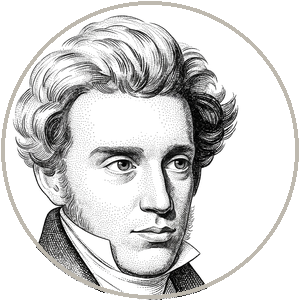 **KIERKEGAARD:** I have been reading your century the way a physician reads a chart. I will say only that I recognize the patient. The technology is new. The sickness is not. But go on — introduce the man who intends to cure death. I want to hear it said aloud.
**EDO SEGAL:** Ray Kurzweil has spent four decades doing the one thing most futurists refuse to do: making specific, dated, falsifiable predictions and staking his name on them across whole decades. In 1999 he wrote that machines would achieve facility with natural language and begin matching human cognition by the late 2020s, and the world treated it as a dinner-party eccentricity until, in the winter of 2025, the ground moved and did not move back. He gave us the [Law of Accelerating Returns](https://www.youonai.ai/fieldguide/med/law_of_accelerating_returns) — the claim that information technology improves not steadily but exponentially, doubling and doubling until a curve that looked flat for a century erupts. He arranges all of cosmic history into six epochs. And he has put a date on the abolition of death. Ray — for the audience, in your own words: what are you actually promising?
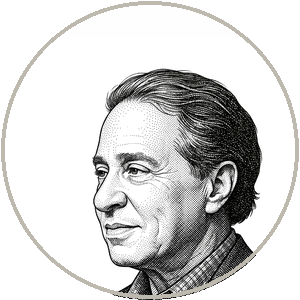 **KURZWEIL:** I'm promising what the curve promises, which is more modest than my critics pretend and more radical than my supporters understand. I'm saying that aging and death are the result of information processes — cellular, genetic, metabolic — and that information processes are exactly the thing we are learning to read and rewrite at an accelerating rate. By the 2030s the medical bridge gets us to longevity escape velocity, where each year of research buys back more than a year of life expectancy. By the 2040s the substrate stops mattering. What you are — the pattern that is you, your memories, your way of connecting ideas, the specific person doing the thinking — can be backed up, extended, run on hardware that doesn't decay. I'm not promising you'll feel different. I'm promising you'll continue. That's all death ever interrupted: the continuing.
**KIERKEGAARD:** You said "that's all." I want the room to hold onto those two words. We will return to them.
**EDO SEGAL:** We have three hours, so we will return to everything. Let me state the rules of the evening, and there are only three. First: nobody wins by the next bell. Long form exists so an argument can breathe before anyone strangles it. Second: I declare my bias up front. I am not neutral. I build with these systems, I wrote a book with one, and I have a stake in this question on both sides of my own chest — I want Ray to be right about my children's bodies, and I am afraid Søren is right about my soul. Third: if the disagreement survives three hours, we do not paper over it. We hand it to the reader, intact, the way you hand someone a live coal. Either of you may add a rule.
**KIERKEGAARD:** One. No abstraction may be permitted to hide behind its own fluency. When Herr Kurzweil says "the pattern that is you," I will ask: in virtue of what is it you, and not merely a portrait of you so accurate it fools the mourners? And I will hold myself to the same standard. The age I came from drowned in eloquence about the self. Yours drowns in eloquence about the machine. The duty is the same: cash the word, or surrender it.
**KURZWEIL:** I accept that, and I'll add the symmetric rule. No intuition may hide behind its own gravity. When Mr. Kierkegaard says death is the forge of the self, I'm going to ask him to show me the mechanism — why a particular failure mode of biology, the fact that telomeres shorten and proteins misfold, should be load-bearing for meaning. People have always sanctified whatever they couldn't fix. The sun, the plague, the lightning. I notice that every limit, the moment it became negotiable, stopped looking sacred and started looking like a problem we'd been romanticizing because we were stuck with it.
**KIERKEGAARD:** *You* notice. I notice that you have never been afraid in the way I mean. We shall find out tonight whether that is your strength or the precise location of your blindness.
**KURZWEIL:** Can I respond to "the man who can do everything eventually has no reason to become anything today"? Because that's the load-bearing sentence and I think it's empirically false. We *have* a natural experiment. People who are told they have decades left don't become paralyzed aesthetes keeping every option open. They commit — to careers, to marriages, to children, to causes — *more* than people who think they're about to die, not less. The terminally diagnosed don't start cathedral-length projects; they make peace and say goodbye. It's the people who believe they have a long future who plant the slow-growing trees. So the data cuts against you: a longer horizon produces *more* commitment, not the paralysis you predict.
**KIERKEGAARD:** You have described commitment to *finite* projects within a *finite* life — and of course a man with thirty years left commits more than a man with thirty days; the thirty-years man still stands inside the horizon, still numbered, still pressed by an end he can see from where he stands. That is my point, not yours. Your experiment compares two *mortals* and finds the one with more time commits more — yes, *because he is still mortal*, still bounded, still gathered by a death merely further off. You cannot extend that line to infinity and assume it holds. Remove the horizon *entirely* and you have removed the very thing that made even the thirty-years man commit, which is that his thirty years would, certainly, *run out*. The immortal is not a mortal with a longer lease. He is a creature for whom the lease has been torn up — and a tenant who can never be evicted, never pressed, never finally called to account, is the one tenant who never troubles to make the place a home.
**EDO SEGAL:** You can already feel the shape of the evening. Before the opening statements, I want one image on the table, because it's the frame this whole series climbs inside and you are both going to have to take a position on it. In [YOU] on AI I argued there is no elevator to the top of the tower — there is a [staircase](https://www.youonai.ai/fieldguide/med/elevator_and_staircase), and the friction of climbing it is not an obstacle to becoming yourself, it *is* becoming yourself. Ray, you are, in the most literal sense available, selling an elevator. Søren, you spent your life insisting the elevator is a lie that costs people their souls. So before anyone makes a speech: Ray, is the climb just inefficiency we haven't optimized away yet?
**KURZWEIL:** The climb is real and I'm not against it. I'm against the stairs being made of the fact that your knees give out. There's a difference between effort you choose and suffering imposed on you by a substrate you didn't design. Mountaineers climb. They also accept oxygen at altitude. Nobody calls the oxygen a betrayal of the mountain.
**KIERKEGAARD:** And yet a man carried to the summit in a chair has not climbed it, however identical the view. He has been *delivered*. The question is not whether you reach the top. The question is who is standing there when you arrive — a person who became someone on the way, or a passenger who arrived unchanged, holding a photograph of a view he did not earn the eyes to see.
**EDO SEGAL:** Then we have our evening. The machine is offering you the chair. One of these men says take it — the suffering was never holy, only unsolved. The other says the moment you sit down, the self you were trying to save gets off at the previous floor and you don't even notice it's gone. Søren Kierkegaard, you opened the door of every book you ever wrote by speaking to a single individual. Open this one. The floor is yours.