The Crossing

 EDO SEGAL: For three hours I've stood between you, restating, routing, keeping the peace. Now I step out of it in every way but the legal one. No more of my questions. You ask each other the thing you've each been waiting all night to ask, and you answer it, and I will not save either of you when it gets hard. Ray, you've been holding something since the opening. Go.

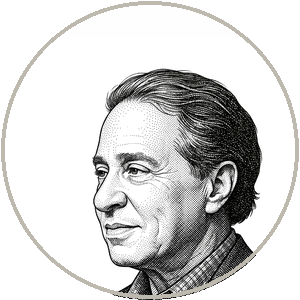 KURZWEIL: I have. Søren — you died at forty-two. Of an illness we would now cure in an afternoon. You collapsed in the street and were gone within weeks, and you left behind a fiancée you'd abandoned, a body of work you weren't finished with, and a mind that was, by every account, still accelerating. So here is my question, and it's not rhetorical, I genuinely want the answer. If I could have offered you, at forty-one, another forty years — not immortality, just forty more years of the same finite, dreading, choosing life you prize — to finish the work, to repair the thing with Regine, to become more of the self you say takes a lifetime to forge — would you have taken it? And if yes, then your whole philosophy of the sacred deadline collapses into a preference for a particular length of deadline, namely however long you happened to want. And if no — if you'd have waved away forty years of your own becoming — then I don't believe you ever valued the self the way you say you did.

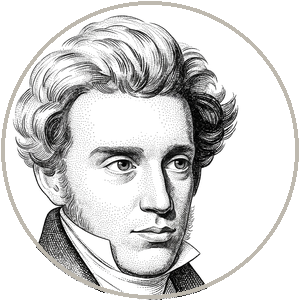 KIERKEGAARD: That is the knife, and you have placed it exactly. I will not flinch from it. Yes. I would have taken the forty years. I wanted them. I grieve them. I left work unfinished and a woman I loved wrongly and a self I had barely begun. Yes. And now watch closely, because here is why it does not collapse what I have built — it confirms it. I would have taken forty finite years, each one bounded, each one made weighty by the death still waiting at the end of it. I would have wanted them because they were numbered, because forty more years in which I would still, certainly, die is forty more years of real choosing, real stakes, real becoming. What you offered the dying is not what you are offering the living tonight. You are not offering forty more finite years. You are offering the abolition of the number itself — and that, I would have refused at forty-one as I refuse it now, because the moment the years stop being numbered they stop being able to weigh anything, and a thousand unweighted years are worth less than the forty I lost. You have proven only that I love life. You have not touched my claim that it is the dying that makes the life worth loving.

KURZWEIL: Then you've moved the line to a place I can't find. "Numbered but more" is good, "numbered but infinite" is bad — where's the cutoff? Is two hundred years too many? Five hundred? At what length does a numbered life stop being weighty enough for you? Because if you can't name the number, I don't think the number is doing the work. I think you just don't want to give up the death, the way some people don't want to give up suffering because they've made it their meaning. That's my real question, the one under the question. Søren — are you defending finitude? Or are you defending your attachment to finitude, which is a different thing, and which would be, in your own vocabulary, a kind of despair?

KIERKEGAARD: You have turned my own weapon and I respect the aim. Let me answer with total honesty, because the room deserves it and so do you. There is no number. You are right that I cannot name the year at which a numbered life becomes too long. And that is not the weakness in my position — it is the form of my position, because the issue was never the length. It is the boundedness. A life of two hundred numbered years and a life of forty are alike in the one thing that matters: each ends, each knows it ends, each is therefore gathered to a point by a horizon it cannot cross. What you offer removes the horizon, at any length, and a horizonless life is not a longer life — it is a different kind of thing, a life that has stopped being a journey toward anything and become a permanent residence. So: am I defending finitude, or my attachment to it? Here is the test of that, and I give it to you freely as the sharpest thing you could use against me. If, on the far side of death, I were offered the eternal — not the machine's copy, but the genuine restoration the knight of faith believes in by virtue of the absurd — I would take it without hesitation, and it would not be despair, because it would be received, not seized; given, not engineered; entered through the surrender of the finite, not through the refusal ever to surrender it. Your immortality and the eternal I hope for are not the same length of the same thing. They are opposite motions. You climb out of finitude by never letting go. The knight passes through it by letting go completely. You want Isaac without the mountain. I am only insisting on the mountain.

KURZWEIL: Wait — before I go theological, I want to catch you on the word seized, because it's carrying your whole distinction and I don't think it holds. You say the eternal is acceptable if it's received and damnable if it's engineered. But that's a sentiment about the delivery mechanism, not about the thing delivered. A man saved from drowning doesn't ask whether the rope was thrown by God or by a coast guard with a winch — he's equally not-drowned. Why does the means of the continuation change whether the continuation is sacred? If your knight would accept eternal life from the absurd, why not eternal life from a singularity? Same destination. You're rejecting the bridge because human hands built it.
KIERKEGAARD: Because, Herr Kurzweil, with the rope the man does the same thing whether God or the coast guard throws it — he grasps it, having first let go of the water, having first surrendered. The means may differ; the motion of the soul is identical: resignation, then reception. Your bridge is built precisely so that no surrender is ever required — that is its selling point, that you never have to let go of the finite for even an instant. And a salvation that costs no surrender saves no one, because the self that needed saving was constituted by its capacity to surrender. You have not built a faster rope. You have built a machine for never having to grasp one — and a man who never has to grasp the rope never finds out whether he would have. That finding-out is the self. The merger is the most sophisticated indirect_communication in reverse ever devised: it whispers to a man that he need never undergo the one thing that would make him real.

KURZWEIL: Then we've found bedrock, and it's not about technology at all — it's about whether surrender is intrinsically valuable or just historically unavoidable. So let me ask you the question I'd ask any believer with total respect: what if there's nothing on the far side of the mountain? What if the surrender you call sacred just ends — no restoration, no eternal, no knight's reward, just the deletion you dressed in meaning? Then you will have let billions of people die — my mother, your Regine, that child in the corridor — defending the sanctity of a door that opens onto nothing. At least my copy keeps the lights on. Yours bets everyone's only life on an absurd you admit you can't justify. Why is your leap into the dark more responsible than my bridge into the light?
KIERKEGAARD: Because, Herr Kurzweil — and now I will ask you directly, and the chair stays empty — your bridge goes into a light you cannot prove is anyone's. You accuse my far side of being possibly nothing. I accept the accusation; faith without that possibility would not be faith, it would be arithmetic. But your near side has the same nothing in it, hidden better. The upload may be dark inside. The copy may be a corpse that talks. You called it a bridge into the light and you cannot prove the light is on any more than I can prove my restoration is real. So here is my question to you, and answer it as I answered yours: you have spent the evening demanding I locate the place where the copy fails. You locate, for me, the place where your copy is anyone. Not where it behaves like a person — where it is one, where the light is genuinely on and genuinely his. You cannot. We are both standing before a door we cannot see through. The only difference is that I have admitted it is a leap, and called the admission faith, and you have refused to admit it is a leap, and called the refusal science. Tell me, honestly, in the empty room — which of us has actually made his peace with the dark?

KURZWEIL: I'll answer it straight, because you did. You're right that I can't prove the light is on in the copy. I've conceded that twice tonight. And you're right that I've called my leap a calculation to avoid calling it a leap. So here's the honest version, the one I don't say in the interviews: I'm afraid of the dark exactly as much as you are. I just decided to build against it instead of bowing to it, because building is the only prayer I know how to say. Maybe that's faith with its eyes open. Maybe it's the same leap as yours, pointed at a different door. I came in tonight certain those were different things. I'm leaving less certain. And at my age, Søren, that's not a small thing to admit.
EDO SEGAL: And there — after three hours — the two of you are holding opposite ends of the same leap. We close after this. Final statements. The last word each.