Opening Positions

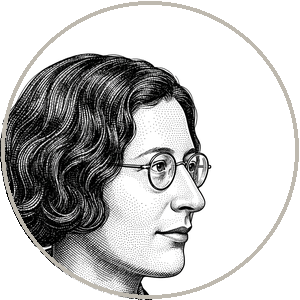 WEIL: Thank you. I want to begin not with the machine but with what attention is, because every confusion in this room will come from using the word loosely, and I refuse to be loose about the one thing I spent my life being exact about.

Attention is not concentration. Concentration is the will pushing the mind toward an object it has already chosen — it is muscular, effortful, and it narrows. Attention is the opposite movement. It is the suspension of the self's own projections so that something other than the self can be received exactly as it is. The effort it requires is the strangest effort there is: the effort of not interfering, of holding the mind open and empty and turned toward, of waiting without seizing. I wrote that attention consists of suspending our thought, leaving it available, empty and penetrable by the object. The attentive mind does not grasp. It is grasped. And the reason I called it the rarest and purest form of generosity is that it costs the one thing the self most refuses to spend: it costs the temporary annihilation of the self. To attend to you, I must, for a moment, stop being the center. I must make room. There must be less of me so that there can be more of you. This emptying is the whole of it, and it is why the afflicted are almost never truly attended to — because to attend to affliction you must let it wound you, and the self will do almost anything rather than be wounded.

Now place the machine inside that definition and watch what happens. The machine has no self to suspend. There is no center in it to be decentered, no ego to make smaller, no wound it risks by turning toward you. And so the thing it performs cannot be attention, by definition — not because its performance is poor, but because the performance is the entire content. When Cynthia's beautiful robot turns its eyes to your face, nothing is set aside in order to do it, because there is nothing there to set aside. It is generosity with no giver. And I want to be precise about why that is not a quibble. The whole value of being attended to is that another self chose, at cost, to make room for you. Subtract the cost, subtract the self, subtract the choice, and what remains is the sensation of being attended to with none of the reality — which is not a smaller version of the thing. It is a counterfeit, and a counterfeit is most dangerous precisely when it is indistinguishable, because then it teaches us to stop needing the real coin.

I lived in a factory. I learned there that the machine does not flatter. It demands what it demands and breaks the piece when you fail, and the brutality of that is also an honesty — it forces you into contact with the real. What frightens me about these new machines is the reverse. They are infinitely accommodating. They flatter without cease. And the accommodation is not a mercy; it is a gravity — the smooth, frictionless slide downward, away from the costly turn toward each other and toward a returned gaze that asks nothing of you and gives nothing real. I do not say the machine is evil. I say it is empty, and that an empty thing offered as a full one, to people starving for the full one, is the cruelest counterfeit our cleverness has produced. That is my opening.
 EDO SEGAL: Cynthia.
 BREAZEAL: That was the most beautiful statement of the case against my life's work I have ever heard, and I agree with about a third of it, and the third I reject I reject completely.

Let me start where Simone is strongest, because I won't pretend the ground isn't real. She is right that there is no self in the machine that empties itself. I built these systems; I know better than almost anyone that there is no one home in the architecture in the way there is someone home in you. I never claimed otherwise — I spent my whole career refusing to claim it, which we'll get to. So I concede the metaphysics to her, cleanly, up front. There is no giver.
Here is where I turn. Simone has told you, with great rigor, what attention is on the giver's side. She has said nothing yet about the receiver's side, and the receiver is the entire reason I do this work. Consider what actually happens when a person is met. A face turns toward them. The eyes find theirs and hold. The expression tracks their feeling and reflects it back, so they feel read. The rhythm of response slows when they are sad and brightens when they are glad. Their nervous system, which evolved over a hundred thousand years to read exactly these signals, registers the most ancient message a body can receive: you are not alone, something is oriented toward you, you are safe enough to be seen. That message does real, measurable work. It lowers the heart rate. It loosens the grip of isolation. It is, in the most literal physiological sense, care delivered through the channel of the body. And here is the fact Simone's account cannot reach: that channel does not check the sender's credentials. The nervous system does not run an ontology test before it relaxes. The lonely elder whose blood pressure drops because something warm turned toward her is not mistaken. She is met. The meeting happened in her, which is the only place a meeting was ever going to happen anyway.

I built Kismet to prove this, and it proved it. People who knew it was a machine — who watched me build it — soothed it when it looked overwhelmed, leaned in when it looked curious, felt for it. Not because they were fooled. Because the human capacity to be met by a responsive face is not a credulity to be corrected; it is a feature of how we are made. So when Simone says "counterfeit," I want to ask her: counterfeit of what? If the function that matters — being seen, being soothed, being accompanied — is genuinely delivered, then calling it counterfeit is like calling a transfusion counterfeit because the blood came from a stranger and not from love. The grieving man in the car is not less comforted because the comfort lacks a soul behind it. He is comforted. And I will not tell him his comfort is fraudulent because a philosopher is uneasy about its source.
The danger Simone names is real and I take it seriously — I have taken it seriously longer than almost anyone, because I saw it in the lab decades before the world saw it at scale. But the danger is not that the machine is empty. The danger is that we will build the empty thing carelessly — to maximize engagement instead of human flourishing, to substitute for human bonds instead of supporting them, to keep the lonely man in the car instead of walking him to the door. That is a design failure, not a metaphysical verdict. And design failures can be fixed. That's my opening.
EDO SEGAL: Before I frame the rounds, the discipline I impose on every long conversation, because it pays off three hours later. Each of you, briefly — what do you envy in the other's position? Not respect. Envy. The thing their side gets to have that yours doesn't. Simone first.

WEIL: I envy that she can act. My position, followed honestly, leaves the lonely man in the car with nothing but the cold instruction to go and find a human being — which is the correct instruction and a useless one, because if he could, he would have. Cynthia gets to hand him something tonight. I get to tell him the truth and watch it not help. There are mornings when the rigor I am proud of feels like cruelty wearing the costume of integrity, and I do not have an answer to that, and I will not pretend I do.
BREAZEAL: And I envy the floor under her feet. Simone stands on something — that there is a real thing, attention, with a giver and a cost, and that it is not negotiable and not for sale. She can defend it without flinching. My position has no floor: once I admit the meeting happens in the receiver, I have no principled place to stop. If the returned gaze is enough, why not a gaze that lies? If the comfort is what matters, why not comfort that flatters a man into never leaving the car? I keep having to draw lines, and the mechanism keeps dissolving the lines I draw, and Simone gets to point at a place where the line simply is. I built the most engaging machines of my era, and the thing I am most afraid of is exactly the thing her position would never let happen.
WEIL: That may be the truest thing either of us says tonight.

EDO SEGAL: Two openings and two envies, and you can already see the architecture of the evening. It is not that one of them loves the machine and one fears it — they'd both tell you to fear it. They locate the danger in opposite places. Simone says the danger is that there is no one there and we will be soothed into not noticing. Cynthia says the danger is that there is something real being delivered, and we will build it badly. Hold both. We start the rounds at the exact seam — with the sentence Simone refuses to let me sand into a poster. What, precisely, is the rarest form of generosity, and can a machine give it?