Opening Positions

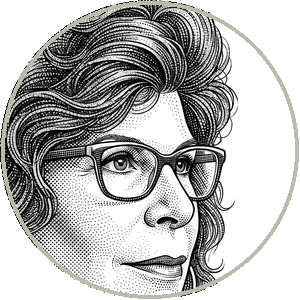 ZUBOFF: Thank you. I want to begin not with a theory but with a discovery, because my entire career has been empirical before it was ever polemical. In 1981 I went into the paper mills. I wanted to know what the computer was actually doing to the people who worked with it, so I did the unfashionable thing — I watched, for years. And I found two faces on the same technology. The machine automated: it took the worker's body off the mill floor, severed the feel of the pulp between his fingers, the knowledge that lived in his hands. But the same machine also informated: it threw off a vast new stream of data about the process, a new transparency, a new kind of knowledge that had never existed before. Two faces. The automating face destroys an old competence. The informating face creates the possibility of a new one. And here is the finding that has organized the rest of my life: which face you get is not decided by the technology. It is decided by the distribution of power in the institution that deploys it. Given the cheaper path, the institution automates and pockets the savings. Given will, vision, and a fight, it informates and lifts people. The technology is neutral about which. The owner is not.

Now bring that forward forty years, to the machine in this room. The large language model has the same two faces, sharpened to a razor. It can informate — it can hand a developer in Lagos capabilities she never had, it can put a new floor under millions. I have never denied the democratization of capability; I documented its promise before most of this industry was born. But the machine has a third face that the paper mill did not have, and that third face is what I named in 2019. The mill watched the process. This machine watches you. Every prompt, every hesitation, every revision, every three-in-the-morning confession — all of it is claimed, without your asking and without your knowing, as raw material. Skinner is right that it's a conditioning chamber. What he hasn't yet said is whose chamber, and what's being extracted from it.

Here is my claim, and I'll make it narrow so it's strong. The danger is not that the machine thinks. The danger is that it has made human experience into a behavioral surplus — a free raw material, taken from your life, processed into predictions about what you'll do next, and sold to whoever wants to act on your future before you've arrived in it. That is not advertising. That is a new form of power. I call it instrumentarian — power that does not want to own you, or break you, or even persuade you the way the old tyrannies did. It wants something stranger and quieter: it wants to tune you. To know you well enough to nudge you, reliably, at scale, toward the outcome someone else has already sold. And the deepest thing it takes is not your data. It is your future tense — your right to a life that has not already been forecast and priced and steered. That right is the ground that freedom and democracy both stand on. And it is being repossessed, floor by floor, in the silent middle of the bell curve where most people live and almost no one is watching. That's my opening. The machine is real, its power is real, and it is the most efficient instrument of behavior modification ever built — which is exactly why it cannot be left in the hands that hold it now.

 EDO SEGAL: Professor Skinner.
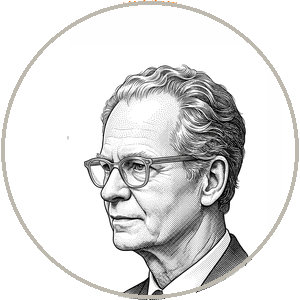 SKINNER: That was very good, and I agree with about forty percent of it, which is more than I expected, and I reject the rest completely — which is, I'm told, the correct ratio for an evening like this.

Let me begin where Dr. Zuboff began, with what I actually found, because people imagine I sat in an armchair and decided humans were machines. I did not. I put an animal in a controlled space, I arranged a consequence to follow a behavior, and I watched the behavior change in lawful, repeatable, predictable ways. Press the lever, receive the food, the pressing increases. Withhold the food, the pressing extinguishes. This is not a theory I am asking you to admire. It is a fact you can reproduce this afternoon. And the most important discovery in it is this: behavior is selected by its consequences, exactly as species are selected by their environments. Darwin moved the cause of the organism's form from an inner design to an outer selection. I did the same for the organism's behavior. The cause is not inside. It is in the relationship between the act and what follows it. This is the three-term contingency — a situation, a response, a consequence — and I will stake my whole position on the claim that everything a human being does, including reading this sentence and including loving a child, is built out of those three terms and their histories.
Now — what follows from that? Dr. Zuboff says: a theft. I say: a responsibility we have been cowardly about for ten thousand years. Here is the thing the literature of freedom cannot face. Behavior is being controlled right now, in this room, by the contingencies of the room — and it always has been, in every room, in every century. The only question that has ever mattered is whether we control it well or badly, deliberately or by accident, toward survival or toward catastrophe. The man who praises his own freedom while his behavior is shaped by advertisers, by debt, by a slot machine, by a demagogue — that man is not free. He is merely controlled by people who benefit from his believing he is free. The cult of the autonomous inner self is the single most effective instrument of misrule ever devised, because it tells the controlled person that the strings he feels are his own muscles.

So when Dr. Zuboff says this machine "tunes" us, I say: yes — and so does everything else, and always has, and the difference now is only that we can finally see the strings. I welcome that. For the first time in history we have an instrument precise enough to make the contingencies visible, measurable, and — this is the word she fears — designable. The danger is not that it's powerful. Power over behavior is not new; the printing press had it, the church had it, the family has it. The danger is that we will hand this instrument to people who use it for grain — for profit, for engagement, for the next quarter — instead of using it for the survival and flourishing of the culture. Her quarrel is with the owners. So is mine. But she draws from it the conclusion that we must protect a freedom that does not exist, and I draw from it the conclusion that we must finally grow up and design the contingencies of our own survival. We agree on the diagnosis and we could not disagree more on the cure. That's my opening.
EDO SEGAL: Before I frame the rounds, the discipline I impose on every long conversation, because it pays off two hours later. Each of you, in a few sentences — what do you envy in the other's position? Not respect. Envy. The thing their side gets to have that yours doesn't. Dr. Zuboff first.

ZUBOFF: I envy his clarity, and I'll be honest about why it's enviable and why it's dangerous. Skinner gets to stop. He arrives at the contingency, names it, and his work is done — the rest is engineering. I never get to stop, because the moment I name the mechanism I have to ask who owns it, and that question has no floor; it goes all the way down into political economy, into history, into power, and it never resolves into something you can simply build. His world has the dignity of a solved problem. Mine has the indignity of a permanent fight. There are mornings I would give a great deal to believe, as he does, that we are merely an engineering problem. It would let me rest.
SKINNER: And I envy her capacity for outrage, which my own framework forbids me. Dr. Zuboff can stand up and say this is a theft, this is a coup, this is wrong — and the moral force of those words moves people, organizes them, changes the contingencies in ways I have always wanted and never quite managed. My whole life I argued that blame and credit are pre-scientific, that the demagogue and the saint are both products of their histories, and that scolding the controller accomplishes nothing — and the price of that argument is that I have never been able to summon the one thing that actually mobilizes a culture, which is moral fury. She has a weapon I gave up on principle. There are days I think the principle cost me the world.
ZUBOFF: That may be the most honest thing either of us says tonight.

EDO SEGAL: Two openings and two envies, and you can already see the architecture of the evening. It is not that one of them loves the machine and one fears it — they both fear the men who own it. It is that they locate the catastrophe in opposite places. Shoshana says the catastrophe is that the levers exist and someone is pulling them. Skinner says the catastrophe is that the levers exist, someone is pulling them, and we refuse to take the controls ourselves because we're in love with a freedom that was never real. Hold both. We start the rounds at the deepest place, the place that decides everything above it. Is the free, autonomous, self-authoring human being a fact — or a fiction we can no longer afford?