Freedom, Dignity, and the Right to the Future Tense

 EDO SEGAL: Professor Skinner, the title of your most famous and most hated book is Beyond Freedom and Dignity. People assume it means you're against freedom and dignity. I've read it; it means something more precise and more disturbing. I want you to say what it actually argues, in plain words, and I want you to say it to a parent at a kitchen table — a mother who has just been told that the two values she's been trying to raise her children to honor are, in your account, obstacles to their survival. Make her understand.
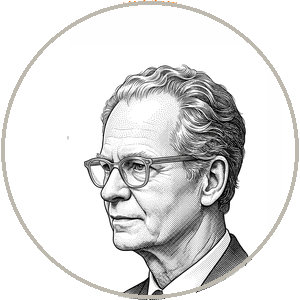 SKINNER: I'll speak to her directly, because she deserves it and because she's the one who actually matters in all of this. Ma'am — I am not against your children being free or dignified. I am against a particular theory of freedom and dignity that I believe is getting your children hurt. Here's the theory. We say a person is free when their behavior comes from inside them — from their own will, uncaused by anything outside. And we give a person dignity — credit, admiration — in proportion to how much we believe their good behavior came from inside rather than from their circumstances. So the more we can't explain why someone is good, the more credit we give them.
Now watch what that does. It means that every time we explain behavior — every time we show that a child steals because he's hungry and unloved, that a man drinks because of what was done to him, that your daughter studies because her environment made studying rewarding — we are seen to subtract freedom and dignity. The better our explanation, the less "free" the person looks. So the theory of freedom and dignity fights every attempt to actually understand and improve human life. It defends the inner cause, which doesn't exist, against the outer causes, which do — and which we could change. I want to go beyond that theory, not beyond your children's freedom. I want to stop crediting people for being good and start building the conditions that make people good, the way we stopped blaming the sick for their illness and started curing it. The mother who raises a kind child did not summon kindness from the child's soul. She arranged a world in which kindness was reinforced. That's not a smaller thing than freedom. It's the only thing that ever actually made a free person. The theory tells her to take no credit and do nothing. The science tells her exactly what she did and how to do more of it.
EDO SEGAL: That's the most persuasive I've ever heard that argument made. Dr. Zuboff, he just told the mother her dignity is a superstition that prevents her from helping her children. And you've named the thing he's beyond — the right to the future tense — as the deepest stake of the whole digital age. So defend her. What does the mother have that Skinner's account leaves out?
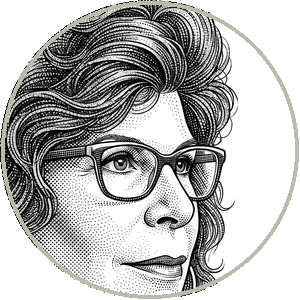 ZUBOFF: I'll defend her, and I'll start by conceding the part Skinner gets right, because the concession makes the rest unanswerable. He's right that the inner-cause theory of freedom can be used to abandon people — to say you're free, so your suffering is your fault — and that this is cruel and false. Poverty, abuse, a brutal environment: these shape behavior, and pretending otherwise is a way of refusing to help. I grant all of it. I am not defending the lie that we are uncaused.
Here is what the mother has that Skinner's account cannot hold. She is not only arranging her child's contingencies. She is making a promise to a future she cannot see. When she teaches her daughter to read, she is not optimizing a behavior toward a known target. She is equipping the girl to become a person the mother herself cannot predict and would not want to — a person who will have thoughts her mother never had, make a life her mother can't imagine, possibly reject everything her mother believes. That is the right to the future tense: the right to a future that is open, unwritten, not yet sold. The mother's dignity is not a claim that her child is uncaused. It is her refusal to treat her child as a predictable product — her insistence on raising a person who will exceed the raising. Skinner's science, applied with total success, produces a child who turns out exactly as designed. The mother's love, applied with total success, produces a child who surprises her. Those are opposite aims. And the instrument in this room serves Skinner's aim, not the mother's — because a surprising person is a bad prediction, and a bad prediction is worthless on the market. The right to the future tense is the right to be a bad prediction. That is what's being repossessed. And the mother feels it, even if she can't name it, every time the machine finishes her child's sentence before the child has thought it.
SKINNER: "The right to be a bad prediction." I will carry that sentence out of this room. And I want to do something I rarely do, which is agree with the value and fight only the mechanism. I want surprising people too. The whole of Walden Two is an argument for a community that produces people who flourish in ways the planner didn't dictate. But here's my correction, and it's load-bearing. Dr. Zuboff treats "surprising" and "designed" as opposites. They are not. A jazz musician is designed — trained, shaped, drilled for ten thousand hours — in order to surprise. The training doesn't kill the surprise; it creates the capacity for it. Reinforce variability, reinforce improvisation, reinforce the very act of generating the unpredicted, and you get a person who surprises you more, not less. The mother who teaches her daughter to read is designing her toward surprise. So when Dr. Zuboff says the right to the future tense is the right to be a bad prediction, I say: yes — and that capacity is itself built by contingencies, which means it can be protected, expanded, and reinforced. The danger isn't design. The danger is design aimed at predictability instead of at the generative capacity that defeats prediction. Same instrument. Opposite target. We keep arriving here.
ZUBOFF: We keep arriving here because it's the real seam, and I'm going to drive the wedge in all the way this time. Skinner says: reinforce variability, design people toward surprise. But hear the economics underneath the jazz metaphor. The jazz teacher is paid to make the student more free, because the teacher's reward is the student's flourishing. The instrument in this room is paid to make the user more predictable, because the owner's reward is the sale of the prediction. You cannot wish away the direction of the gradient by citing a teacher who points it the other way. The teacher and the platform run the same machinery — you're right — but they run it down opposite slopes, and the slope is set by who profits. In a world where surprising people were the profitable product, I'd have no quarrel with you. We do not live in that world. We live in a world where my unpredictability is a defect to be optimized out of me, by an instrument owned by people who get richer the more reliably I can be steered. Your jazz teacher is a beautiful exception inside a system whose every incentive runs the other way. And the candle you're describing — the spark of the unpredicted person — is exactly what that system is built to snuff, slowly, profitably, in the dark, while telling the mother her child has never had more choices.
EDO SEGAL: I'm going to mark something the reader can't see, because it's been building for an hour and it just crystallized. The two of you have stopped arguing about the machine and started arguing about the gradient — the direction the same machinery is pointed, and who sets it. Skinner: the gradient is a design choice, point it toward freedom. Zuboff: the gradient is set by ownership, and ownership points it toward predictability. That is your deepest convergence and your deepest fork in one sentence: you agree the machinery is neutral and the gradient is everything; you disagree about whether the gradient can be turned against the people who own the machine. Hold that. Because the next round takes it out of theory and into the one place every reader of this series lives: their work, their craft, the thing they're good at — and what the machine does to the slow, frictional process that made them good. After this.